
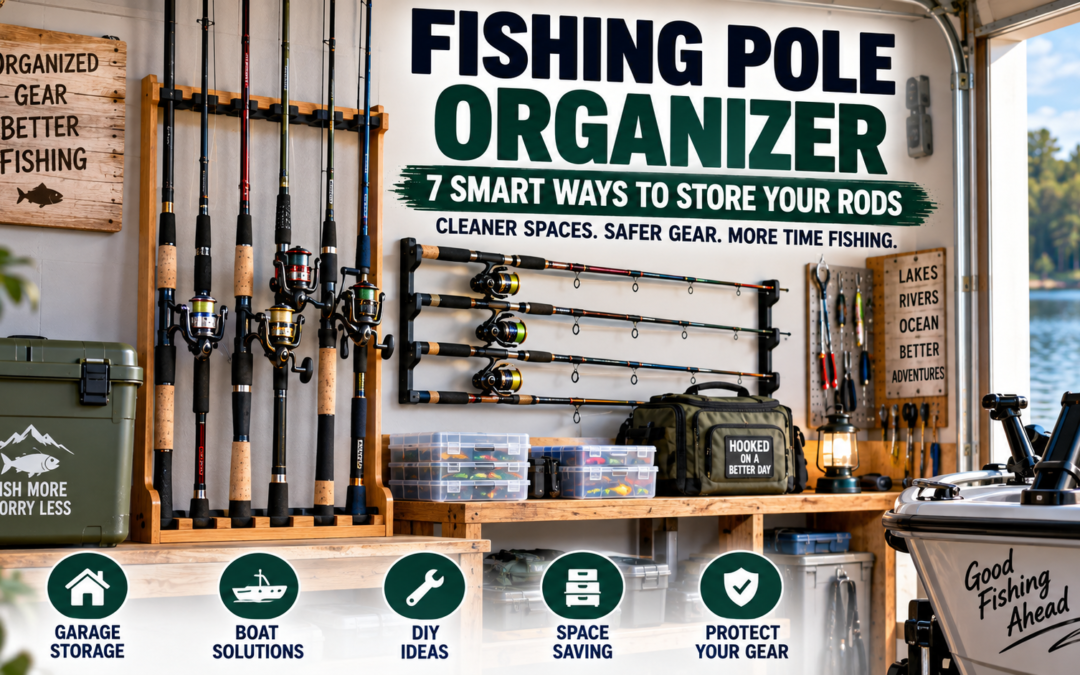
Fishing Pole Organizer: 7 Smart Ways to Store Your Rods
A good fishing pole organizer does more than make a garage, boat, basement, or fishing room look tidy. The right storage system keeps rods separated, makes your equipment easier to find, reduces clutter around reels and tackle, and gives you a consistent place to put your gear after every fishing trip.
Fishing rods are long, fragile pieces of equipment, so simply leaning them against a wall or placing them in a corner can create an unnecessarily messy storage area. A properly planned fishing pole organizer gives each rod a defined position while making room for reels, tackle boxes, line, lures, and other equipment.
This guide covers seven practical organizer approaches, explains where each works best, and shows what to consider before choosing a storage system. You will also see how a rod holder can become part of a larger organization system for your fishing equipment.
For broader beginner equipment information, start with the fishing rods for beginners guide.
What Is a Fishing Pole Organizer?
A fishing pole organizer is a storage solution designed to keep fishing rods arranged, separated, accessible, and protected when they are not being used.
Organizers can be simple wall-mounted holders, vertical racks, horizontal racks, freestanding storage systems, boat-mounted holders, or custom DIY structures. The best option depends on the number of rods you own, the available space, the type of rods and reels you use, and whether you need permanent or portable storage.
A useful organizer should accomplish several things at once:
- Keep rods separated instead of allowing them to become tangled together.
- Provide enough clearance for reels and handles.
- Use available wall, floor, ceiling, or boat space efficiently.
- Make frequently used rods easy to access.
- Keep rods away from areas where they can easily be stepped on or knocked over.
7 Fishing Pole Organizer Ideas
1. Wall-Mounted Fishing Pole Organizer
A wall-mounted fishing pole organizer is one of the most practical choices for garages, workshops, storage rooms, and dedicated fishing spaces.
Instead of allowing rods to occupy valuable floor space, the organizer uses a wall surface to keep them arranged vertically or horizontally. This can make the room easier to navigate while creating a dedicated location for fishing equipment.
Wall-mounted storage is especially useful when you already have a fixed fishing area. You can position the organizer at a comfortable height, leave enough room for reel handles, and group rods according to type or frequency of use.
Before installation, measure the complete rod and reel combination rather than measuring only the rod blank. A reel can significantly increase the amount of space required between individual rods.
2. Vertical Fishing Rod Rack
A vertical rack stores rods upright, making it a useful option when floor width is limited but you have available vertical wall space.
A vertical fishing pole organizer can work well for anglers with multiple spinning rods, casting rods, or other longer setups. Keeping each rod in a separate position also makes it easier to grab one without disturbing the rest of the collection.
Vertical storage is particularly attractive in smaller garages because it uses wall height instead of taking up a large section of the floor.
The bottom of the rod should remain clear of areas where water, dirt, tools, or other objects could damage the equipment. Make sure the mounting system is secure enough for the number of rods you intend to store.
For another storage approach, see the fishing rod rack guide.
3. Horizontal Fishing Pole Organizer
A horizontal organizer supports rods along their length and can be useful when you have a wide wall and want the rods displayed where they are easy to identify.
This arrangement can make it simple to organize equipment by fishing style. For example, freshwater rods can occupy one section while specialized rods can be stored separately.
Horizontal storage can also be helpful when you want to keep longer rods away from low-traffic floor areas.
One important consideration is support. A long fishing rod should not be stored in a way that places unnecessary pressure on a single point. A properly spaced organizer provides more balanced support along the equipment.
4. Freestanding Fishing Pole Organizer
A freestanding organizer is useful when you do not want to drill into a wall or when your fishing equipment needs to move between locations.
This type of fishing pole organizer can be positioned in a garage, workshop, basement, storage room, or other suitable area.
The main advantage is flexibility. You can move the rack when reorganizing the room, increase the amount of storage later, or place the rack closer to the area where you prepare your equipment.
The main consideration is stability. A freestanding rack should have a sufficiently wide and stable base for the number of rods being stored. A tall, lightly loaded rack can become unstable if rods are removed from one side repeatedly.
5. Boat and Fishing-Space Rod Holder System
Boat anglers may need a different type of storage than someone organizing rods in a garage.
A boat-oriented fishing pole organizer can keep rods accessible while leaving other deck space available for tackle, seating, equipment, and movement.
The type of holder should match the boat, the fishing technique, the rods being used, and the mounting location. Check the manufacturer's installation requirements before drilling or attaching a permanent holder.
For a catalog example, Hooked Beginner carries the Scotty 290 R-5 Rod Holder, which can be evaluated when comparing rod-holder solutions.
6. DIY PVC Fishing Pole Organizer
DIY storage can be useful when you have an unusual wall shape, a large collection of rods, or specific spacing requirements.
A PVC-based system can be configured to create individual rod positions and customized around the size of your collection.
Before building a DIY organizer, measure the rods and reels you actually own. A design that fits the rod blank may not provide enough space for larger spinning reels, casting reels, handles, or rod guides.
Take Me Fishing has a dedicated guide to building a DIY fishing rod holder using PVC and plywood. You can see the complete external reference here: DIY Fishing Rod Holder Guide.
DIY storage is also a good opportunity to label individual sections. You could separate freshwater rods, light rods, bass rods, spare rods, and specialized equipment rather than putting everything into one undifferentiated rack.
7. Multi-Section Fishing Pole Organizer System
If you own a growing collection of rods, a single small holder may eventually become insufficient.
A multi-section fishing pole organizer allows you to create zones for different types of fishing equipment.
One section could hold everyday spinning rods. Another could contain casting rods. A third could be reserved for spare equipment, while another section could store rods prepared for a specific fishing trip.
This approach becomes particularly useful when your fishing gear includes rods, reels, tackle boxes, line, pliers, nets, lures, and other accessories.
Organization should make preparation faster, not simply make equipment look neat. The easier it is to identify the gear you need, the less time you spend searching through piles of equipment.
How to Choose the Right Fishing Pole Organizer
Consider How Many Rods You Own
Start with your current collection instead of buying an organizer based on an estimated future collection.
Count the complete setups you normally store. If you have eight fishing rods but several are stored with large reels, the actual storage requirement can be greater than the raw rod count suggests.
Leave some room between positions so rods can be removed without scraping against neighboring equipment.
Measure the Available Space
Measure the wall, floor, cabinet, garage corner, boat compartment, or other area where the organizer will be installed.
Check the available height, width, and depth. Also consider doors, shelves, vehicles, workbenches, and other objects that could interfere with access.
A compact fishing pole organizer may be better than a large rack if the storage area has limited clearance.
Account for Reel Size
One of the most common storage mistakes is measuring only the fishing rod.
Spinning reels, baitcasting reels, and larger reels can increase the width and depth required by the storage system. The handle also needs enough clearance to avoid being pressed against another object.
Measure the complete rod-and-reel setup before finalizing the organizer layout.
Think About Accessibility
The best organizer is not necessarily the one that stores the most rods. It should also allow you to remove a rod without disturbing the rest of the collection.
Put the equipment you use most frequently in the easiest positions to reach.
Less frequently used equipment can be stored higher, farther back, or in a secondary section.
Choose the Right Mounting Method
Wall-mounted systems need appropriate mounting hardware and a suitable surface. Do not assume that a wall covering alone can support the weight of multiple fishing rods and reels.
Follow the organizer manufacturer's installation instructions and use mounting hardware appropriate for the wall material.
Fishing Pole Organizer vs. Fishing Rod Rack
The terms fishing pole organizer and fishing rod rack are often used for similar storage products, but the concept of an organizer can be broader.
| Storage Type | Main Purpose | Useful For |
|---|---|---|
| Rod rack | Store multiple rods together | Garages, workshops, storage rooms |
| Rod holder | Secure individual rods or small groups | Boats, walls, work areas |
| Organizer system | Manage rods and surrounding fishing equipment | Complete fishing gear storage areas |
| Freestanding rack | Portable or flexible rod storage | Homes, garages, temporary storage |
In practice, an organizer can contain several different storage components. A garage setup might combine a rod rack with tackle shelves and a dedicated holder for frequently used fishing poles.
How to Organize Fishing Rods by Type
Once you install your fishing pole organizer, organize the rods in a way that makes sense for how you fish.
Group by Fishing Style
You might create separate sections for spinning, casting, light tackle, bass fishing, river fishing, or other techniques.
Group by Frequency of Use
Place the rods you use every week in the easiest-to-reach section. Seasonal or specialized rods can occupy less convenient positions.
Group by Rod Length
Grouping similar lengths together can make the collection easier to manage and can help prevent shorter rods from getting hidden behind much longer equipment.
Separate Ready-to-Fish Setups
If some rods are already rigged, keep them together so you can quickly grab them before heading out.
How to Organize Rods and Tackle Together
Rod storage is only one part of a complete fishing organization system.
Hooks, lures, line, pliers, tools, and other tackle should have designated storage locations as well.
IGFA's tackle organization guide recommends structured storage and labeling systems for fishing equipment. See the full resource here: IGFA Tackle Organization Guide.
Take Me Fishing also provides guidance on setting up tackle boxes and keeping fishing equipment arranged so commonly needed items can be accessed more easily: Fishing Tackle Boxes and Tools.
A useful system might therefore look like this:
- Fishing rods stored vertically or horizontally.
- Reels kept attached to frequently used rods.
- Lures divided into labeled tackle boxes.
- Fishing line stored separately and kept dry.
- Pliers and cutters stored where they are easy to reach.
- Landing nets stored in a dedicated location.
How to Protect Rods in Storage
Good storage is about more than saving space.
Keep rods away from heavy objects that could fall onto them. Avoid placing equipment where people regularly walk or where doors can strike the rods.
Before long-term storage, inspect the rod, guides, reel seat, handle, and reel. Remove dirt and debris and allow equipment to dry before putting it away.
Take Me Fishing also provides maintenance guidance for anglers storing fishing gear between trips or seasons: Fishing Gear Maintenance Guide.
Fishing Pole Organizer Ideas for Small Spaces
Limited space does not mean you need to leave rods leaning in a corner.
A narrow wall-mounted organizer can use vertical space without taking up valuable floor area. You can also place rods along a high wall section while keeping frequently accessed tackle at waist height.
For very small storage areas, consider organizing rods by frequency of use and reducing unnecessary duplicate equipment. A smaller, well-organized collection is easier to manage than a larger collection with no defined storage system.
Another option is to use one organizer for complete rod-and-reel combinations and another small storage area for spare or broken-down rods.
Fishing Pole Organizer for Garages
Garages are popular fishing storage areas because they provide room for larger equipment, but they can also become crowded quickly.
Keep fishing rods away from vehicles, bicycles, lawn equipment, power tools, and heavy storage containers.
A wall-mounted fishing pole organizer can keep rods above normal floor traffic while leaving the ground available for other equipment.
Arrange the rods so they can be accessed without moving boxes or equipment first. The objective is to create a repeatable storage routine: clean the gear, inspect it, place it in its assigned position, and store the tackle in its designated container.
Fishing Pole Organizer for Boats
Boat storage requires particular attention to accessibility and secure positioning.
Fishing rods should not be placed where they can interfere with normal movement around the boat. A holder should also be appropriate for the mounting location and the type of equipment being stored.
Keep frequently used rods close to the fishing position while storing backup equipment in less accessible areas.
For additional rod-related equipment, you can also browse Hooked Beginner's fishing accessories category.
Fishing Pole Organizer Buying Checklist
| Check | What to Ask |
|---|---|
| Capacity | How many complete rod-and-reel setups will it hold? |
| Space | Will it fit the available wall or floor area? |
| Reel clearance | Is there enough room for reel handles and bodies? |
| Access | Can you remove one rod without disturbing the others? |
| Mounting | Is the mounting method suitable for the installation surface? |
| Portability | Does the organizer need to move between locations? |
| Organization | Can rods be separated by type, length, or frequency of use? |
| Expansion | Can additional storage be added if your collection grows? |
Frequently Asked Questions
What is the best fishing pole organizer?
The best fishing pole organizer depends on your available space, rod collection, reel sizes, and storage location. Wall-mounted, vertical, horizontal, and freestanding designs can all work well when properly matched to the space.
How many fishing rods should an organizer hold?
Choose capacity based on the number of complete setups you currently own. Allow some extra room between rods so they can be removed and replaced without disturbing neighboring equipment.
Is vertical or horizontal fishing rod storage better?
Neither is universally better. Vertical storage can make excellent use of wall height, while horizontal storage can work well when you have sufficient wall width and want rods displayed along the wall.
Can I build my own fishing pole organizer?
Yes. DIY organizers can be made from materials such as PVC and plywood. Measure your actual rods and reels before building so the spacing fits your equipment.
Can a rod rack store rods with reels attached?
Many storage systems can accommodate complete rod-and-reel setups, but you should verify the organizer's dimensions and make sure the reels have sufficient clearance.
Where should fishing rods be stored?
Store rods in a clean, dry location where they will not be stepped on, struck by doors, crushed by other equipment, or exposed to unnecessary clutter.
Should fishing rods be stored vertically or horizontally for long-term storage?
Either approach can work when the rods are properly supported. The important considerations are secure positioning, sufficient support, protection from impacts, and avoiding unnecessary pressure on the rod.
Final Thoughts
A good fishing pole organizer turns rod storage from a pile of equipment into a usable system. Whether you choose a wall-mounted holder, vertical rack, horizontal rack, freestanding system, boat-mounted holder, DIY solution, or multi-section setup, the goal is the same: keep your fishing rods organized, accessible, and protected.
Start by counting your rods, measuring the available space, checking reel clearance, and deciding which equipment needs the easiest access. Then choose an organizer that fits those requirements instead of choosing based solely on appearance or capacity.
For anglers building a broader storage system, the fishing rod rack guide provides additional storage ideas, while the spinning fishing rods guide can help with organizing and selecting spinning equipment.
You can also compare the Scotty 290 R-5 Rod Holder as one catalog example when evaluating rod-holder equipment.
The best storage system is the one you will actually use consistently. Give every rod a designated place, keep your tackle organized, and make it easy to put equipment away after every trip.