
Description
Table of Contents
“`
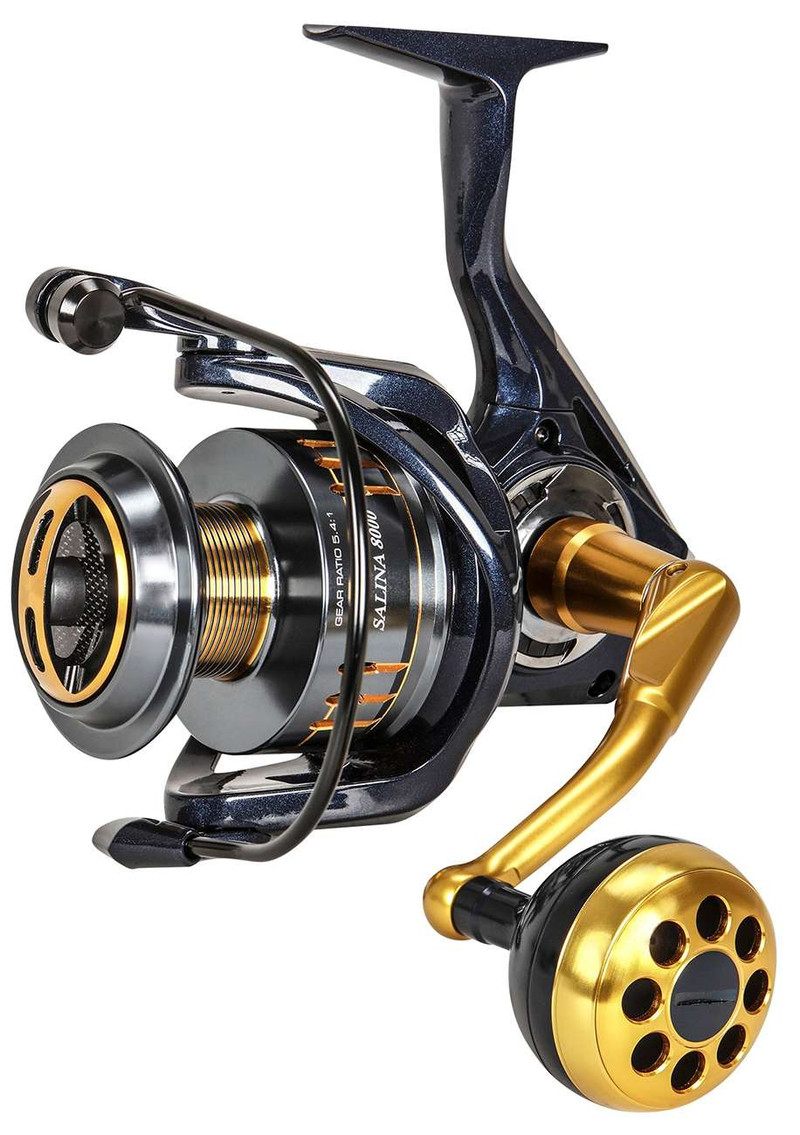
Okuma Salina Spinning Reels for Demanding Saltwater Fishing
The Okuma Salina spinning reels are built for anglers who need reliable equipment for challenging saltwater environments. Whether you fish from the shore, pier, rocks, beach, or boat, choosing the correct spinning reel can improve casting control, line management, drag performance, and fish-fighting confidence.
Saltwater fishing places greater demands on equipment than many freshwater applications. Reels may be exposed to salt spray, moisture, sand, powerful fish, heavy lines, and long periods of repeated casting. The Okuma Salina saltwater spinning reel range is intended for anglers seeking a strong and versatile setup for these demanding conditions.
Why Choose an Okuma Salina Saltwater Spinning Reel?
A good saltwater spinning reel should provide dependable operation while remaining comfortable enough for repeated casting and retrieval. The Okuma Salina spinning reel range gives anglers several size options, allowing them to select a configuration suited to their rod, line type, target species, and fishing location.
Smaller configurations may suit lighter inshore techniques, while larger sizes may provide the line capacity and power needed for surf, offshore, jigging, and heavy saltwater applications. Always review the individual model specifications before choosing your preferred size.
Suitable Fishing Applications
- Inshore saltwater fishing
- Surf and beach fishing
- Pier and jetty fishing
- Boat fishing
- Vertical jigging
- Offshore spinning applications
- Heavy freshwater fishing where additional capacity is required
Choose the Correct Okuma Salina Reel Size
The best Okuma Salina fishing reel size depends on the fishing rod, line strength, lure weight, target species, and environment. A reel that is too large may make the setup feel heavy and unbalanced, while a reel that is too small may not provide enough line capacity or drag capability.
Before selecting a size, consider:
- The length and power of your fishing rod
- The fishing line type and diameter
- The average size of your target species
- Whether you fish inshore, offshore, or from the surf
- The lure, jig, or bait weight you use
- The amount of line capacity required
Available Salina configurations may include several reel sizes. Check the product options and technical specifications carefully before placing your order.
Designed for Saltwater Spinning Applications
The Okuma Salina spinning reels are intended for anglers who want the simplicity of spinning equipment combined with the strength required for demanding fishing. Spinning reels are popular because they are versatile, easy to cast, and compatible with many fishing lines and lure styles.
A spinning setup can be particularly useful when casting live bait, metal jigs, soft plastics, plugs, spoons, and other saltwater lures. It also gives anglers the flexibility to use lighter presentations than many conventional setups.
Line Selection for Okuma Salina Spinning Reels
Braided fishing line is commonly used on saltwater spinning reels because it provides high strength with a relatively small diameter. This allows the spool to hold more line while maintaining sensitivity and casting performance.
Monofilament and fluorocarbon may also be used depending on the technique. Many anglers use braid as the main line and attach a monofilament or fluorocarbon leader for abrasion resistance, stretch, or reduced underwater visibility.
Follow the line-capacity information for your selected reel size. Using line that is much thicker than recommended can reduce capacity and affect casting distance.
Match the Reel with the Right Rod
A properly balanced rod and reel combination improves comfort, lure control, casting performance, and fish-fighting leverage. Larger Okuma Salina spinning reels should generally be paired with rods designed to support their weight, line capacity, and intended fishing application.
For lighter inshore fishing, a medium or medium-heavy spinning rod may provide sufficient balance. Surf, offshore, or heavy jigging applications may require longer or more powerful rods with suitable line and lure ratings.
Browse our rod and reel combos to compare balanced fishing setups for different techniques.
Okuma Salina for Inshore Fishing
Inshore anglers often target redfish, snook, striped bass, sea trout, flounder, and other coastal species. A suitable Salina saltwater spinning reel can support lures, bait rigs, and braided line while providing the versatility needed around estuaries, bays, beaches, and coastal structure.
For inshore use, select a reel size that balances comfortably with your rod and provides enough drag and line capacity without adding unnecessary weight.
Okuma Salina for Surf and Offshore Fishing
Surf and offshore fishing often require greater line capacity and stronger equipment. Larger reel configurations may be more suitable when targeting fish that make long runs or when fishing in deeper water.
An Okuma Salina high speed spinning reel configuration may be useful for techniques requiring quick line recovery, such as retrieving fast-moving lures, working jigs, or removing slack line during a strike. Confirm the gear ratio and line-retrieval specifications for the exact model before buying.
Saltwater Reel Care and Maintenance
Proper maintenance can help extend the working life of any saltwater fishing reel. Salt crystals, sand, and moisture can affect moving components when they are allowed to remain on the reel after fishing.
- Follow the manufacturer’s cleaning instructions after saltwater use.
- Use gentle fresh water rather than forcing high-pressure water into the reel.
- Dry the reel thoroughly before storage.
- Inspect the fishing line, leader, and knots regularly.
- Keep sand away from the spool, handle, and moving components.
- Use only manufacturer-recommended lubricants and service procedures.
- Store the reel in a cool, dry location.
Do not completely submerge the reel during cleaning unless the manufacturer specifically approves that procedure.
Compare More Saltwater Spinning Reels
The Okuma Salina spinning reels are one option within a broad range of saltwater fishing equipment. Comparing reel size, weight, drag capability, gear ratio, line capacity, and intended use can help you select the best model for your fishing style.
- Shop Okuma fishing reels
- Browse spinning reels
- Explore saltwater fishing reels
- Compare the best saltwater fishing reels
Frequently Asked Questions
Are Okuma Salina spinning reels suitable for saltwater?
The Salina range is marketed for saltwater spinning applications. The appropriate model depends on the fishing environment, rod, line, and target species.
Which Okuma Salina reel size should I choose?
Choose according to your rod rating, fishing line, lure weight, required capacity, and target species. Review the specifications for each available size before purchasing.
Can braided line be used on an Okuma Salina reel?
Braided line is commonly used with saltwater spinning reels. Follow the manufacturer’s line-capacity guidance and use suitable backing when required.
Is the Okuma Salina suitable for surf fishing?
Larger Salina configurations may suit surf applications when matched with the correct rod, line, and target species. Confirm the exact model specifications before ordering.
How should I clean an Okuma Salina spinning reel?
Follow Okuma’s maintenance instructions. Generally, remove surface salt gently, dry the reel thoroughly, and avoid forcing water into internal components.
Order the Right Okuma Salina Spinning Reel
Choose from the available Okuma Salina spinning reels based on your fishing environment, rod setup, target species, and preferred line. Review every product option carefully because reel size, capacity, weight, gear ratio, and performance specifications may vary by model.
“`html
Why Okuma Salina Spinning Reels Suit Serious Saltwater Anglers
Okuma Salina spinning reels are designed for anglers who need dependable line control, strong fish-fighting performance, and versatile operation in demanding saltwater environments. Saltwater fishing can place considerable pressure on a reel because anglers may encounter powerful fish, changing currents, abrasive structures, salt spray, sand, and long casting sessions. Selecting a reel made for these conditions can improve confidence when fishing from beaches, piers, jetties, rocks, or boats.
The main advantage of Okuma Salina spinning reels is their ability to support several fishing applications through different available reel sizes. A lighter configuration may be suitable for inshore casting and lure fishing, while larger options may better support surf casting, vertical jigging, deep-water fishing, or heavier offshore techniques. The correct choice depends on the exact model specifications, rod power, fishing line, target species, and preferred presentation.
Using Okuma Salina Spinning Reels for Inshore Fishing
Inshore fishing often requires equipment that feels comfortable during repeated casting but still offers enough line capacity and drag control for fast coastal fish. Okuma Salina spinning reels can be considered for estuaries, coastal rivers, bays, flats, beaches, and other nearshore environments when the selected model matches the intended application.
Inshore anglers commonly use soft plastics, spoons, plugs, metal lures, live bait, and natural bait. A balanced spinning reel allows these presentations to be cast efficiently while giving the angler direct control over retrieval speed. The reel should be paired with a rod that supports the chosen lure weight, fishing line, and target species.
When selecting an inshore size, avoid automatically choosing the largest reel. A heavy reel may cause unnecessary fatigue and make a light rod feel unbalanced. Instead, compare reel weight, line capacity, maximum drag, gear ratio, and line retrieval for each available Salina model.
Okuma Salina Spinning Reels for Surf Fishing
Surf fishing can require long casts, larger baits, greater line capacity, and equipment capable of operating around waves, sand, and salt spray. Larger Okuma Salina spinning reels may suit surf anglers who need additional capacity for braided or monofilament fishing line.
The correct surf reel should balance properly with the length and power of the surf rod. A reel that is too small may lack the required capacity, while an oversized reel can add unnecessary weight. Consider the casting distance required, sinker weight, current strength, target species, and the possibility of fish making long runs.
Sand should be kept away from all moving reel components. Placing the reel directly on the beach can allow fine particles to enter the spool, handle, line roller, or reel body. A rod holder or secure tackle station can reduce unnecessary exposure during surf fishing.
Offshore and Boat Fishing Applications
Boat anglers may use Okuma Salina spinning reels for casting lures, working jigs, presenting live bait, and targeting species that require strong drag performance. Offshore fishing often involves deeper water, larger fish, heavier lines, and longer battles, making correct reel selection especially important.
High-speed configurations may be useful when anglers need to retrieve lures quickly, recover slack line, or work fast-moving presentations. Lower-speed options may offer a different balance between retrieval speed and cranking power. Always review the gear ratio and line-retrieval measurement of the exact model rather than relying only on marketing terms such as “high speed.”
For vertical jigging, anglers should also consider reel weight and handle comfort. Repeatedly lifting and retrieving metal jigs can become tiring, so a balanced setup is important. The rod, reel, line, leader, and lure should function as one complete system.
Choosing Fishing Line for Okuma Salina Spinning Reels
Braided fishing line is frequently paired with Okuma Salina spinning reels because braid provides high strength with a comparatively small diameter. This can allow anglers to carry more line while maintaining sensitivity and direct lure control.
However, braid should be installed correctly. Some anglers use backing beneath the braid to help prevent slipping on the spool. The line should be wound under steady tension and filled according to the spool manufacturer’s recommendations. Overfilling may cause loose coils and casting problems, while significant underfilling can reduce casting distance.
Monofilament offers stretch and can be useful for certain bait-fishing or shock-absorbing applications. Fluorocarbon is often used as leader material because of its abrasion resistance and reduced visibility underwater. The ideal combination depends on water clarity, structure, lure type, target species, and fishing technique.
Understanding Drag Performance
The drag system is one of the most important features to evaluate when comparing Okuma Salina spinning reels. Drag allows fishing line to leave the spool under controlled pressure when a fish pulls strongly. This helps protect the fishing line, leader, knots, rod, and hooks from excessive force.
Drag should release line smoothly rather than sticking and suddenly slipping. Before fishing, test the drag by pulling line from the reel under steady pressure. The correct setting depends on line strength, knot quality, rod action, hook size, target species, and fishing conditions.
Avoid tightening the drag completely simply because the reel offers high drag capacity. Excessive pressure may break the line, damage tackle, or pull hooks free. Controlled pressure usually provides better fish-fighting results than locking the spool unnecessarily.
Gear Ratio and Line Retrieval
Gear ratio helps explain how quickly a reel retrieves line when the handle turns. An Okuma Salina spinning reel with a higher gear ratio may recover line faster, while another configuration may prioritize greater cranking control.
Gear ratio alone does not reveal the complete retrieval speed. Spool diameter also affects how much line is collected during each handle rotation. Review the line-retrieval measurement when comparing different models, especially when choosing equipment for fast lures, jigging, surf fishing, or deep-water applications.
Fast retrieval can help anglers remove slack before setting the hook, keep certain lures moving correctly, or quickly bring a lure back for another cast. Moderate retrieval may be easier to control with slower presentations, bait rigs, or high-resistance lures.
Balancing Okuma Salina Spinning Reels with the Right Rod
The performance of Okuma Salina spinning reels depends partly on the rod used with them. A properly balanced combination feels more comfortable, improves casting control, and helps the angler maintain leverage while fighting fish.
Compare the rod’s recommended line rating, lure rating, power, action, and intended use with the selected reel specifications. A compact Salina model may match a lighter inshore rod, while a larger configuration may require a stronger surf, jigging, or offshore spinning rod.
The reel seat must also hold the reel securely. Before fishing, confirm that the reel foot is properly positioned and that the reel-seat locking mechanism is tight. Loose connections can reduce control and potentially damage the rod or reel during use.
Maintaining Okuma Salina Spinning Reels After Saltwater Use
Proper maintenance helps Okuma Salina spinning reels continue operating smoothly after exposure to saltwater. Salt deposits can remain on the reel surface, line roller, handle, spool, and other components after a fishing trip.
Follow the manufacturer’s care instructions for the exact model. In general, anglers should avoid using forceful water pressure because it may push salt, sand, or moisture deeper into the reel. Remove visible salt gently, dry the reel thoroughly, and store it in a clean location with good ventilation.
Inspect the fishing line for fraying or abrasion, particularly after fishing near rocks, reefs, docks, shells, or submerged structure. Check the bail, line roller, handle, spool, and drag adjustment for unusual movement or noise. Professional servicing may be appropriate if the reel begins grinding, binding, or operating inconsistently.
For broader education about recreational saltwater fishing, regulations, and responsible angling, visit NOAA Fisheries recreational fishing resources. Anglers can also find beginner lessons, equipment guidance, and fishing safety information through Take Me Fishing.
Who Should Consider Okuma Salina Spinning Reels?
Okuma Salina spinning reels may suit anglers seeking equipment for inshore fishing, surf casting, pier fishing, boat fishing, jigging, or offshore spinning. They can also be useful for experienced freshwater anglers who need greater line capacity or power for larger species.
Before purchasing, compare every available model carefully. Reel sizes may differ in weight, drag capability, line capacity, gear ratio, retrieval rate, and intended application. Choosing the correct size is more important than selecting the largest or most powerful option.
Anglers should also consider how frequently they fish, where the reel will be used, what species they target, and whether the equipment will be exposed regularly to saltwater. A well-matched setup can provide better comfort and control than a reel selected only because of its appearance or maximum specifications.
Make a Confident Okuma Salina Buying Decision
Choosing among Okuma Salina spinning reels begins with understanding your actual fishing needs. Identify the target species, fishing environment, rod specifications, line strength, lure weight, and required capacity. Then compare the available Salina sizes to find the most balanced option.
A smaller model may provide lighter handling and easier repeated casting. A larger model may offer additional capacity and power for surf, offshore, or heavy-duty fishing. Neither option is automatically better—the best reel is the one that matches the complete fishing setup.
Review the exact product variation before ordering because specifications can change between reel sizes. When correctly matched and properly maintained, Okuma Salina spinning reels can support a wide range of serious saltwater fishing techniques.
“`
Reviews
There are no reviews yet.