
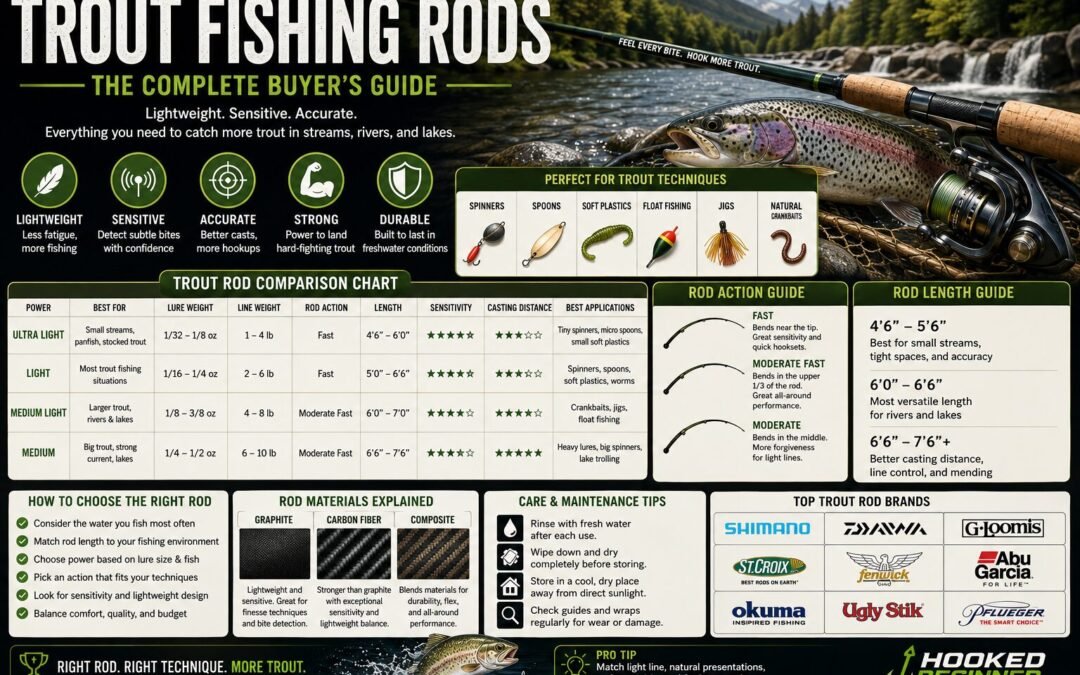

Trout Fishing Rods: The Complete Buyer's Guide
Trout Fishing Rods are designed to provide the precision, sensitivity, and control needed to target one of the world's most popular freshwater game fish. Whether you're casting lightweight spinners into mountain streams, drifting bait through rivers, or fishing lakes with soft plastics, selecting the right rod can dramatically improve casting accuracy, lure presentation, and hook-up success.
Unlike heavy-duty equipment built for larger species, Trout Fishing Rods prioritize lightweight construction and responsive actions that allow anglers to cast small lures effortlessly while detecting even the lightest bites. Trout are often cautious feeders, making sensitivity one of the most important characteristics when choosing the right setup.
Modern rod manufacturers produce a wide range of trout rods suitable for beginners and experienced anglers alike. Understanding rod length, power, action, materials, and intended fishing techniques will help you choose equipment that matches your fishing style and local waters.
At Hooked Beginner, you'll find premium Fishing Rods, lightweight Spinning Rods, and high-quality fishing equipment designed to improve every freshwater fishing adventure.
Table of Contents
- Why Choose Trout Fishing Rods?
- Choosing the Right Rod Length
- Understanding Rod Power
- Rod Action Explained
- Rod Materials
- Best Trout Fishing Techniques
- Buying Guide
Why Choose Trout Fishing Rods?
Trout Fishing Rods are engineered for finesse fishing. They excel at casting lightweight lures, maintaining sensitivity during slow retrieves, and protecting lighter fishing lines when fighting energetic trout.
Trout frequently inhabit clear water where natural lure presentation is essential. A properly matched rod allows anglers to deliver accurate casts with minimal disturbance, increasing the likelihood of attracting strikes from cautious fish.
Their lightweight design also reduces fatigue during long days on rivers, streams, and lakes, making them comfortable for anglers who spend hours actively casting and retrieving.
Choosing the Right Rod Length
Rod length influences casting distance, lure control, and maneuverability. Selecting the proper length depends largely on the type of water being fished and the surrounding environment.
Short Rods
Shorter rods provide excellent control in narrow creeks, heavily wooded streams, and locations where overhead casting space is limited. They offer precise lure placement around rocks, logs, and overhanging branches.
Medium-Length Rods
Medium-length rods balance casting distance with accuracy, making them one of the most versatile choices for rivers and smaller lakes.
Long Rods
Longer rods generate greater casting distance while providing improved line control when fishing larger rivers or open-water environments.
Understanding Rod Power
Power describes how much force is required to bend the rod blank. Choosing the appropriate power helps anglers match their equipment to lure sizes and fishing conditions.
- Ultra Light: Perfect for tiny lures, light lines, and small trout.
- Light: Excellent for most general trout fishing situations.
- Medium Light: Handles larger trout and slightly heavier presentations while maintaining excellent sensitivity.
- Medium: Suitable for larger rivers, lakes, and heavier lures.
Matching rod power with lure weight improves casting efficiency while reducing unnecessary strain on the equipment.
Rod Action Explained
Rod action refers to where the blank bends when pressure is applied. Action influences casting accuracy, lure presentation, and hook-setting performance.
Fast Action
Fast-action rods bend primarily near the tip, providing quick hooksets, improved sensitivity, and excellent lure control for artificial presentations.
Moderate Fast Action
This versatile action combines sensitivity with forgiveness, making it suitable for anglers who frequently switch between different lure styles.
Moderate Action
Moderate-action rods bend deeper into the blank, helping protect lighter fishing lines while reducing the chances of fish throwing the hook during energetic fights.
Rod Materials
The material used to construct the rod blank directly affects overall performance, durability, and sensitivity.
Graphite
Graphite rods are lightweight and highly sensitive, allowing anglers to detect subtle bites and underwater structure with ease.
Carbon Fiber
Carbon fiber construction combines impressive strength with reduced overall weight, making it a popular choice for anglers seeking premium performance.
Composite BlanksComposite rods blend multiple materials to create balanced equipment that offers strength, flexibility, and durability across a wide range of fishing conditions.
Best Trout Fishing Techniques
Trout Fishing Rods are versatile enough to support many popular freshwater fishing methods.
- Inline spinner fishing.
- Spoon fishing.
- Soft plastic presentations.
- Float fishing.
- Bottom fishing.
- Drift fishing.
- Jig fishing.
- Small crankbait fishing.
- Natural bait fishing.
- Lake trout presentations.
Using the proper technique alongside well-balanced equipment improves lure presentation while increasing the chances of consistent success throughout the season.
Trout Fishing Rods Buying Guide
Before purchasing Trout Fishing Rods, consider where you fish most often, the average size of trout in your local waters, your preferred lure styles, and whether you primarily fish streams, rivers, or lakes.
A lightweight, balanced rod improves comfort during long fishing sessions while increasing casting accuracy and bite detection. Investing in quality equipment provides dependable performance season after season.
Explore Hooked Beginner's collection of premium Fishing Rods and freshwater fishing equipment to build a setup that matches your fishing goals.
For additional freshwater fishing education and conservation resources, visit the International Game Fish Association, Take Me Fishing, and NOAA Fisheries.