
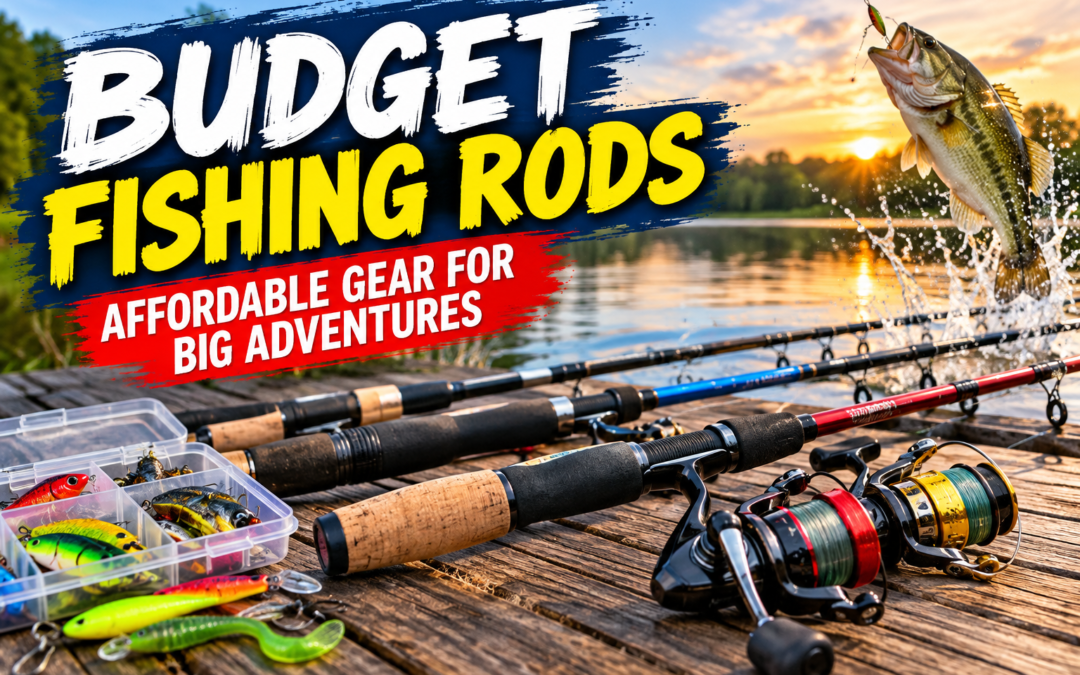
Finding budget fishing rods doesn't mean settling for poor quality. Today's manufacturers produce affordable rods that offer dependable performance, impressive durability, and features once found only in premium models. Whether you're buying your first setup, adding another rod to your collection, or shopping on a budget, there are plenty of options that deliver excellent value.
The key to choosing affordable equipment is understanding which features matter most. Instead of focusing only on price, compare construction, rod material, action, power, comfort, and the type of fishing you plan to do. A well-built budget rod that matches your fishing style will outperform an expensive rod designed for the wrong application.
If you're exploring different options, browse our complete collection of Fishing Rods. You can also compare specialized collections including Spinning Rods and Casting Rods.
For general guidance on choosing rod specifications, Take Me Fishing's fishing rod guide explains why anglers should consider factors such as length, power, action, line, and lure weight.
- Why Buy Budget Fishing Rods?
- What to Look for Before Buying
- 7 Types of Budget Fishing Rods to Consider
- Choosing the Right Material
- Selecting the Right Power
- Understanding Rod Action
- Why Budget Rods Are Great for Beginners
- Freshwater Applications
- Saltwater Applications
- Budget Fishing Rods Comparison Table
- Budget Fishing Rods and Rod-and-Reel Combos
- Frequently Asked Questions
Why Buy Budget Fishing Rods?
Many anglers assume lower-priced equipment automatically means lower quality, but that isn't always true. Modern manufacturing has made reliable fishing equipment more affordable than ever before. Entry-level and mid-range rods now incorporate quality graphite, fiberglass, and composite materials that provide dependable performance for recreational fishing.
Affordable equipment is an excellent choice for beginners who are learning different techniques without making a large financial investment. It also works well for experienced anglers who want additional setups for different species or fishing locations.
Budget-friendly rods are commonly used for shore fishing, kayak fishing, pier fishing, pond fishing, river fishing, and family outings where dependable performance matters more than premium features.
What to Look for Before Buying Budget Fishing Rods
Price should never be the only deciding factor. Instead, evaluate the overall build quality and whether the rod matches your intended fishing style.
Blank Construction
The blank is the backbone of every fishing rod. A properly constructed blank provides strength, casting distance, and sensitivity while maintaining consistent performance throughout repeated use.
Guide Quality
Rod guides should be securely wrapped, evenly aligned, and smooth enough to reduce friction on your fishing line. Quality guides improve casting distance while minimizing unnecessary wear.
Comfortable Handle
A comfortable grip becomes increasingly important during long fishing trips. Handles made from EVA foam or cork provide excellent comfort while maintaining a secure grip in both wet and dry conditions.
Reel Seat
The reel seat should firmly secure your fishing reel without loosening during repeated casting. A well-designed reel seat improves overall balance and helps maintain better control while fighting fish.
Overall Balance
A balanced setup reduces fatigue and improves casting accuracy. Even affordable rods should feel comfortable when paired with a properly sized reel.
7 Types of Budget Fishing Rods to Consider
1. Affordable Spinning Rods
Spinning rods are one of the easiest places for beginners to find useful budget equipment. They work with spinning reels and are suitable for many freshwater applications involving bait and lighter artificial lures.
A budget spinning rod can be used for panfish, trout, perch, smaller bass, and general freshwater fishing when its specifications match the application. See our spinning fishing rods guide for more information.
2. Budget Casting Rods
Casting rods can also be available at accessible prices. They are designed for use with casting reels and are commonly selected for bass fishing and techniques involving heavier lures.
When comparing budget casting rods, pay close attention to the lure range, power, and action. Our casting rods guide provides additional information.
3. Affordable Ultralight Rods
Ultralight rods are designed around smaller lures and lighter line. They can be an excellent option for anglers targeting trout, crappie, bluegill, perch, and other smaller freshwater species.
Because these rods are designed for light tackle, they should not be selected for heavy-duty fishing simply because they are inexpensive. Always check recommended lure and line ratings.
4. Budget Medium-Light Rods
Medium-light rods can provide an excellent balance between sensitivity and versatility. They are useful for anglers who want light tackle without moving all the way to ultralight equipment.
Depending on specifications, a medium-light rod can work for trout, walleye, perch, and bass finesse techniques.
5. Affordable Medium-Power Rods
Medium-power rods are frequently useful for general fishing because they sit near the middle of the power spectrum.
For a budget-conscious angler looking for one rod that can handle several everyday freshwater situations, a medium-power spinning rod may provide a practical starting point.
6. Budget Medium-Heavy Rods
Medium-heavy rods offer greater backbone and are commonly used for bass fishing and other situations involving heavier lures or stronger fish.
An affordable medium-heavy rod may be especially useful when fishing around vegetation, docks, timber, or other cover where additional control is needed.
7. Affordable Specialized Rods
Budget rods are also available for specialized applications such as catfish, trout, travel fishing, saltwater fishing, and other techniques.
Before purchasing a specialized rod, make sure the fishing application justifies having a dedicated setup. For occasional anglers, a versatile rod may provide better value.
Choosing the Right Material
Graphite
Graphite rods offer excellent sensitivity and lightweight performance, making them ideal for anglers who frequently cast artificial lures or require better bite detection.
Fiberglass
Fiberglass remains one of the most durable materials available. Its flexibility makes it forgiving when fighting fish and an excellent option for beginners or anglers targeting hard-fighting species.
Composite Construction
Composite rods combine graphite and fiberglass to create an excellent balance of strength, flexibility, and sensitivity. This makes them a versatile choice for anglers who enjoy multiple fishing techniques.
Selecting the Right Power
Rod power refers to the amount of force needed to bend the blank. Matching power to your target species and lure weight significantly improves performance.
- Ultra Light: Panfish and small trout.
- Light: Small freshwater species.
- Medium: Versatile everyday fishing.
- Medium Heavy: Bass and larger freshwater fish.
- Heavy: Heavy cover and larger species.
- Extra Heavy: Offshore and trophy fish.
Read our fishing rod power guide for more details.
Understanding Rod Action
Rod action influences how quickly the rod bends when pressure is applied. It affects casting performance, hook-setting speed, and lure presentation.
- Extra Fast: Maximum sensitivity and quick hooksets.
- Fast: Excellent all-around performance.
- Moderate: Smooth casting with better fish control.
- Slow: Ideal for lightweight presentations.
See our fishing rod action guide to learn more.
Why Budget Rods Are Great for Beginners
Beginners often benefit more from learning proper casting techniques than purchasing expensive equipment. Affordable rods provide an excellent opportunity to develop confidence while exploring different fishing styles.
Many entry-level rods now feature modern materials, ergonomic handles, and dependable construction that make them enjoyable to use for years. As skills improve, anglers can gradually expand their collection while keeping budget-friendly setups for guests, travel, or backup equipment.
If you're looking for reliable options, explore the Carbon R1 One Piece Fishing Rod, the Shimano Curado Spinning Rods, or the Okuma Serrano Spinning Rods available at Hooked Beginner.
Read our fishing rod buying guide for a broader introduction to selecting a setup.
Freshwater Applications
Budget-friendly freshwater rods excel in ponds, lakes, and streams. Whether you are targeting bass, trout, catfish, or panfish, matching the right power and action to your target species ensures success without overspending.
Saltwater Applications
While saltwater fishing demands corrosion resistance and sturdy components, affordable options exist for inshore and pier anglers. Always rinse gear with fresh water after exposure to marine environments. Take Me Fishing's saltwater rod and reel guide provides additional guidance.
Budget Fishing Rods Comparison Table
| Rod Type | Common Use | Main Benefit | What to Check |
|---|---|---|---|
| Spinning | General freshwater fishing | Versatility and ease of use | Length, power, action, reel compatibility |
| Casting | Bass and heavier lure techniques | Control and backbone | Lure range and power |
| Ultralight | Trout and panfish | Sensitivity | Light line and lure ratings |
| Medium-Light | Light freshwater applications | Balance of sensitivity and strength | Target species and lure weight |
| Medium | General-purpose fishing | Versatility | Line and lure range |
| Medium-Heavy | Bass and heavier presentations | Greater power | Technique and cover |
Budget Fishing Rods and Rod-and-Reel Combos
Some anglers can lower the complexity of their first purchase by choosing a rod-and-reel combo. Combos can be useful because components are selected to work together. Browse the spinning rod-and-reel combo category when comparing available setups.
Frequently Asked Questions About Budget Fishing Rods
Are budget fishing rods worth buying?
Yes. An affordable rod can provide useful performance when its specifications match the fishing technique, target species, lure weight, and line being used.
What is a good cheap fishing rod for beginners?
A versatile spinning rod is often a practical starting point for beginners because it can handle many common freshwater applications.
Should I buy an affordable spinning rod or casting rod?
Choose based on the techniques you intend to use. Spinning rods are common for lighter tackle, while casting rods are useful for heavier lures.
What is the best rod power for a budget fishing rod?
Medium and medium-light rods offer useful versatility for many everyday freshwater situations.
Can a budget fishing rod catch large fish?
An affordable rod can catch large fish when it is specifically designed and rated for the application.
Conclusion
The best budget fishing rods are the ones that deliver the specifications you need at a price that fits your fishing budget.
Start by identifying your target species, fishing environment, lure weight, and preferred technique. Then compare rod type, length, power, action, material, line rating, and reel compatibility to build a dependable setup.
Explore more helpful guides across Hooked Beginner, including fishing rods, rod length selection, and fishing reels.