
Fishing Rod Power Guide: Choose the Right Rod Strength
A complete Fishing Rod Power Guide is essential for anglers who want to choose a fishing rod that matches their target species, lure weight, and fishing style. Rod power affects casting performance, hook-setting strength, fish-fighting ability, and overall control, making it one of the most important specifications to understand before purchasing a new rod.
This Fishing Rod Power Guide explains what rod power means, how different power ratings perform on the water, and how to select the right rod for freshwater, saltwater, bass, trout, pike, surf, and offshore fishing. Whether you're buying your first rod or upgrading your current setup, this guide will help you make an informed decision.
Table of Contents
What Is Fishing Rod Power?
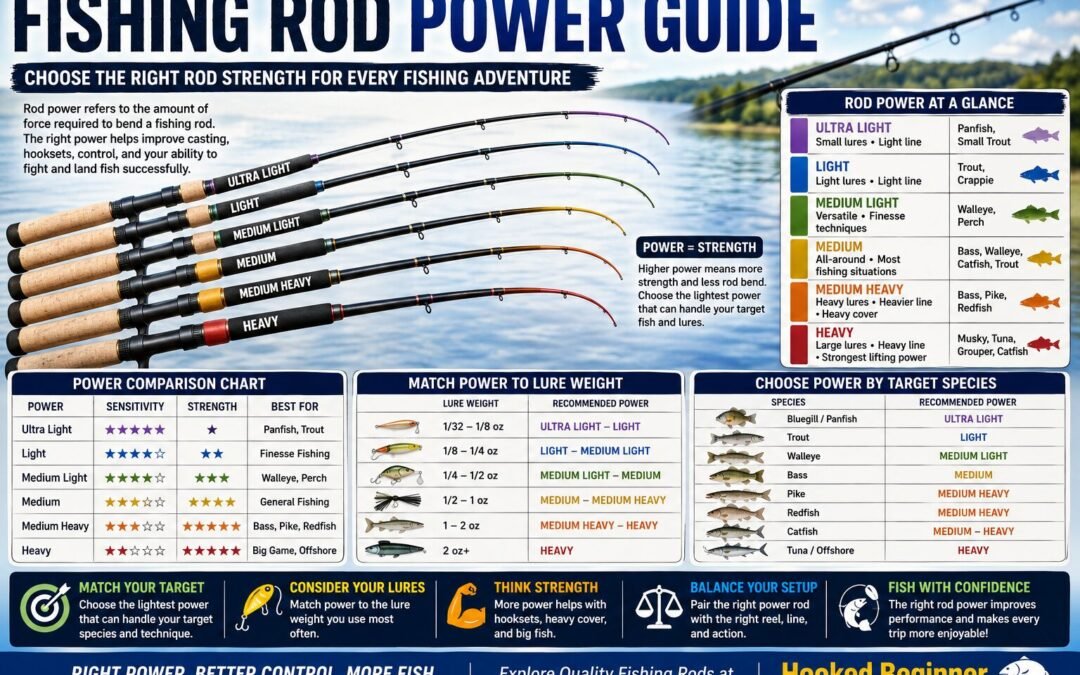
A Fishing Rod Power Guide begins by explaining that rod power refers to the amount of force required to bend a fishing rod. It measures the rod's overall strength rather than where the rod bends. Rod power works together with rod action, but the two specifications are not the same.
Choosing the correct rod power improves lure presentation, casting accuracy, hook-setting performance, and your ability to control fish during the fight. Understanding the basics covered in this Fishing Rod Power Guide helps eliminate guesswork when comparing fishing rods.
Browse our collection of Fishing Rods to compare spinning, casting, saltwater, and specialty models.
Fishing Rod Power Ratings
Every Fishing Rod Power Guide should explain the common power ratings used by rod manufacturers. Each power level is designed for different lure weights, fishing lines, and target species.
| Rod Power | Best Applications | Typical Target Species |
|---|---|---|
| Ultra Light | Small lures and finesse fishing | Panfish, small trout |
| Light | Lightweight presentations | Trout, crappie |
| Medium-Light | Versatile finesse fishing | Walleye, perch |
| Medium | General-purpose fishing | Bass, walleye, catfish |
| Medium Heavy | Heavy cover and larger fish | Bass, pike, redfish |
| Heavy | Large lures and offshore fishing | Musky, tuna, grouper |
This Fishing Rod Power Guide recommends a medium-power rod for most beginners because it offers excellent versatility across many fishing situations.
Light Power Fishing Rods
Light-power rods are designed for finesse techniques, lightweight lures, and smaller fish. A Fishing Rod Power Guide recommends these rods for anglers targeting trout, crappie, bluegill, and other species that require delicate presentations.
Advantages of Light Power Rods
- Excellent sensitivity.
- Ideal for lightweight lures.
- Long casting with small baits.
- More enjoyable fights with smaller fish.
- Perfect for finesse presentations.
Light-power rods pair exceptionally well with lightweight spinning reels and thin braided or monofilament fishing lines.
Medium Power Fishing Rods
A Fishing Rod Power Guide generally recommends medium-power rods for most anglers because they provide the best balance of versatility, sensitivity, casting performance, and fish-fighting ability. Medium-power rods are capable of handling a wide range of lure weights and are suitable for many freshwater species.
If you're unsure which rod to buy, this Fishing Rod Power Guide suggests starting with a medium-power spinning rod. It performs well for bass, walleye, trout, catfish, and many other popular game fish.
Advantages of Medium Power Rods
- Excellent all-around versatility.
- Compatible with many lure types.
- Ideal for beginners and experienced anglers.
- Balanced sensitivity and strength.
- Suitable for freshwater and light saltwater fishing.
Heavy Power Fishing Rods
Heavy-power rods are designed for large fish, heavy fishing lines, and demanding conditions. This Fishing Rod Power Guide recommends heavy-power rods for anglers targeting species such as musky, large catfish, grouper, tuna, and other powerful fish.
Heavy-power rods generate greater lifting strength and better control when fishing around heavy cover, docks, rocks, and offshore structures.
Advantages of Heavy Power Rods
- Maximum lifting strength.
- Handles heavy braided lines.
- Ideal for big fish.
- Excellent hook-setting power.
- Built for demanding conditions.
Fishing Rod Power Comparison
This Fishing Rod Power Guide compares the most common rod powers to help simplify your buying decision.
| Power | Sensitivity | Strength | Best For |
|---|---|---|---|
| Ultra Light | Excellent | Low | Panfish, trout |
| Light | Very High | Light | Finesse fishing |
| Medium | High | Balanced | General freshwater fishing |
| Medium Heavy | Good | High | Bass, pike, redfish |
| Heavy | Moderate | Maximum | Offshore and trophy fish |
This Fishing Rod Power Guide recommends medium power for anglers who fish a variety of species, while heavy power is best reserved for larger fish and challenging environments.
Choosing Rod Power by Target Species
One of the easiest ways to use this Fishing Rod Power Guide is by matching rod power to the fish you plan to catch most often.
| Target Species | Recommended Rod Power |
|---|---|
| Bluegill | Ultra Light |
| Trout | Light |
| Bass | Medium |
| Walleye | Medium-Light |
| Pike | Medium Heavy |
| Redfish | Medium Heavy |
| Catfish | Medium to Heavy |
| Tuna | Heavy |
This Fishing Rod Power Guide recommends choosing the lightest rod power that can comfortably handle your target species. Doing so improves sensitivity, casting accuracy, and overall fishing enjoyment.
Helpful collections:
How Rod Power Affects Fishing Performance
A complete Fishing Rod Power Guide should explain how rod power influences every stage of fishing, from casting and lure presentation to hook-setting and fighting fish. Selecting the proper power allows your rod to perform efficiently without sacrificing sensitivity or control.
Light-power rods excel with finesse techniques and lightweight lures, while medium-power rods provide outstanding versatility across many freshwater applications. Heavy-power rods generate the strength needed to pull large fish away from structure and control powerful saltwater species.
| Rod Power | Casting Performance | Fish Control |
|---|---|---|
| Ultra Light | Excellent with tiny lures | Light species only |
| Light | Excellent | Small to medium fish |
| Medium | Very Good | Excellent versatility |
| Medium Heavy | Good | Large freshwater fish |
| Heavy | Power-focused | Maximum control |
This Fishing Rod Power Guide recommends choosing rod power based on the lures and fish you encounter most often instead of simply selecting the strongest rod available.
Matching Rod Power to Lure Weight
Another important lesson in this Fishing Rod Power Guide is matching rod power with the lures you plan to throw. Proper pairing improves casting distance, lure action, and hook-up success.
| Lure Type | Recommended Rod Power |
|---|---|
| Small Soft Plastics | Light |
| Drop Shot Rigs | Light to Medium-Light |
| Spinnerbaits | Medium |
| Crankbaits | Medium |
| Jigs | Medium Heavy |
| Large Swimbaits | Heavy |
| Offshore Live Baits | Heavy |
Following this Fishing Rod Power Guide ensures your rod loads correctly during the cast and delivers the best possible lure performance.
Common Rod Power Mistakes
Understanding these common mistakes will help you get the most from this Fishing Rod Power Guide.
Choosing Too Much Power
Many anglers purchase rods that are much heavier than necessary. Overpowered rods reduce casting performance with smaller lures and make fighting average-sized fish less enjoyable.
Ignoring Lure Weight
A rod should match the lures you use most often. Selecting the proper rod power improves casting distance, accuracy, and lure presentation.
Confusing Power with Action
This Fishing Rod Power Guide emphasizes that rod power measures strength, while rod action describes where the rod bends. Understanding both specifications is essential when comparing fishing rods.
Not Balancing the Reel
Even the correct rod power can perform poorly if paired with the wrong reel size. A balanced outfit improves comfort, casting efficiency, and fish-fighting performance.
Recommended Fishing Rods
Ready to put this Fishing Rod Power Guide into practice? Explore these recommended rods on Hooked Beginner.
- St. Croix Premier 2025 Spinning Rods
- St. Croix Triumph Spinning Rods
- Shimano Curado Spinning Rods
- Shimano Grappler Type J Rods
- IMX Pro Blue Saltwater Rods
- Carbon R1 One Piece Fishing Rod
Continue Learning
- Fishing Rod Buying Guide
- How to Choose a Fishing Rod
- Fishing Rod Action Guide
- Fishing Reel Buying Guide
- Fishing Reel Maintenance Guide
Frequently Asked Questions
What rod power is best for beginners?
This Fishing Rod Power Guide recommends a medium-power rod for most beginners because it offers an excellent balance of sensitivity, casting performance, and strength. It works well for bass, trout, walleye, catfish, and many other freshwater species.
What is the difference between rod power and rod action?
One of the most important lessons in this Fishing Rod Power Guide is understanding that rod power measures the overall strength of the rod, while rod action describes where the rod bends under pressure. Both specifications work together but influence rod performance in different ways.
Should I choose a medium or medium-heavy rod?
If you primarily fish for bass, walleye, trout, or use a variety of lures, a medium-power rod is usually the better choice. Medium-heavy rods are better suited for heavier lures, thicker cover, larger fish, and stronger fishing lines.
Can I use a heavy-power rod for small fish?
You can, but it generally isn't recommended. Heavy-power rods reduce sensitivity with small lures and make smaller fish less enjoyable to fight. Choosing the lightest rod that safely handles your target species usually provides better overall performance.
Which rod power is best for saltwater fishing?
It depends on the species you target. Light and medium powers work well for inshore fishing, while medium-heavy and heavy-power rods are commonly used for offshore species such as tuna, grouper, amberjack, and other large game fish.
Final Thoughts
A complete Fishing Rod Power Guide gives anglers the knowledge needed to select a rod that matches their fishing style, target species, and preferred lure weights. Choosing the correct rod power improves casting efficiency, hook-setting performance, fish control, and overall comfort on the water.
Whether you're shopping for your first spinning rod or building a specialized offshore setup, understanding rod power will help you make smarter buying decisions and avoid equipment that doesn't match your fishing needs.
For the best results, evaluate rod power alongside rod action, rod length, reel compatibility, and fishing techniques. A balanced setup will always outperform equipment that is mismatched for the conditions.
Continue Exploring Hooked Beginner
- Shop Fishing Rods
- Browse Fishing Reels
- Explore Rod & Reel Combos
- Fishing Accessories
- Fishing Rod Buying Guide
Helpful External Resources
- Take Me Fishing – Learn more about fishing techniques, tackle selection, and beginner education.
- International Game Fish Association (IGFA) – Explore ethical angling practices, species information, and world-record catches.
- NOAA Fisheries – Access fisheries regulations, conservation information, and sustainable fishing resources.
Trackbacks/Pingbacks