
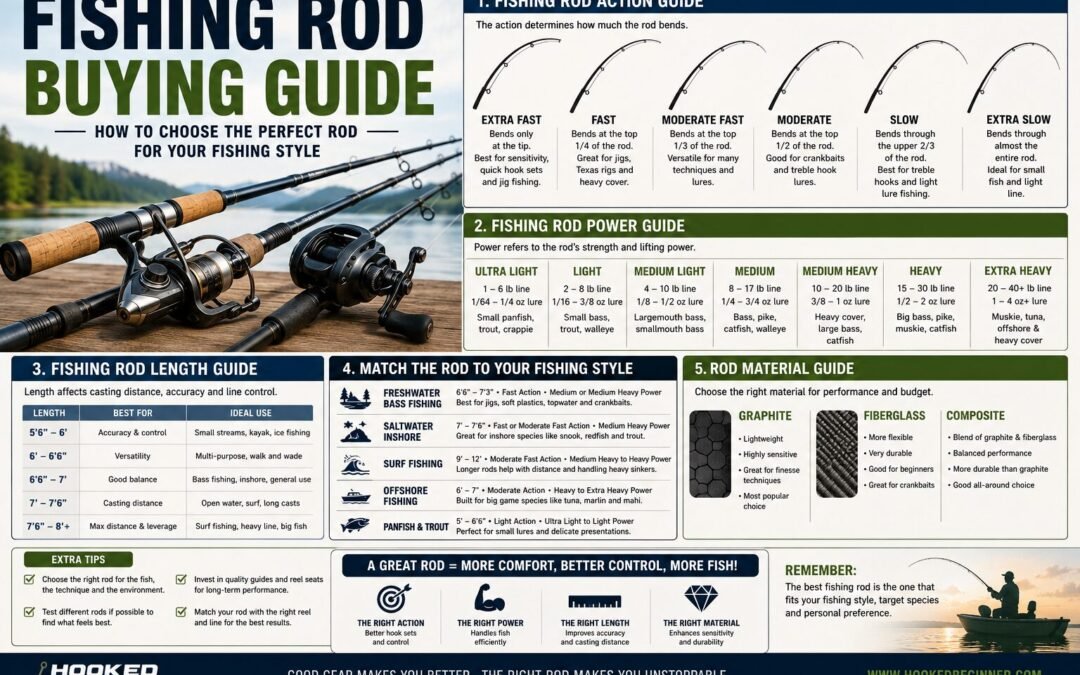
Fishing Rod Buying Guide: Choose the Perfect Rod for Every Fishing Style
A complete Fishing Rod Buying Guide is the best place to start if you're searching for a rod that matches your fishing style, target species, and experience level. Choosing the right fishing rod improves casting accuracy, hook-setting power, lure presentation, and overall enjoyment on the water. Whether you're fishing small ponds, freshwater lakes, rivers, surf beaches, or offshore waters, selecting the proper rod is one of the most important decisions an angler can make.
This Fishing Rod Buying Guide explains rod action, rod power, rod length, materials, and how to match the right rod with your fishing reel. By following this Fishing Rod Buying Guide, you'll understand exactly what to look for before purchasing your next fishing rod.
Table of Contents
Understanding Fishing Rods
A Fishing Rod Buying Guide starts by understanding what a fishing rod actually does. Modern fishing rods are designed to cast lures efficiently, absorb the force of fighting fish, improve sensitivity, and work together with your fishing reel as one balanced system.
Different fishing techniques require different rods. A lightweight trout rod performs very differently from a heavy offshore rod designed for tuna or large saltwater species. This Fishing Rod Buying Guide helps simplify those differences so you can confidently select the right equipment.
Browse our collection of Fishing Rods to compare spinning, casting, saltwater, and specialty fishing rods.
Fishing Rod Components
Every Fishing Rod Buying Guide should explain the basic parts of a fishing rod before discussing performance. Understanding these components makes it much easier to compare different rod models.
| Component | Purpose |
|---|---|
| Blank | Main body of the rod that provides strength and flexibility. |
| Handle | Provides grip and comfort while casting and fighting fish. |
| Reel Seat | Secures the fishing reel to the rod. |
| Guides | Direct the fishing line during casting and retrieval. |
| Tip | Provides sensitivity and detects subtle bites. |
A quality Fishing Rod Buying Guide recommends inspecting these components carefully before making a purchase, especially the guides and reel seat.
Choosing the Right Fishing Rod Length
Rod length has a significant impact on casting distance, lure control, hook-setting power, and fish-fighting ability. This Fishing Rod Buying Guide recommends selecting rod length based on where and how you fish most often.
| Rod Length | Best For |
|---|---|
| 5'6"–6' | Small streams and precision casting. |
| 6'–6'6" | General freshwater fishing. |
| 6'6"–7' | Bass, trout, walleye, and versatile fishing. |
| 7'–7'6" | Longer casting distance and larger fish. |
| 7'6"–10'+ | Surf fishing and offshore applications. |
This Fishing Rod Buying Guide recommends medium-length rods for most beginners because they provide an excellent balance between casting distance, accuracy, and versatility.
Fishing Rod Power Guide
A complete Fishing Rod Buying Guide must explain rod power because it determines how much force is required to bend the rod. Choosing the correct power improves casting performance, hook-setting ability, and fish-fighting control. This Fishing Rod Buying Guide recommends selecting rod power based on lure weight, fishing line, and target species rather than simply choosing the stiffest rod available.
Rod power ranges from ultra-light to extra-heavy, with each option designed for specific fishing situations. A balanced setup will always outperform a rod that is either too powerful or too light for the job.
| Rod Power | Best Applications | Target Species |
|---|---|---|
| Ultra Light | Finesse fishing | Panfish, Small Trout |
| Light | Small lures | Trout, Crappie |
| Medium Light | General finesse techniques | Bass, Walleye |
| Medium | All-around fishing | Bass, Pike, Walleye |
| Medium Heavy | Heavy cover | Bass, Redfish |
| Heavy | Offshore and large fish | Musky, Tuna, Grouper |
This Fishing Rod Buying Guide recommends a medium-power rod for most beginners because it offers the versatility to fish a wide range of lures and target multiple freshwater species.
Fishing Rod Action Guide
Every Fishing Rod Buying Guide should also explain rod action. Rod action describes where the rod bends under pressure. Understanding rod action helps anglers choose equipment that matches their fishing techniques and improves lure presentation.
This Fishing Rod Buying Guide separates rod actions into four general categories.
| Rod Action | Characteristics | Best For |
|---|---|---|
| Slow | Bends throughout most of the blank | Live bait, small fish |
| Moderate | Bends through the upper half | Crankbaits, treble hooks |
| Fast | Bends mainly near the tip | Jigs, worms, soft plastics |
| Extra Fast | Very sensitive tip section | Precision hook sets |
A Fishing Rod Buying Guide generally recommends fast-action rods for anglers looking for versatility, sensitivity, and strong hook-setting performance across many fishing techniques.
Fishing Rod Materials
Rod material plays a major role in weight, durability, sensitivity, and overall performance. This Fishing Rod Buying Guide recommends comparing rod materials carefully before choosing a model.
| Material | Advantages | Ideal Use |
|---|---|---|
| Fiberglass | Durable and forgiving | Beginners, trolling |
| Graphite | Lightweight and sensitive | Bass, freshwater fishing |
| Carbon Fiber | Extremely light and responsive | Premium performance |
| Composite | Balanced strength and flexibility | Versatile fishing styles |
This Fishing Rod Buying Guide recommends graphite and carbon fiber rods for anglers who value lightweight performance and improved sensitivity, while fiberglass remains an excellent option for durability and beginner-friendly use.
Matching Your Fishing Rod with the Right Reel
A Fishing Rod Buying Guide is incomplete without discussing rod and reel balance. The right reel complements the rod's length, power, and action, creating a setup that casts smoothly and feels comfortable throughout the day.
| Rod Type | Recommended Reel |
|---|---|
| Spinning Rod | Spinning Reel |
| Casting Rod | Baitcasting Reel |
| Boat Rod | Conventional Reel |
| Deep Drop Rod | Electric Reel |
Our Fishing Rod Buying Guide recommends choosing a balanced rod and reel combination rather than purchasing each component separately. A properly matched setup improves casting distance, lure control, and overall comfort.
Helpful collections:
Choosing a Fishing Rod by Target Species
A complete Fishing Rod Buying Guide should help anglers select a rod based on the fish they plan to catch most often. Different species require different rod lengths, powers, and actions to maximize casting performance and landing success. This Fishing Rod Buying Guide recommends choosing a rod that matches your primary fishing style instead of trying to find one rod for every situation.
| Target Species | Recommended Rod | Power |
|---|---|---|
| Trout | Spinning Rod | Light |
| Panfish | Ultralight Rod | Ultra Light |
| Bass | Spinning or Casting Rod | Medium |
| Walleye | Spinning Rod | Medium-Light |
| Pike | Casting Rod | Medium Heavy |
| Redfish | Saltwater Spinning Rod | Medium Heavy |
| Snook | Saltwater Spinning Rod | Medium Heavy |
| Tuna | Offshore Rod | Heavy |
Using this Fishing Rod Buying Guide together with the proper reel and fishing line creates a balanced setup that improves casting accuracy, sensitivity, and fish-fighting performance.
How to Test a Fishing Rod Before Buying
Whenever possible, inspect a rod before making your purchase. This Fishing Rod Buying Guide recommends checking build quality rather than relying only on specifications or brand names.
Things to Inspect
- Guide alignment and finish.
- Reel seat security.
- Handle comfort.
- Blank straightness.
- Rod balance.
- Overall weight.
- Build quality.
A quality Fishing Rod Buying Guide encourages anglers to hold the rod with a reel installed whenever possible to evaluate its balance and comfort.
Common Fishing Rod Buying Mistakes
Even experienced anglers occasionally purchase the wrong rod. Following this Fishing Rod Buying Guide can help you avoid expensive mistakes and choose equipment that matches your fishing style.
1. Buying the Wrong Rod Power
Many beginners purchase rods that are much heavier than necessary. A rod that matches your lure weight and target species will perform far better than one chosen simply because it feels stronger.
2. Ignoring Rod Action
Action affects casting, lure presentation, and hook-setting performance. This Fishing Rod Buying Guide recommends understanding rod action before comparing models.
3. Choosing the Wrong Length
Long rods generally cast farther, while shorter rods provide greater accuracy. Select the length that matches where you fish most often.
4. Ignoring Reel Compatibility
Always pair spinning rods with spinning reels and casting rods with baitcasting reels. Balanced equipment performs significantly better on the water.
5. Buying Based Only on Price
The most expensive rod isn't always the best choice. This Fishing Rod Buying Guide recommends focusing on quality, balance, and intended use before considering premium features.
Explore Fishing Rod Categories
If you're still comparing options, this Fishing Rod Buying Guide recommends browsing specialized rod categories before making your final decision.
- Fishing Rods
- Spinning Rods
- Casting Rods
- St. Croix Premier 2025 Spinning Rods
- Shimano Grappler Type J Rods
- IMX Pro Blue Saltwater Rods
- Carbon R1 One Piece Fishing Rod
Helpful Buying Guides
- Best Fishing Reels
- Best Spinning Reels
- Best Fishing Reels for Beginners
- Fishing Reels
- Fishing Accessories
Frequently Asked Questions
What is the best fishing rod for beginners?
A Fishing Rod Buying Guide generally recommends a 6'6" to 7' medium-power, fast-action spinning rod for beginners. This combination is versatile enough for bass, trout, walleye, panfish, and many other freshwater species while remaining easy to cast and control.
How do I choose the right fishing rod length?
This Fishing Rod Buying Guide recommends choosing rod length based on where you fish. Shorter rods provide greater casting accuracy in tight spaces, while longer rods improve casting distance and line control in open water.
What rod action is best for bass fishing?
Fast-action rods are commonly preferred for bass fishing because they offer excellent sensitivity, solid hook-setting power, and precise lure control. However, moderate-action rods remain popular for crankbaits and other treble-hook lures.
Should I choose graphite or fiberglass?
A Fishing Rod Buying Guide usually recommends graphite rods for anglers who prioritize sensitivity and lightweight performance. Fiberglass rods are heavier but extremely durable, making them excellent choices for beginners, trolling, and larger moving baits.
Can one fishing rod do everything?
Although no single rod is perfect for every situation, this Fishing Rod Buying Guide recommends a medium-power, fast-action spinning rod as the most versatile option for anglers who want one setup capable of handling multiple fishing techniques.
Final Thoughts
A reliable Fishing Rod Buying Guide makes choosing your next rod much easier by helping you understand rod length, power, action, materials, and reel compatibility. Instead of selecting a rod based only on price or brand, focus on the fishing techniques you use most often and the species you target regularly.
Whether you're buying your first spinning rod, upgrading to a premium casting rod, or investing in specialized surf or offshore equipment, following this Fishing Rod Buying Guide will help you build a balanced setup that improves casting distance, sensitivity, comfort, and fish-fighting performance.
Before making your final purchase, compare several rod models, read product specifications carefully, and match your rod with the appropriate reel, fishing line, and lure weights for the best possible experience on the water.
Continue Exploring Hooked Beginner
- Shop Fishing Rods
- Browse Fishing Reels
- Explore Rod & Reel Combos
- Fishing Accessories
- Best Fishing Reels
Helpful External Resources
- Take Me Fishing – Learn more about fishing techniques, tackle selection, and beginner education.
- International Game Fish Association (IGFA) – Discover ethical angling practices, fish species information, and world records.
- NOAA Fisheries – Access fisheries regulations, conservation information, and sustainable fishing resources.
Trackbacks/Pingbacks