
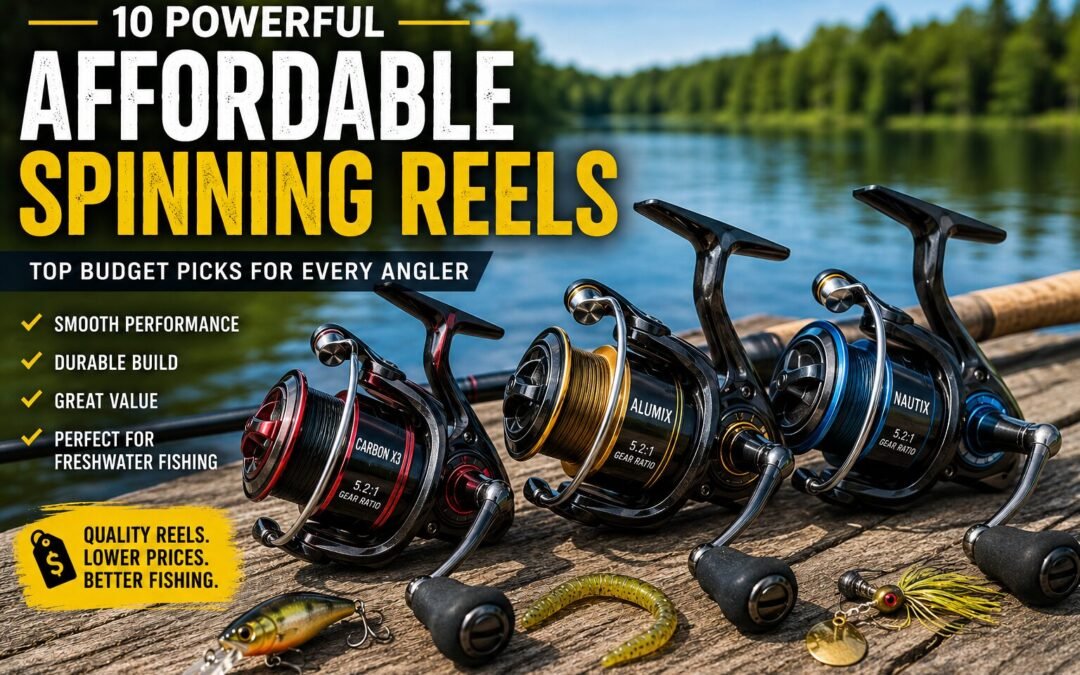
Fishing Reel Buying Guide: How to Choose the Right Reel for Every Fishing Style
If you're looking for the ultimate Fishing Reel Buying Guide, you've come to the right place. Choosing the right fishing reel can make the difference between landing your dream fish and missing opportunities on the water. Whether you're targeting bass in freshwater, casting for trout in rivers, battling redfish along the coast, or chasing tuna offshore, selecting the correct reel is one of the most important decisions every angler makes.
This Fishing Reel Buying Guide explains the major reel types, how they work, what features matter most, and how to choose the best model for your fishing style. You'll also learn about gear ratios, drag systems, reel sizes, bearings, construction materials, and matching reels with the right rods. By the end of this guide, you'll have the confidence to choose a fishing reel that fits your budget and performs reliably for years.
Table of Contents
Why Your Fishing Reel Matters
A fishing reel is much more than a line storage device. It controls casting distance, retrieves your lure, applies drag pressure during a fight, and helps you land fish efficiently. Buying the wrong reel often results in poor casting performance, unnecessary fatigue, tangled line, or equipment that simply isn't suited for your target species.
Modern fishing reels are designed for specific techniques. Some excel at finesse fishing with lightweight lures, while others are built for heavy offshore battles. Understanding these differences before buying will save money and improve your overall fishing experience.
If you're still deciding what type of reel you need, browse our complete collection of Fishing Reels to compare the most popular styles.
Fishing Reel Types Explained
The first step in any Fishing Reel Buying Guide is understanding the four major reel categories. Each one is designed for different fishing techniques and environments.
| Reel Type | Best For | Skill Level |
|---|---|---|
| Spinning Reel | Freshwater, inshore, beginners | Beginner to Expert |
| Casting Reel | Bass fishing, heavy lures, accuracy | Intermediate to Expert |
| Conventional Reel | Offshore trolling, bottom fishing | Intermediate to Expert |
| Electric Reel | Deep drop fishing | All Levels |
Spinning Reels
Spinning reels are the most versatile and beginner-friendly fishing reels available today. They are easy to cast, handle light lures exceptionally well, and work for everything from panfish and trout to bass, redfish, snook, and even offshore species when using larger models.
Because the spool remains stationary during casting, spinning reels dramatically reduce backlash compared to baitcasting reels. This makes them the preferred choice for new anglers while still being trusted by experienced fishermen worldwide.
Advantages
- Easy to learn
- Excellent for lightweight lures
- Minimal backlash
- Wide range of sizes
- Ideal for freshwater and saltwater
Recommended Internal Links
- Spinning Reels
- Best Spinning Reels
- Shimano Stella FK
- Penn Spinfisher VII
- Daiwa Saltist MQ
- Piscifun Carbon X3
Casting (Baitcasting) Reels
Baitcasting reels are designed for anglers who demand greater casting accuracy, improved lure control, and higher line strength. They are especially popular among bass anglers throwing heavier lures into cover, working jigs, flipping docks, or fishing around vegetation.
While baitcasters require more practice than spinning reels, they provide exceptional precision once mastered. Modern braking systems have also made them much easier to learn than older models.
Ideal Applications
- Bass fishing
- Heavy jigs
- Spinnerbaits
- Frogs
- Large crankbaits
- Power fishing techniques
Recommended Internal Links
Conventional Reels
Conventional reels, sometimes called overhead reels, are built for strength and durability. Unlike spinning reels, the spool rotates during both casting and retrieval, allowing these reels to handle heavy fishing line, larger sinkers, and powerful game fish. They are the preferred choice for offshore trolling, bottom fishing, jigging, and targeting species such as tuna, grouper, amberjack, halibut, and large snapper.
Many conventional reels feature either a star drag or lever drag system. Lever drag models are especially popular for offshore anglers because they allow precise drag adjustments during long battles with powerful fish.
Advantages of Conventional Reels
- Excellent line capacity
- Designed for heavy braided and monofilament lines
- Powerful drag systems
- Ideal for offshore fishing
- Built to withstand heavy loads
Best Uses
- Bottom fishing
- Deep sea fishing
- Live bait fishing
- Trolling
- Vertical jigging
Explore more options in our Conventional Reels collection.
Featured Conventional Reels
- Penn Fathom II Lever Drag
- Penn Fathom II Star Drag
- Shimano Talica II
- Penn Torque Offshore 2-Speed
- Daiwa Saltiga 300 Jigging Reel
Electric Fishing Reels
Electric fishing reels have transformed deep-drop fishing by reducing the effort required to retrieve heavy rigs from extreme depths. Powered by rechargeable batteries or external power sources, these reels allow anglers to fish efficiently in water hundreds or even thousands of feet deep.
Although originally designed for commercial fishing, electric reels are now widely used by recreational anglers targeting swordfish, tilefish, grouper, and deep-water snapper.
Benefits of Electric Reels
- Retrieves heavy rigs effortlessly
- Ideal for deep-water fishing
- Reduces physical fatigue
- Consistent retrieval speed
- Excellent for offshore anglers
Browse our complete selection of Electric Fishing Reels.
Featured Electric Reels
Important Features to Consider Before Buying
Every fishing reel may look similar at first glance, but several important features determine how it performs on the water. Understanding these features will help you invest in equipment that matches your fishing style instead of simply buying the most expensive reel available.
1. Reel Construction
Quality fishing reels are commonly built from graphite, aluminum, or carbon composite materials.
| Material | Advantages | Best For |
|---|---|---|
| Graphite | Lightweight and corrosion resistant | Freshwater |
| Aluminum | Strong and rigid | Saltwater |
| Carbon Composite | Lightweight with excellent strength | Premium reels |
2. Ball Bearings
Bearings reduce friction and create smoother operation. While many anglers focus on the number of bearings, quality matters far more than quantity. A reel with fewer high-quality stainless-steel bearings often outperforms one with many low-quality bearings.
3. Corrosion Resistance
If you fish in saltwater, corrosion resistance should be a top priority. Saltwater quickly damages untreated metal components. Look for sealed bearings, corrosion-resistant finishes, anodized aluminum frames, and stainless-steel internal parts.
4. Handle Comfort
Large ergonomic handles improve leverage and reduce fatigue during long fishing sessions, especially when targeting powerful saltwater species.
5. Weight
A lighter reel reduces arm fatigue during all-day casting, while heavier reels generally offer greater strength for offshore applications.
Choosing the Right Reel Size
One of the most common questions beginners ask is what reel size they should buy. Reel manufacturers use different sizing systems, but most spinning reels follow a similar pattern.
| Reel Size | Target Species |
|---|---|
| 1000–2500 | Panfish, Trout, Crappie |
| 2500–3000 | Bass, Walleye |
| 3000–4000 | Redfish, Snook, Pike |
| 5000–6000 | Surf Fishing, Salmon |
| 8000+ | Tuna, Shark, Offshore Species |
The correct reel size depends on your fishing rod, line strength, lure weight, and target species. A properly balanced setup casts farther, feels lighter in your hand, and improves overall control.
Recommended Reading
- Best Fishing Reels for Bass
- Best Fishing Reels Under $100
- Best Fishing Reels Under $200
- Best Saltwater Fishing Reels
Understanding Fishing Reel Gear Ratios
Gear ratio is one of the most important specifications to understand before purchasing a new fishing reel. It tells you how many times the spool rotates with one complete turn of the handle. A higher gear ratio retrieves line faster, while a lower gear ratio provides more cranking power for larger fish and high-resistance lures.
Rather than choosing the fastest reel available, match the gear ratio to your fishing technique. Fast-moving presentations benefit from higher ratios, while deep-diving crankbaits, live bait, and heavy offshore fishing often perform better with lower ratios.
| Gear Ratio | Retrieval Speed | Best Applications |
|---|---|---|
| 5.1:1 – 5.8:1 | Slow | Deep crankbaits, trolling, large swimbaits |
| 6.0:1 – 6.6:1 | Medium | All-around freshwater and saltwater fishing |
| 7.0:1 – 8.5:1 | Fast | Jigs, frogs, pitching, flipping, topwater lures |
For beginners, a medium gear ratio is usually the most versatile option because it performs well across many fishing situations without sacrificing too much power or speed.
Fishing Reel Drag Systems Explained
The drag system controls how much resistance a fish feels when it pulls line from the reel. A properly adjusted drag protects your fishing line from breaking while allowing you to tire out larger fish safely.
Modern fishing reels generally use one of three drag systems.
Front Drag
Common on spinning reels, front drag systems are easy to adjust and often provide the smoothest performance under heavy loads.
Rear Drag
Rear drag systems are simple to access while fighting fish, although they are generally found on entry-level spinning reels.
Lever Drag
Lever drag systems are popular on offshore conventional reels because they allow anglers to make quick, precise drag adjustments while battling large fish.
Star Drag
Star drag systems are commonly used on conventional reels and many baitcasters. They are reliable, durable, and excellent for a wide variety of fishing techniques.
Choosing the Best Reel for Your Target Species
Different fish require different tackle. Choosing a reel designed for your target species improves performance, increases landing success, and extends the life of your equipment.
| Target Species | Recommended Reel Type |
|---|---|
| Bass | Spinning or Baitcasting Reel |
| Trout | Lightweight Spinning Reel |
| Walleye | Medium Spinning Reel |
| Pike | Baitcasting or Large Spinning Reel |
| Redfish | Saltwater Spinning Reel |
| Snook | Saltwater Spinning Reel |
| Salmon | Large Spinning or Conventional Reel |
| Tuna | Heavy Conventional Reel |
| Swordfish | Electric or Conventional Reel |
If you're building a complete setup, remember that the reel should always complement the rod's power, action, and intended fishing technique.
Browse our selection of Fishing Rods to match your reel with the right rod.
Matching Your Reel with the Right Fishing Rod
Even the best fishing reel cannot perform at its full potential if paired with the wrong rod. Balance is essential. A lightweight spinning reel works best with a spinning rod of matching power and action, while heavy conventional reels should be paired with rods designed for offshore fishing.
When matching a rod and reel, consider:
- Rod length
- Rod power
- Rod action
- Line rating
- Lure weight
- Target species
Recommended categories:
Common Fishing Reel Buying Mistakes
Many anglers buy their first reel based only on price or appearance. While budget matters, choosing a reel that matches your fishing style is far more important.
Avoid These Common Mistakes
- Buying a reel that is too large for your rod.
- Choosing the highest gear ratio without considering fishing techniques.
- Ignoring corrosion resistance when fishing saltwater.
- Focusing only on bearing count instead of overall build quality.
- Purchasing an expensive offshore reel for freshwater fishing.
- Using oversized line that exceeds the reel's recommended capacity.
- Ignoring long-term maintenance requirements.
A little research before purchasing can save money and ensure your equipment performs well for years.
Trusted Fishing Reel Brands
Several manufacturers have built strong reputations for producing dependable fishing reels across different price ranges.
- Shimano Fishing Reels
- Daiwa Fishing Reels
- Penn Fishing Reels
- Abu Garcia Fishing Reels
- Okuma Fishing Reels
- Van Staal Fishing Reels
- KastKing Fishing Reels
Each brand offers reels designed for different budgets, fishing styles, and target species. Comparing features, construction quality, and intended use is often more valuable than choosing a reel based solely on brand recognition.
Frequently Asked Questions
What is the best fishing reel for beginners?
For most new anglers, a spinning reel is the easiest option to learn. It is simple to cast, handles lightweight lures well, and is less prone to backlash than a baitcasting reel. Pairing a quality spinning reel with a medium-power spinning rod creates a versatile setup for many freshwater and inshore fishing situations.
Should I choose a spinning reel or a baitcasting reel?
If you're just starting out or frequently use light lures, a spinning reel is usually the better choice. Baitcasting reels offer greater casting accuracy and power but require more practice to master. Experienced bass anglers often use baitcasters for techniques that demand precision and heavier line.
What reel size is best for bass fishing?
A 2500 to 3000 size spinning reel or a low-profile baitcasting reel is commonly used for bass fishing. The ideal size depends on your rod, line, lure weight, and fishing technique.
Can I use the same reel for freshwater and saltwater fishing?
Some reels are designed for both freshwater and saltwater use, but they should be rinsed thoroughly after every saltwater trip. Reels specifically built for saltwater generally feature corrosion-resistant materials, sealed bearings, and protective coatings that help extend their lifespan.
How often should I maintain my fishing reel?
Light cleaning after every fishing trip and a more thorough inspection several times each season will help maintain smooth performance. Reels used in saltwater should always be rinsed with fresh water after use and serviced according to the manufacturer's recommendations.
Final Thoughts
Choosing the right fishing reel doesn't have to be complicated. By understanding the different reel types, selecting the proper size, considering gear ratio and drag performance, and matching your reel to your target species, you'll make a purchase that improves both your confidence and success on the water.
Whether you're buying your first spinning reel, upgrading to a premium baitcaster, investing in a powerful offshore conventional reel, or exploring electric reels for deep-drop fishing, taking the time to compare features and intended applications will help you get the most value from your investment.
Before making your final decision, browse our complete collection of fishing gear to compare categories, brands, and top-rated products:
- Fishing Reels
- Fishing Rods
- Rod & Reel Combos
- Fishing Accessories
- Best Fishing Reels
- Best Spinning Reels
- Best Saltwater Fishing Reels
Helpful External Resources
- Take Me Fishing – Learn fishing techniques, conservation practices, and beginner-friendly tips.
- International Game Fish Association (IGFA) – Explore ethical angling practices, species information, and world fishing records.
- NOAA Fisheries – Stay informed about sustainable fishing, regulations, and marine conservation.