
Best Fly Fishing Rods: The Complete Buyer's Guide
Best Fly Fishing Rods are designed to deliver exceptional casting precision, smooth line control, and delicate fly presentations across a variety of freshwater and saltwater environments. Whether you're targeting trout in mountain streams, chasing bass on local lakes, pursuing salmon in powerful rivers, or exploring saltwater flats, choosing the right fly rod significantly improves your casting efficiency and overall fishing experience.
Unlike conventional fishing equipment, fly rods cast the weight of the fly line instead of the lure. This unique casting method allows anglers to present lightweight flies naturally while maintaining excellent control over distance, accuracy, and presentation. Selecting the proper rod length, weight, action, and construction ensures your equipment performs exactly as needed for your preferred fishing style.
Modern manufacturers offer fly rods for virtually every species and environment. Understanding the differences between rod weights, actions, materials, and applications helps anglers invest in equipment that delivers reliable performance season after season.
At Hooked Beginner, anglers can explore premium Fishing Rods, complete Fly Fishing Combos, and high-quality fishing gear designed for anglers of every skill level.
Table of Contents
- Why Choose the Best Fly Fishing Rods?
- Understanding Fly Rod Weights
- Fly Rod Actions Explained
- Choosing the Right Fly Rod Length
- Fly Rod Materials
- Matching Fly Rods to Fish Species
- Features to Compare
- Buying Guide
Why Choose the Best Fly Fishing Rods?
Best Fly Fishing Rods are engineered to provide smooth casting performance, lightweight balance, excellent sensitivity, and dependable fish-fighting power. High-quality fly rods allow anglers to make accurate presentations while reducing fatigue during long days on the water.
Well-designed fly rods also improve line control, making it easier to mend line, manage drifts, and present flies naturally in moving water. These advantages become increasingly important when targeting selective fish that demand realistic presentations.
Understanding Fly Rod Weights
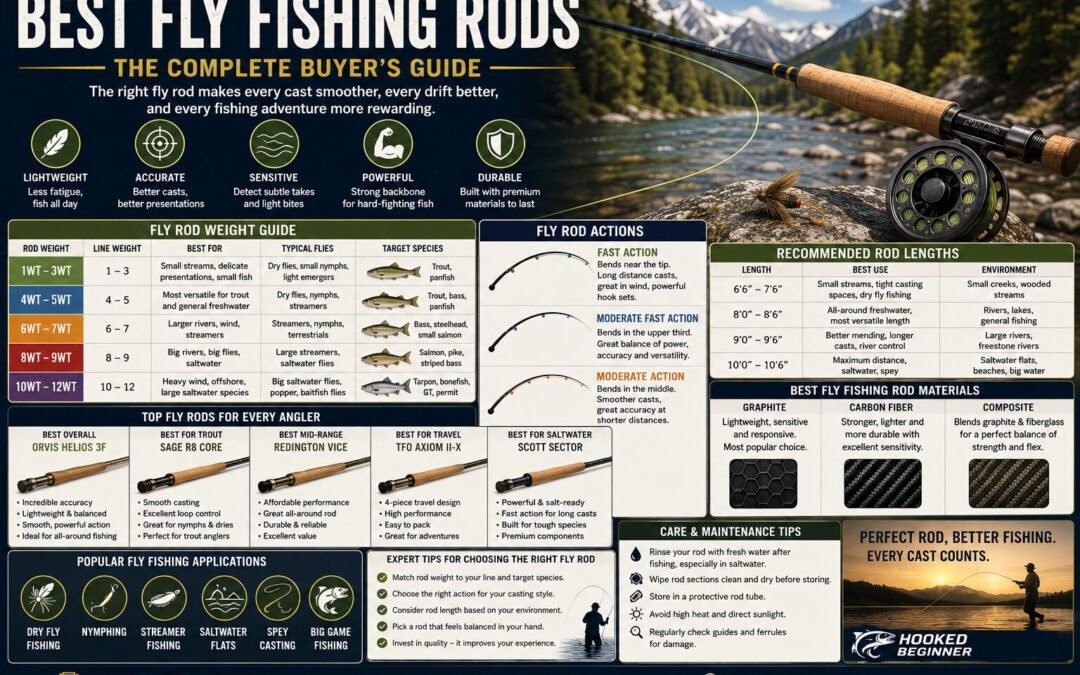
Fly rod weight refers to the weight of the fly line the rod is designed to cast efficiently. Selecting the proper weight helps maximize casting performance and fish-fighting capability.
Light Weights
Lighter fly rods excel when targeting smaller fish using tiny dry flies and delicate presentations. They provide exceptional sensitivity and make fighting smaller fish enjoyable.
Medium Weights
Medium-weight rods remain among the most versatile options available, handling dry flies, nymphs, streamers, and a wide variety of freshwater species.
Heavy Weights
Heavier fly rods generate additional casting power for larger flies, windy conditions, bigger fish, and saltwater applications where stronger equipment becomes essential.
Fly Rod Actions Explained
Rod action describes how the blank flexes during casting and while fighting fish. Different actions suit different casting styles and fishing conditions.
Fast Action
Fast-action fly rods bend primarily near the tip, generating higher line speeds and longer casts. They perform exceptionally well in windy conditions and when casting larger flies.
Moderate Fast Action
This balanced action combines power with forgiveness, making it suitable for anglers who fish multiple techniques throughout the season.
Moderate Action
Moderate-action rods load deeply during the cast, providing smooth presentations and excellent accuracy at shorter distances while protecting lighter tippets.
Choosing the Right Fly Rod Length
Fly rod length influences casting distance, line control, mending ability, and presentation quality.
- Shorter rods provide excellent accuracy in tight streams and heavily wooded environments.
- Medium-length rods offer balanced versatility for rivers and lakes.
- Longer rods improve casting distance, line mending, and drift control on larger rivers and open water.
Selecting the proper length depends on the waters you fish most frequently and the casting techniques you prefer.
Fly Rod Materials
Graphite
Graphite remains the most popular material due to its lightweight construction, sensitivity, and excellent casting performance.
Carbon Fiber
Carbon fiber blanks provide outstanding strength-to-weight ratios while maintaining exceptional responsiveness and casting efficiency.
Composite Construction
Composite rods combine multiple materials to create balanced performance, durability, and versatility across many fly fishing situations.
Matching Fly Rods to Fish Species
The Best Fly Fishing Rods vary depending on the species being targeted and the fishing conditions encountered.
- Trout fishing.
- Bass fishing.
- Panfish.
- Salmon.
- Steelhead.
- Pike.
- Carp.
- Redfish.
- Bonefish.
- Saltwater flats species.
Matching your rod to the target species improves casting efficiency, fish control, and overall enjoyment on the water.
Features to Compare
- Rod weight.
- Rod length.
- Rod action.
- Blank construction.
- Guide quality.
- Handle material.
- Reel seat.
- Overall balance.
- Warranty.
- Value for money.
Comparing these features allows anglers to confidently select equipment that matches both their experience level and fishing goals.
Best Fly Fishing Rods Buying Guide
Before purchasing the Best Fly Fishing Rods, consider the species you target most often, your preferred fishing environment, fly size, casting distance, and personal casting style. A properly balanced fly rod improves accuracy, reduces fatigue, and increases confidence on every outing.
Hooked Beginner offers premium fishing equipment designed to support anglers from their very first cast to years of successful fishing adventures.
For additional fly fishing education and conservation information, visit the International Game Fish Association, Take Me Fishing, and NOAA Fisheries.