
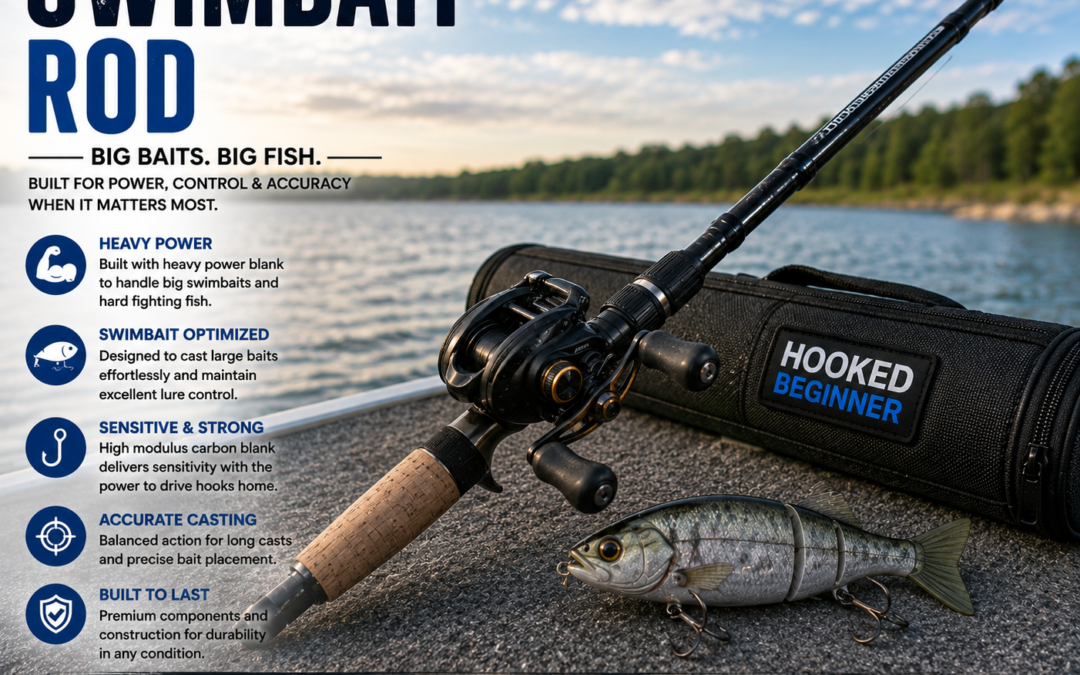
Bass fishing isn't one technique — it's a dozen different ones, and each demands something slightly different from your gear. A swimbait rod built for throwing heavy glide baits all day handles completely differently than a finesse rod built for detecting a subtle pickup on a drop shot. Using the wrong rod for the technique is one of the most common reasons beginners miss fish they should be landing.
This guide breaks down the rods behind bass fishing's core techniques — swimbait, frog, jig, and finesse — so you can match your setup to how you actually fish.
Table of Contents
Swimbait Rod Basics
A swimbait rod needs to do two things well: cast a heavy, often bulky lure accurately, and have enough backbone to drive a hook into a bass that's already committed to eating a big meal. Most swimbait rods run medium-heavy to heavy power with a moderate-fast action, giving enough flex to load up on the cast without sacrificing the hookset power you need on the take.
Glide baits in particular put unique demands on a swimbait rod — the retrieve requires a rod that can impart action through subtle rod-tip movement while still having backbone in reserve.
Frog Fishing Rods
Frog fishing is a different animal entirely. You're typically working a hollow-body frog through heavy vegetation, and hooksets need to be immediate and powerful to pull a bass up and out of cover before it wraps you around a weed stalk. Frog rods tend to run heavy power with a fast action — stiffer than a typical swimbait rod, prioritizing hookset strength over castability.
Jig Rods
Jig fishing rewards sensitivity. You're often working a jig slowly along the bottom, feeling for subtle taps or the telltale "mush" of a bass inhaling the bait. A good jig rod balances enough backbone for a solid hookset with enough sensitivity in the tip to actually feel what's happening down there — usually a medium-heavy, fast action rod.
Finesse and Drop Shot Rods
Finesse techniques — drop shot, shaky head, wacky rig — are the opposite of frog fishing in terms of gear philosophy. These setups use lighter line and subtler presentations, so a finesse rod needs a softer tip to prevent tearing hooks out of light-biting bass while still maintaining backbone in the lower half of the blank for the hookset. Medium or medium-light power with a fast action is typical here.
Technique-Matched Rod & Combo Picks
Rather than buying rods and reels separately for every technique, several pre-matched combos take the guesswork out of pairing action and power correctly:
- Best for jerkbait technique: Megabass Levante Jerkbait Combo
- Best for spinnerbait technique: Westin W2 Spinnerbait Combo
- Best for glide bait / swimbait rod setup: Svartzonker Horizon Curado Combo
- Best all-around bass technique combo: Gator Mirage Oblivion Combo
- Best for panfish-to-bass crossover technique fishing: Axel Aslund Gator Big Perch Combo
- Best premium technique-specific setup: Megabass Tequila Baccarac Ryoga Combo
- Best value all-purpose combo: Wolfcreek Damn You Rod Combo
For exact power, action, and line ratings, check each product page — specifications vary by size and configuration selected.
How to Choose Based on Your Style
If you had to own just one rod and had to pick a lane, most beginners are best served starting with a medium-heavy, fast-action rod — it flexes enough to handle jig and moderate swimbait rod duties while still having enough backbone for a decent hookset on heavier techniques. As your technique preferences narrow, that's when it makes sense to add a dedicated finesse rod or frog rod to the lineup. Browse our full bass fishing rods and fishing reels collections to build out a technique-specific setup.
Frequently Asked Questions
Can I use one rod for all bass techniques?
You can, but you'll be compromising somewhere. A medium-heavy, fast-action rod is the most versatile single option, but dedicated swimbait, frog, and finesse rods will each outperform a generalist rod within their specific technique.
What action is best for a swimbait rod?
Moderate-fast is typical — enough flex to load properly on the cast with a heavier bait, while retaining enough backbone in the butt section for a solid hookset.
Why do frog rods need to be so stiff?
Frog fishing usually happens in heavy cover, so an immediate, powerful hookset is needed to pull the bass up and out before it can wrap you around vegetation — a softer rod simply can't generate that same hookset speed.
What line works best with a finesse rod?
Lighter fluorocarbon or braid-to-fluorocarbon leader setups are common with finesse rods, since the softer tip is designed specifically to protect lighter line from snapping on the hookset.
Bass fishing isn't one technique — it's a dozen different ones, and each demands something slightly different from your gear. A swimbait rod built for throwing heavy glide baits all day handles completely differently than a finesse rod built for detecting a subtle pickup on a drop shot. Using the wrong rod for the technique is one of the most common reasons beginners miss fish they should be landing.
This guide breaks down the rods behind bass fishing's core techniques — swimbait, frog, jig, and finesse — so you can match your setup to how you actually fish.
Table of Contents
Swimbait Rod Basics
A swimbait rod needs to do two things well: cast a heavy, often bulky lure accurately, and have enough backbone to drive a hook into a bass that's already committed to eating a big meal. Most swimbait rods run medium-heavy to heavy power with a moderate-fast action, giving enough flex to load up on the cast without sacrificing hookset power on the take.
Frog Fishing Rods
Frog fishing is a different animal entirely. You're typically working a hollow-body frog through heavy vegetation, and hooksets need to be immediate and powerful to pull a bass up and out of cover before it wraps you around a weed stalk. Frog rods tend to run heavy power with a fast action — stiffer than a typical swimbait rod, prioritizing hookset strength over castability.
Jig Rods
Jig fishing rewards sensitivity. You're often working a jig slowly along the bottom, feeling for subtle taps or the telltale "mush" of a bass inhaling the bait. A good jig rod balances enough backbone for a solid hookset with enough sensitivity in the tip to actually feel what's happening down there — usually a medium-heavy, fast action rod.
Finesse and Drop Shot Rods
Finesse techniques — drop shot, shaky head, wacky rig — are the opposite of frog fishing in terms of gear philosophy. These setups use lighter line and subtler presentations, so a finesse rod needs a softer tip to prevent tearing hooks out of light-biting bass while still maintaining backbone in the lower half of the blank for the hookset. Medium or medium-light power with a fast action is typical here.
Technique-Matched Combo Picks
Rather than buying rods and reels separately for every technique, several pre-matched combos take the guesswork out of pairing action and power correctly:
- Best for jerkbait technique: Megabass Levante Jerkbait Combo
- Best for spinnerbait technique: Westin W2 Spinnerbait Combo
- Best for glide bait / swimbait rod setup: Svartzonker Horizon Curado Combo
- Best all-around bass technique combo: Gator Mirage Oblivion Combo
- Best value all-purpose combo: Wolfcreek Damn You Rod Combo
For exact power, action, and line ratings, check each product page — specifications vary by size and configuration selected.
How to Choose Based on Your Style
If you had to own just one rod and had to pick a lane, most beginners are best served starting with a medium-heavy, fast-action rod — it flexes enough to handle jig and moderate swimbait rod duties while still having enough backbone for a decent hookset on heavier techniques. As your technique preferences narrow, that's when it makes sense to add a dedicated finesse rod or frog rod to the lineup. Browse our full bass fishing rods and fishing reels collections to build out a technique-specific setup. For technique breakdowns straight from competitive anglers, Bassmaster is a great ongoing resource as you refine your approach.
Frequently Asked Questions
Can I use one rod for all bass techniques?
You can, but you'll be compromising somewhere. A medium-heavy, fast-action rod is the most versatile single option, but dedicated swimbait, frog, and finesse rods will each outperform a generalist rod within their specific technique.
What action is best for a swimbait rod?
Moderate-fast is typical — enough flex to load properly on the cast with a heavier bait, while retaining enough backbone in the butt section for a solid hookset.
Why do frog rods need to be so stiff?
Frog fishing usually happens in heavy cover, so an immediate, powerful hookset is needed to pull the bass up and out before it can wrap you around vegetation.
What line works best with a finesse rod?
Lighter fluorocarbon or braid-to-fluorocarbon leader setups are common, since the softer tip is designed to protect lighter line from snapping on the hookset.