
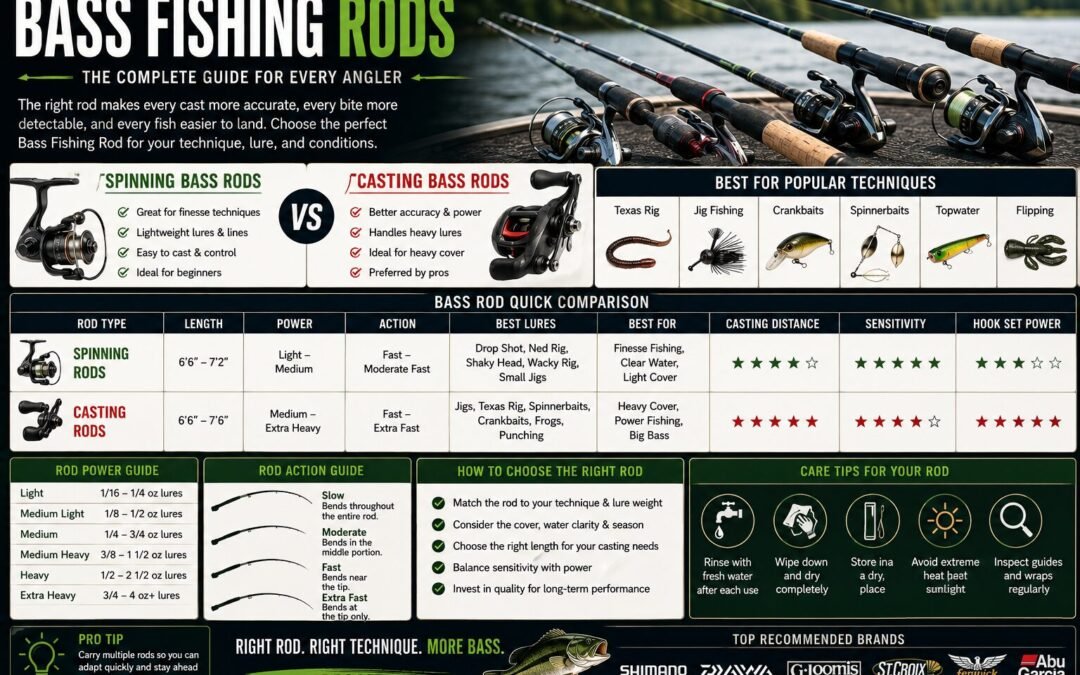

Bass Fishing Rods: The Complete Guide for Every Angler
Bass Fishing Rods are designed to help anglers cast accurately, detect subtle strikes, and fight one of the most popular freshwater game fish with confidence. Whether you enjoy fishing ponds, rivers, reservoirs, or large lakes, selecting the right rod plays a major role in your success on the water.
Modern Bass Fishing Rods combine lightweight construction, premium graphite blanks, responsive actions, and durable components to provide greater sensitivity and casting performance. The right rod allows anglers to present lures naturally, set hooks quickly, and maintain complete control throughout the fight.
Because bass anglers use many different techniques—from finesse presentations to heavy-cover fishing—no single rod fits every situation. Understanding rod length, power, action, and materials will help you choose equipment that complements your fishing style and target conditions.
At Hooked Beginner, you'll find quality equipment for every angler. Browse our collection of Fishing Rods, compare premium Spinning Rods, or explore our high-performance Casting Rods.
Table of Contents
- Why Bass Fishing Rods Matter
- Types of Bass Fishing Rods
- Key Features to Compare
- Rod Materials
- Choosing the Right Length
- Power and Action
- Buying Guide
Why Bass Fishing Rods Matter
The quality of your equipment directly influences your fishing experience. Premium Bass Fishing Rods improve casting accuracy, lure control, hook-setting power, and fish-fighting performance. They also reduce fatigue during long days on the water by providing better balance and lighter overall weight.
Choosing the right Bass Fishing Rods allows anglers to fish confidently around docks, submerged timber, vegetation, rocky banks, and open water while maintaining excellent sensitivity to detect even the lightest bites.
Types of Bass Fishing Rods
Spinning Bass Fishing Rods
Spinning Bass Fishing Rods are excellent for beginners and experienced anglers alike. They perform exceptionally well with lightweight lures, finesse techniques, soft plastics, drop shots, and shaky heads while offering outstanding casting control.
Casting Bass Fishing Rods
Casting Bass Fishing Rods provide greater accuracy and power for heavier lures, jigs, frogs, spinnerbaits, and flipping techniques. They are commonly used when fishing heavy cover or targeting larger bass.
Key Features to Compare
Before selecting Bass Fishing Rods, compare the following characteristics:
- Rod length.
- Power rating.
- Rod action.
- Overall weight.
- Blank construction.
- Guide quality.
- Handle material.
- Reel seat comfort.
- Balance.
- Warranty.
Materials Used in Bass Fishing Rods
Graphite
Graphite blanks provide excellent sensitivity, making them ideal for feeling subtle bass bites and maintaining excellent lure control.
Carbon Fiber
Many premium Bass Fishing Rods utilize advanced carbon fiber construction to maximize strength while minimizing overall weight.
Composite Construction
Composite rods blend graphite and fiberglass to create versatile equipment that balances durability, flexibility, and responsiveness.
Choosing the Right Bass Fishing Rod Length
Rod length affects casting distance, leverage, and lure presentation.
- Shorter rods improve casting accuracy around docks and heavy cover.
- Medium-length rods offer excellent versatility.
- Longer rods increase casting distance and hook-setting leverage.
Selecting the proper length depends on your fishing style, lure selection, and preferred fishing locations.
Understanding Rod Power and Action
Power describes the rod's lifting strength, while action describes where the rod bends under pressure. Together, these characteristics determine how effectively Bass Fishing Rods cast lures, detect strikes, and fight fish.
- Light Power
- Medium-Light Power
- Medium Power
- Medium-Heavy Power
- Heavy Power
- Extra Heavy Power
Fast-action rods excel for worms and jigs, while moderate actions perform well with crankbaits and moving lures.
Bass Fishing Rods Buying Guide
Before purchasing Bass Fishing Rods, consider the waters you fish most often, your preferred techniques, and the species you target. Investing in quality equipment improves casting consistency, comfort, and long-term durability.
Hooked Beginner offers dependable products including the Carbon R1 One Piece Fishing Rod, Shimano Curado Spinning Rods, and Okuma Serrano Spinning Rods, giving anglers premium options for bass fishing applications.
Why Quality Bass Fishing Rods Are Worth the Investment
High-quality Bass Fishing Rods provide superior sensitivity, improved casting performance, stronger hooksets, and greater durability. They also maintain their performance over years of regular fishing, making them an excellent long-term investment for anglers of every skill level.
Whether you're fishing from the bank, a kayak, or a bass boat, choosing dependable Bass Fishing Rods helps improve confidence and increases your chances of landing more fish.
For additional fishing education and conservation resources, visit the International Game Fish Association, Take Me Fishing, and NOAA Fisheries.
Common Bass Fishing Techniques and the Right Rod Setup
Successful bass anglers rarely rely on a single presentation throughout the day. Weather conditions, water clarity, structure, forage, and seasonal movements all influence how bass behave. Because of this, selecting the proper rod for each technique can improve casting efficiency, lure presentation, hook-setting power, and fish control.
Finesse techniques often require lightweight tackle capable of presenting small soft plastics naturally. A responsive rod allows anglers to detect subtle bites that might otherwise go unnoticed. These setups excel when bass become pressured or less aggressive during clear-water conditions.
Power fishing techniques demand equipment with greater backbone. Fishing around heavy vegetation, submerged timber, boat docks, or thick brush requires rods capable of pulling fish away from cover before they become tangled. Stronger equipment also performs better when throwing heavier lures over long distances.
Reaction lures such as crankbaits, spinnerbaits, chatterbaits, and swimbaits benefit from rods that load smoothly during casting while maintaining consistent pressure throughout the fight. Matching the rod to the lure creates a more balanced fishing setup and helps reduce lost fish.
Matching Your Reel with Your Rod
A fishing rod performs best when paired with an appropriately sized reel. Proper balance reduces fatigue during long fishing trips while improving casting accuracy and lure control. An oversized reel may create unnecessary weight, while a reel that is too small can reduce overall performance.
Spinning reels remain popular for finesse fishing because they handle lighter lines and lightweight lures exceptionally well. They are easy to cast and offer excellent versatility for anglers of every experience level.
Baitcasting reels provide greater casting precision and increased power for heavier lures. Their design allows experienced anglers to place lures accurately around docks, fallen trees, weed beds, and shoreline cover where bass frequently hide.
Choosing a balanced rod-and-reel combination creates a more comfortable fishing experience while increasing efficiency throughout the day.
Selecting the Right Fishing Line
The fishing line you choose also affects the overall performance of your equipment. Different line materials offer unique advantages depending on fishing conditions and lure selection.
Monofilament line remains a versatile option because it is easy to manage, stretches under pressure, and works well for many general-purpose applications. It performs especially well with topwater presentations where floating characteristics are beneficial.
Fluorocarbon sinks more readily and offers excellent abrasion resistance, making it a popular choice when fishing around rocks, wood, or submerged vegetation. Its lower visibility underwater can also improve lure presentation in clear conditions.
Braided line provides exceptional strength for its diameter while delivering outstanding sensitivity. Many anglers rely on braided line when fishing heavy vegetation because it cuts through weeds more effectively and offers excellent hook-setting power.
Seasonal Considerations
Bass behavior changes significantly throughout the year. Understanding seasonal patterns allows anglers to choose equipment that complements changing fishing conditions.
During spring, bass often move into shallow water for spawning. Accurate casting becomes especially important when targeting visible fish around shoreline cover and spawning beds.
Summer frequently pushes bass toward deeper structure during the hottest parts of the day. Longer casts and deeper presentations often become necessary to reach actively feeding fish.
Autumn creates excellent opportunities as bass feed aggressively before winter. Fast-moving lures and efficient search techniques often become highly productive during this season.
Winter fishing generally requires slower presentations and greater sensitivity to detect light bites from less active fish. Balanced equipment becomes especially valuable when fishing methodically in colder water.
Maintaining Your Equipment
Regular maintenance helps preserve casting performance and extends the lifespan of your fishing equipment. After every trip, inspect guides for cracks or damage that could weaken fishing line during future outings.
Clean the rod using a soft cloth to remove dirt, salt, algae, and debris. If the rod has been used in saltwater, rinse it thoroughly with fresh water before storage to reduce corrosion.
Periodically examine the reel seat, handle, guide wraps, and blank for signs of wear. Addressing minor issues early helps prevent more significant problems later.
Store rods vertically or horizontally using proper rod racks whenever possible. Avoid placing heavy objects on top of them, and protect them from prolonged exposure to excessive heat or direct sunlight.
Choosing Equipment That Grows with Your Skills
As anglers gain experience, their equipment preferences often evolve. Investing in quality gear from the beginning provides a solid foundation for learning new techniques while minimizing the need for frequent upgrades.
Rather than purchasing equipment based solely on price, consider overall craftsmanship, comfort, versatility, and long-term durability. A well-designed rod can remain a dependable part of your fishing setup for many seasons with proper care.
Developing confidence in your equipment allows you to focus less on the gear itself and more on locating fish, improving presentations, and refining your techniques. Over time, experience on the water becomes the greatest teacher, and dependable equipment simply helps you make the most of every opportunity.