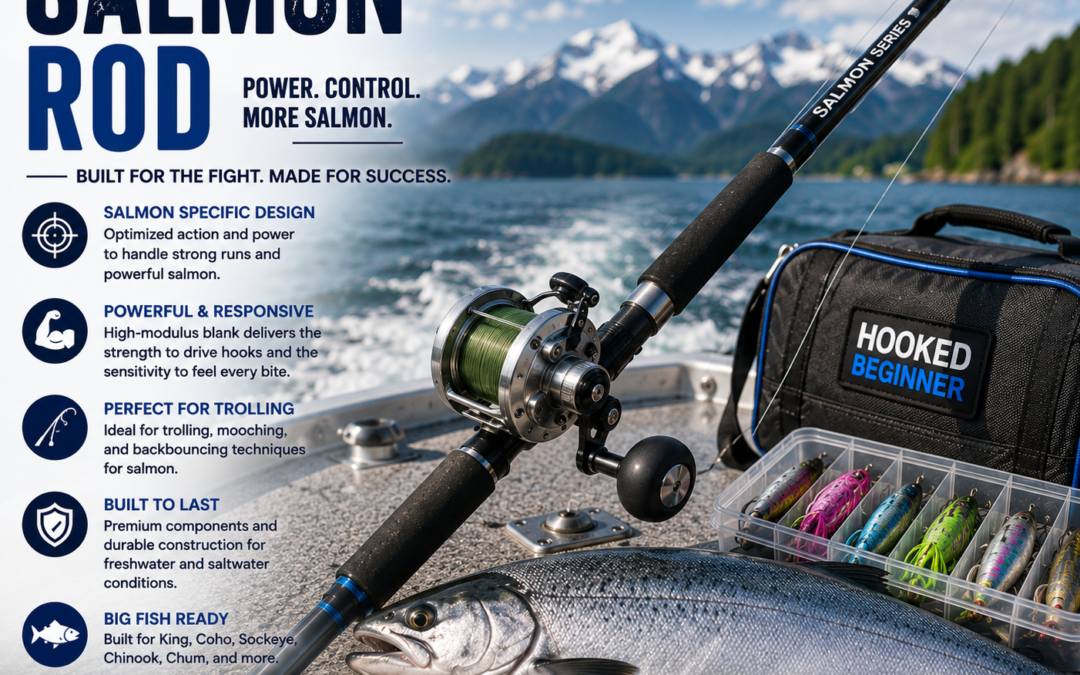
Salmon don't just bite — they fight. A hooked salmon can peel line on a hard run that catches unprepared anglers completely off guard, and a salmon rod that isn't built for that kind of pressure will either lose the fish or, worse, snap under the strain. Choosing the right salmon rod is one of the most important decisions you'll make before your first trip.
This guide covers what actually matters when choosing a salmon rod as a beginner, from power rating to technique.
Table of Contents
Why Power and Backbone Matter Most
A salmon rod needs enough backbone to control a powerful fish without being so stiff that it rips hooks free during a hard run. Most dedicated salmon rods run medium-heavy to heavy power, striking a balance between enough give to absorb sudden runs and enough strength to actually turn a big fish's head when it matters.
Underpowered rods are the most common mistake beginners make with salmon rod selection — a rod built for trout or bass simply doesn't have the backbone reserve salmon fishing demands, and it shows the moment a big fish makes its first run.
Length Considerations for Salmon
Salmon rod length depends heavily on where and how you're fishing:
- 8'–9' rods: common for river and shore fishing, giving better line control and casting distance
- 7'–8' rods: better suited for boat fishing, where casting distance matters less than leverage and control
- 9'+ rods: favored by anglers drift fishing or float fishing larger rivers, where extra length helps manage line across current
For most beginners fishing from shore or a riverbank, an 8'6" medium-heavy salmon rod is a solid, versatile starting point.
Matching Your Rod to Technique
- Drift fishing: favors a longer rod with a sensitive tip to detect subtle takes while drifting bait or lures along the bottom
- Trolling: pairs well with a slightly shorter, more parabolic rod that absorbs strain from a moving boat
- Casting spoons or spinners: benefits from a medium-fast action that loads well on the cast while still having backbone for the hookset
Salmon-Ready Rod Picks
While we don't carry a rod specifically labeled "salmon rod," several of our spinning setups and steelhead rods suit salmon fishing well thanks to their power and backbone:
- Best for river and drift fishing: G. Loomis IMX-PRO Steelhead Rod
- Best all-around spinning setup: Carbon X R1 Spinning Combo
- Best premium build for bigger fish: St. Croix Premier 2025 Spinning Rod
For exact power, length, and line ratings, check each product page — specifications vary by size selected.
Pairing With Reel and Line
Salmon rods perform best paired with a reel that has a strong, smooth drag system — a fish making a hard run needs consistent resistance, not a drag that grabs or slips unpredictably. The Okuma Convector Reel is a solid line-counter option many anglers pair with salmon rods for trolling, since precise line control matters when targeting specific depths. Browse our full fishing reels collection, or check our fishing rod buying guide for more on matching gear to your setup. For current salmon season dates and regional regulations, Take Me Fishing is a reliable resource to check before heading out.
Frequently Asked Questions
What power salmon rod do I need?
Medium-heavy to heavy power is typical, giving enough backbone to control powerful runs without being so stiff that it risks tearing hooks free.
How long should a salmon rod be?
8' to 9' is common for river and shore fishing, while boat anglers often prefer a slightly shorter 7'–8' rod for better leverage and control.
Can I use a steelhead rod for salmon?
Yes — steelhead and salmon rods share very similar power and action requirements, which is why many anglers use the same rod for both species.
What line is best for a salmon rod?
Braided main line with a fluorocarbon leader is common, offering strength and reduced visibility while still allowing enough stretch through the leader to protect against sudden runs.