
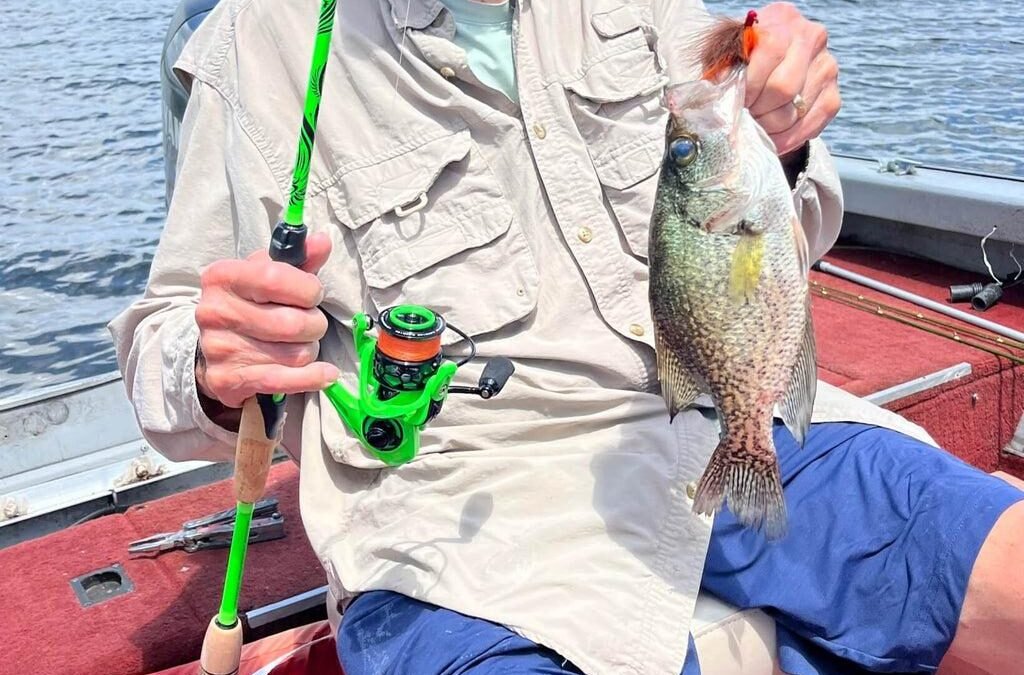
Panfish and crappie don't hit hard. Most bites feel like a faint tap or a slight change in line tension, and a rod that isn't built to register that subtlety will cost you fish you never even knew were there. A dedicated panfish rod solves this by prioritizing sensitivity above almost everything else.
This guide covers what actually matters when choosing a panfish rod as a beginner, from power to length.
Table of Contents
Why Sensitivity Comes First
Unlike bass or salmon, panfish rarely hit with any real force. A panfish rod needs a soft, responsive tip that transmits even the lightest tap up through the blank and into your hand — without that sensitivity, you'll simply miss more bites than you catch, especially with finicky crappie in cold or clear water.
This is why panfish rods lean toward light or ultralight power almost universally, prioritizing feel over raw strength since panfish rarely require much backbone to land.
Choosing the Right Power
Power rating is the single most important spec on a panfish rod:
- Ultralight: maximizes sensitivity, ideal for small jigs and light line — the go-to choice for most dedicated crappie anglers
- Light: a slightly more versatile option that still detects light bites well while handling marginally larger panfish or occasional bonus catches
- Medium-light: useful if you're fishing mixed water where larger species might also show up alongside panfish
For most beginners, an ultralight or light power panfish rod is the right call — you're rarely fighting anything that needs more backbone than that.
Length for Different Panfish Techniques
- 5'–6' rods: easier to handle for close-range jigging around docks, brush piles, or from a boat
- 6'–7' rods: better for casting small jigs or bait rigs further out, common when fishing from shore
- 10'+ crappie poles: favored by dedicated crappie anglers for spider rigging or long-line trolling techniques
A 6' ultralight panfish rod is a versatile starting point that handles most common approaches without requiring a second setup right away.
A Reliable Panfish Rod Pick
The St. Croix Panfish Series Spinning Rod is purpose-built as a dedicated panfish rod, designed specifically around the sensitivity crappie and panfish demand. It's a strong choice whether you're jigging near cover or casting light bait rigs from shore.
For exact power, length, and line ratings, check the product page — specifications vary by size selected.
Pairing With Reel and Line
A panfish rod performs best paired with a small, lightweight spinning reel — a bulky or heavy reel throws off the balance and dulls the sensitivity the rod is designed to offer. The Piscifun Carbon Prism Ultralight Reel is a natural match for a light-power panfish rod, keeping the whole setup light and responsive. Light monofilament or fluorocarbon in the 2-6lb range is standard, since panfish rarely require heavier line strength. Browse our full fishing reels collection, or check our fishing rod buying guide for more on matching gear to your setup. For regional panfish and crappie regulations, Take Me Fishing is a reliable resource to check before heading out.
Frequently Asked Questions
What power panfish rod should I use?
Ultralight or light power is best for most panfish rods, maximizing sensitivity to detect the light bites typical of crappie, bluegill, and other panfish species.
How long should a panfish rod be?
6' is a versatile starting length, though longer 10'+ crappie poles are popular for spider rigging or reaching further from a boat or dock.
Can I use a panfish rod for other species?
You can occasionally hook larger fish on a panfish rod, but its light power isn't designed for sustained fights with bigger species — stick to it for its intended panfish and crappie use.
What line weight works best for panfish?
2-6lb monofilament or fluorocarbon is standard, matching the light power of most panfish rods without sacrificing sensitivity.
Panfish and crappie don't hit hard. Most bites feel like a faint tap or a slight change in tension, and gear that isn't built to register that subtlety will cost you fish you never even knew were there. A dedicated setup solves this by prioritizing sensitivity above almost everything else.
This guide covers what actually matters when choosing gear for panfish and crappie as a beginner, from power to length.
Table of Contents
Why Sensitivity Comes First
Unlike bass or salmon, panfish rarely strike with any real force. What you're using needs a soft, responsive tip that transmits even the lightest tap up through the blank and into your hand — without that feel, you'll simply miss more bites than you land, especially with finicky crappie in cold or clear water.
That's why lighter power dominates this category almost universally. Feel matters more than raw strength here, since these fish rarely demand much backbone to bring in.
Choosing the Right Power
Power rating is the single most important spec to get right:
- Ultralight: maximizes feel, ideal for small jigs and light line — the go-to choice for most dedicated crappie anglers
- Light: a slightly more versatile option that still detects subtle bites well while handling marginally larger catches
- Medium-light: useful if you're fishing mixed water where bigger species might also show up alongside your main target
For most beginners, ultralight or light power is the right call — you're rarely fighting anything that needs more backbone than that.
Length for Different Techniques
- 5'–6': easier to handle for close-range jigging around docks, brush piles, or from a boat
- 6'–7': better for casting small jigs or bait rigs further out, common when fishing from shore
- 10'+ poles: favored by dedicated anglers for spider rigging or long-line trolling techniques
A 6' ultralight setup is a versatile starting point that handles most common approaches without requiring a second option right away.
A Reliable Pick
The St. Croix Panfish Series Spinning Rod is purpose-built around the sensitivity crappie and panfish demand. It's a strong choice whether you're jigging near cover or casting light bait rigs from shore.
For exact power, length, and line ratings, check the product page — specifications vary by size selected.
Pairing With Reel and Line
Performance here depends heavily on pairing with a small, lightweight spinning reel — a bulky or heavy reel throws off the balance and dulls the sensitivity the setup is designed to offer. The Piscifun Carbon Prism Ultralight Reel is a natural match, keeping the whole setup light and responsive. Light monofilament or fluorocarbon in the 2-6lb range is standard, since these fish rarely require heavier line strength. Browse our full fishing reels collection, or check our fishing rod buying guide for more on matching gear to your setup. For regional regulations on crappie and panfish, Take Me Fishing is a reliable resource to check before heading out.
Frequently Asked Questions
What power should I use for panfish?
Ultralight or light power is best, maximizing sensitivity to detect the light bites typical of crappie, bluegill, and other panfish species.
How long should my setup be?
6' is a versatile starting length, though longer 10'+ poles are popular for spider rigging or reaching further from a boat or dock.
Can I target other species with this gear?
You can occasionally hook larger fish, but light power isn't designed for sustained fights with bigger species — stick to it for its intended purpose.
What line weight works best?
2-6lb monofilament or fluorocarbon is standard, matching the light power without sacrificing sensitivity.