
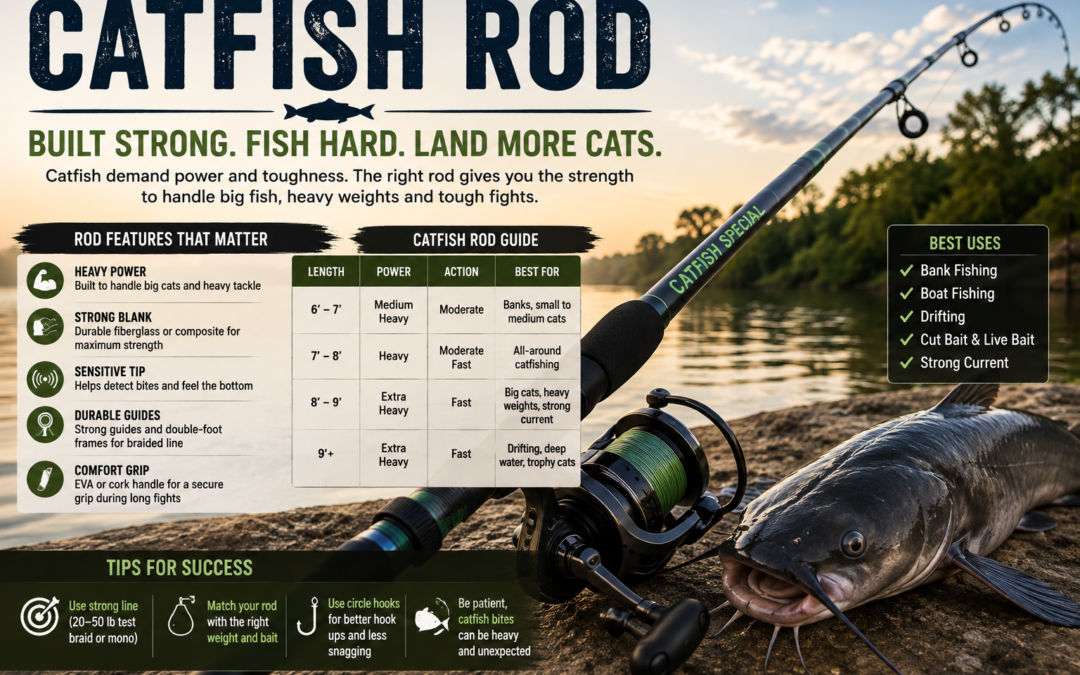
Catfish don't fight fair. Big cats dig for bottom structure the moment they feel the hook, and a rod that isn't built with real backbone will get out-muscled fast. A dedicated catfish rod solves this by prioritizing raw strength and durability over finesse — because with catfish, control matters more than subtlety.
This guide covers what actually matters when choosing a catfish rod as a beginner, from power to setup.
Table of Contents
Why Strength Comes First With Catfish
Unlike panfish or trout, catfish rarely require finesse or subtle bite detection — most catfish bites are unmistakable. What a catfish rod really needs is the backbone to control a powerful fish that's actively trying to bury itself in structure the moment it's hooked. Underpowered rods simply lose that fight, either by breaking or by letting the fish reach cover before you can turn it.
This is why catfish rods lean heavily toward medium-heavy to heavy power, often with a moderate action that still has enough give to absorb sudden headshakes without snapping.
Power and Action for Catfish
- Medium-heavy: suitable for smaller to average-sized catfish in most rivers and lakes
- Heavy: better for larger cats or fishing in heavy cover where you need to control the fish immediately after the hookset
- Extra-heavy: reserved for serious big-cat targeting, often paired with heavier tackle and bait rigs
Action tends toward moderate to moderate-fast on a catfish rod, balancing enough flex to prevent hooks from tearing free with enough backbone to actually move a big fish.
Length Considerations
Catfish rod length depends largely on how and where you're fishing. Shorter rods (6'–7') offer more leverage for close-quarters bank fishing or boat fishing, while longer rods (7'6"–8'+) help with casting heavier weights further out, common in river or reservoir catfishing where longer casts reach deeper holes.
Catfish-Ready Rod & Combo Picks
Several of our rods and combos are purpose-built for the demands of catfish fishing:
- Best dedicated catfish casting rod: LED Catfish Casting Rod
- Best all-in-one catfish combo: Chaos XS Catfish Combo
- Best low-light nighttime option: Lumicat II Catfish Rod
- Best premium catfish combo: Piscifun Chaos Pro Lumicat II Combo
For exact power, length, and line ratings, check each product page — specifications vary by size selected.
Pairing With Reel and Line
A catfish rod needs a reel with a strong, reliable drag system to match — big cats make powerful runs that will expose any weakness in a reel's drag long before the rod becomes the limiting factor. Braided line in higher pound-test ranges is common for catfishing, offering the strength needed to horse a big fish away from structure. Browse our full fishing reels collection, or check our fishing rod buying guide for more on matching gear to your setup. For regional catfish regulations and size limits, Take Me Fishing is a reliable resource to check before heading out.
Frequently Asked Questions
What power catfish rod do I need?
Medium-heavy is a solid starting point for most catfish, while heavy or extra-heavy power is better reserved for larger cats or heavy-cover fishing.
How long should a catfish rod be?
6'–7' offers better leverage for close-quarters fishing, while 7'6"–8'+ helps with longer casts common in river or reservoir catfishing.
Do I need braided line for catfish?
It's strongly recommended — braided line's strength and thin diameter help control powerful runs and pull big cats away from structure more effectively than monofilament.
Can I use a bass rod for catfish?
You can for smaller cats, but a dedicated catfish rod's extra backbone and durability matter a lot more once you're targeting larger fish or fishing heavy cover.