
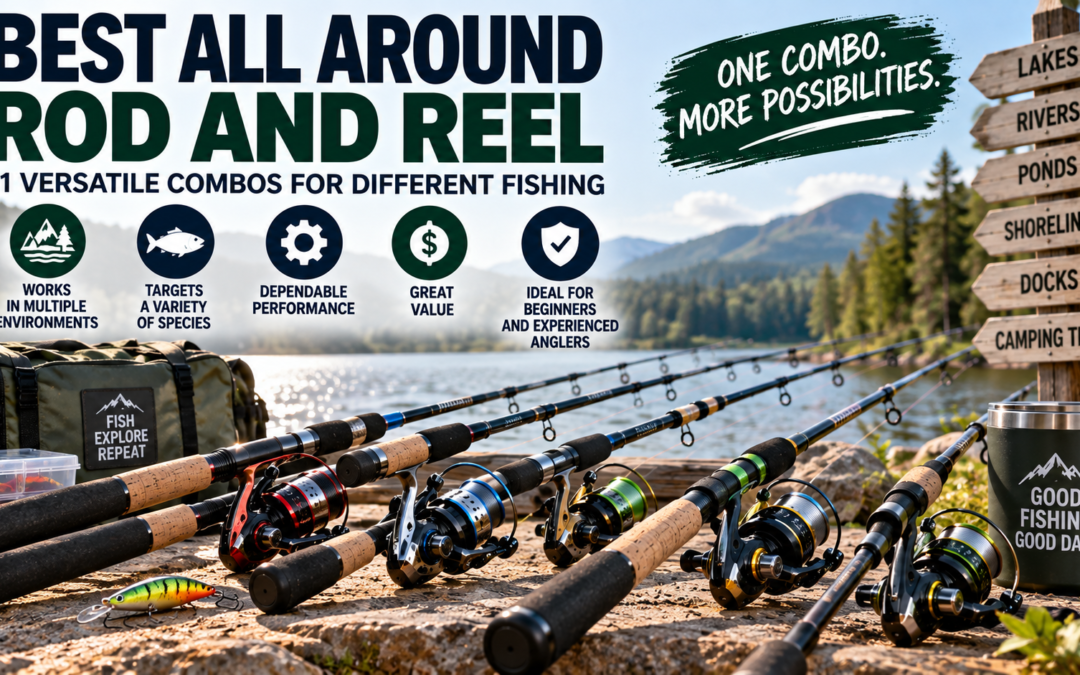
Best All Around Rod and Reel: 11 Versatile Combos for Different Fishing
Finding the best all around rod and reel is about choosing a setup that can handle more than one fishing situation without becoming overly specialized. For anglers who fish different lakes, ponds, rivers, docks, and shorelines, a versatile combo can be more useful than owning separate equipment for every technique.
The goal is not to find one rod and reel that is perfect for every species and every fishing method. Instead, the goal is to build a balanced setup that gives you useful coverage across the situations you encounter most often.
Length, power, action, reel size, line capacity, lure rating, comfort, and fishing environment all influence how versatile a combo will be. A setup that works well for light freshwater fishing may not be appropriate for heavy surf fishing or large offshore species.
This guide compares 11 all around rod and reel approaches and explains how to choose a versatile setup based on your fishing style, target species, tackle, and budget.
For a general introduction to combination setups, visit the beginner rod and reel guide.
What Makes the Best All Around Rod and Reel?
The best all around rod and reel balances versatility, comfort, power, and compatibility.
A truly versatile setup should allow you to fish more than one common technique without becoming awkward or underpowered. For many freshwater anglers, a spinning combo is a practical starting point because it can be used with a broad range of lighter and medium-weight presentations.
The key is matching the setup to the fishing you actually do.
| Factor | Why It Matters for Versatility |
|---|---|
| Rod length | Affects casting distance, control, portability, and maneuverability. |
| Rod power | Determines how well the rod handles different fish and lure weights. |
| Rod action | Influences casting feel, lure control, and hook-setting behavior. |
| Reel size | Affects balance, line capacity, and overall setup weight. |
| Line capacity | Determines how much line the reel can carry for different applications. |
| Lure rating | Helps determine which lure weights the rod is designed to handle. |
| Comfort | Important when repeatedly casting and retrieving for long periods. |
Take Me Fishing's rod-selection guidance similarly emphasizes matching the rod to where you fish and what bait or lures you intend to use. That principle is especially important when choosing one setup to cover several situations.
11 All Around Rod and Reel Setups Worth Considering
1. Medium Spinning Rod With a Versatile Spinning Reel
A medium spinning setup is one of the most useful configurations for anglers who want broad freshwater coverage.
The combination can provide enough strength for a range of common freshwater species while still allowing the use of moderately light presentations.
This type of setup can work well around ponds, lakes, rivers, and other general freshwater environments, provided the lure and line ratings match the intended fishing.
For an angler who wants one setup instead of several specialized combinations, a medium spinning outfit is a logical starting point to evaluate.
2. Medium-Light Spinning Combo
A medium-light combo shifts the balance toward lighter presentations while retaining more versatility than an ultralight setup.
This can make it useful for anglers who target smaller freshwater species, use lighter lures, or fish situations where sensitivity and lighter tackle are important.
The advantage is versatility without excessive weight. The trade-off is that a medium-light setup may not be suitable for techniques requiring substantially heavier lures or stronger tackle.
3. Seven-Foot-Class General-Purpose Spinning Setup
A rod around the seven-foot range can provide a useful compromise between casting distance and control for many anglers.
The extra length compared with a very short rod can help with casting and line management, while still being practical for everyday freshwater fishing.
However, length should always be matched to your environment. A rod that feels ideal on an open lake bank may be less comfortable around tight streams with heavy vegetation.
For more detail, see the fishing rod length guide.
4. Six-and-a-Half-Foot Versatile Spinning Setup
A shorter general-purpose spinning rod can be attractive when you fish in areas where maneuverability matters.
Streams, wooded shorelines, narrow banks, and crowded fishing areas can make a shorter rod easier to handle.
A shorter setup can also be easier to transport and store. The trade-off is that it may not provide the same casting reach as a longer rod in open water.
This makes rod length a genuine compromise when building an all-purpose outfit.
5. Medium-Light Combo for Lighter Freshwater Fishing
If most of your fishing involves smaller lures and freshwater species, a medium-light rod with a properly matched spinning reel can be highly flexible.
The lighter configuration can make smaller fish more enjoyable while allowing you to cast presentations that would be difficult to handle on heavier equipment.
It is important not to interpret “all around” as “heaviest possible.” The best versatile setup is one that can comfortably cover your normal fishing rather than one designed around the largest fish you might encounter someday.
6. Medium Combo for Mixed Freshwater Species
Anglers who fish for several different freshwater species may prefer a medium setup because it gives them more room to work across different lure and line requirements.
This can be useful when one trip involves different species, different lure styles, or different water conditions.
Compare the actual lure and line ratings rather than selecting a rod based only on the word “medium.” Two rods with the same power label can still behave differently.
7. Matched Spinning Combo for Beginners
A matched combo can be particularly useful for beginners who do not yet understand how to pair a rod and reel.
The rod and reel arrive as a complete combination, which reduces some of the guesswork involved in choosing individual components.
For someone building their first versatile setup, this can be a practical route because you can concentrate on choosing the appropriate specifications rather than solving compatibility questions between separate products.
Take Me Fishing also discusses the usefulness of spinning combinations for beginners in its fishing equipment guidance.
8. Upgrade-Friendly All Purpose Combo
An upgrade-friendly setup is useful for anglers who want to begin with one versatile combination and improve individual components later.
You might start with a matched spinning setup and later replace the reel, line, or rod after gaining more experience and understanding your preferred fishing techniques.
This approach can prevent you from investing heavily in highly specialized equipment before you know which types of fishing you enjoy most.
Hooked Beginner's catalog includes the Carbon-X II and Carbon R1 Spinning Combo, the Carbon-X and Carbon R1 Spinning Combo, and the Carbon-X R1 Spinning Combo among its rod-and-reel combo listings.
9. All Around Setup for Bank Fishing
Bank anglers often need equipment that balances casting distance, portability, control, and general-purpose performance.
A versatile spinning setup can work well for open banks, ponds, and lakes where you need reasonable casting range without moving into specialized surf or heavy tackle.
Consider the amount of room behind you when casting. A longer rod may provide more reach, but a slightly shorter rod can be easier to control around trees, fences, docks, and crowded shorelines.
10. All Purpose Setup for River and Lake Fishing
Some anglers regularly move between rivers and lakes, which creates an interesting equipment challenge.
Rivers may favor a more maneuverable rod, especially around narrow banks and vegetation, while open lakes can reward additional casting range.
A medium-length spinning setup can provide a practical middle ground when the same combo needs to travel between both environments.
Again, the goal is not perfection in every situation. The goal is a useful range of performance across the places you actually fish.
11. Balanced Combo for General Freshwater Fishing
A balanced rod-and-reel system can be one of the most useful choices for an angler who wants a single everyday setup.
Balance matters because a rod and reel that feel comfortable together can reduce fatigue during long sessions.
The reel should not make the rod feel unnecessarily heavy in the hand, and the rod should not feel mismatched to the reel's size or intended line capacity.
Hooked Beginner's spinning reel combo category provides another place to compare complete combo configurations.
How to Choose Rod Length for an All Around Setup
Rod length is one of the most important decisions when building an all-purpose combination.
Shorter rods are generally easier to maneuver in tight spaces. Longer rods can provide additional casting distance and line control.
For many anglers, a middle-of-the-range rod offers a practical compromise.
| Rod Length Direction | Potential Advantage | Trade-Off |
|---|---|---|
| Shorter | Better maneuverability and portability | Less casting reach |
| Medium | Balanced casting and control | Does not specialize strongly in either direction |
| Longer | More reach and potential casting distance | Can be harder to manage in tight areas |
The right length depends on your actual fishing environment rather than a universal number.
How to Choose Rod Power
Power is another major consideration.
Light and medium-light rods suit lighter tackle, while medium and heavier powers provide more strength for stronger applications.
A versatile freshwater setup often benefits from avoiding the extremes unless your fishing specifically requires them.
Read the manufacturer's lure and line ratings together with the power classification.
For a detailed explanation, see the fishing rod power guide.
How to Choose Rod Action
Action describes where along the blank the rod bends.
A fast-action rod typically bends closer to the tip, while slower actions allow more of the blank to load.
Action changes the feel of casting, lure control, and hook setting. The choice should therefore depend on the techniques you expect to use most often.
An all-around setup does not need the “best” action in every situation. It needs an action that works reasonably well across your most common techniques.
See the fishing rod action guide for more detail.
How to Choose the Reel for Versatility
Reel Size
Reel size affects weight, line capacity, and overall balance.
A reel that is too large can make a light rod feel cumbersome. A reel that is too small may not provide the line capacity needed for the intended application.
Line Capacity
An all-purpose reel should have enough capacity for the line diameter and fishing situations you normally encounter.
Do not assume that more line capacity is always better. A larger reel can add unnecessary weight to a setup designed for light or medium tackle.
Drag Performance
A usable drag is essential when fighting fish because it allows line to leave the spool under controlled pressure.
Rather than focusing only on the maximum drag number, pay attention to how the drag is intended to function with the type of fishing you do.
Retrieve and Handling
The reel should feel comfortable and predictable during repeated casting and retrieving.
Because an all-around setup may be used for longer sessions, ergonomics and overall comfort can be just as important as individual specifications.
Spinning Rod vs. Casting Rod for All Around Fishing
Spinning equipment is often a practical choice for anglers who want broad versatility across common freshwater applications.
Spinning setups can handle lighter lures and are generally approachable for beginners.
Casting setups can be useful for techniques involving heavier lures and specific presentations, but they may require more familiarity and casting practice.
For a first all-purpose setup, the simpler option is often easier to use across multiple fishing situations.
For additional beginner information, see the fishing rods for beginners guide.
How to Match Line to an All Around Combo
Line choice should match the rod, reel, lure, target species, and environment.
Monofilament can be a straightforward choice for beginners, while braided and fluorocarbon lines can offer different performance characteristics in particular fishing applications.
A versatile setup should use a line that fits within the manufacturer's recommended range for the rod and reel.
Take Me Fishing's freshwater guidance explains that line selection depends on the fish and fishing environment. Its freshwater fishing FAQ provides additional background.
All Around Rod and Reel for Freshwater Fishing
Freshwater is where an all-purpose setup can be especially useful because the same angler may fish ponds, lakes, rivers, and streams.
Rather than purchasing separate gear for every body of water, choose a combination that comfortably handles the tackle you use most often.
A versatile spinning combo can be suitable for many common freshwater situations when the lure, line, power, and action are correctly matched.
Take Me Fishing also offers a beginner freshwater equipment guide that explains how rods, reels, line, and terminal tackle work together. See the freshwater equipment guide.
What an All Around Combo Cannot Do
Versatility does not mean unlimited capability.
An all-purpose freshwater combo is not automatically appropriate for heavy surf fishing, offshore saltwater fishing, very large freshwater species, or specialized techniques that require specific tackle.
The more specialized the fishing application becomes, the more useful specialized equipment can be.
The purpose of an all-around setup is to cover your common fishing needs efficiently, not replace every possible fishing outfit.
Common Mistakes When Choosing an All Purpose Rod and Reel
Buying the Heaviest Setup
Heavy equipment is not automatically more versatile. It can make lighter presentations harder to cast and less enjoyable to use.
Choosing Only by Rod Length
Length matters, but it must be considered alongside power, action, lure rating, and fishing location.
Ignoring Reel Balance
A rod and reel should feel like a single system. Poor balance can create fatigue during repeated casting.
Ignoring Lure Ratings
Lure ratings are one of the most important ways to determine whether the rod can comfortably handle your intended presentations.
Trying to Cover Too Many Techniques
If you fish very specialized techniques, an all-around combo may eventually become limiting. Do not force one setup into applications outside its intended range.
Choosing Based Only on Brand
Brand recognition should not replace checking specifications. Compare the actual rod and reel characteristics against your fishing requirements.
How to Build a Versatile Fishing Setup on a Budget
You do not need to buy the most expensive components to build a useful all-purpose setup.
Start by deciding what type of fishing makes up most of your trips. Then identify the rod length, power, action, reel size, line, and lure weights that cover those situations.
Once those requirements are established, compare complete combos and individual components within your budget.
A matched combo can simplify the process for beginners. More experienced anglers may prefer selecting the rod and reel separately.
For affordable combination options, compare the best budget rod and reel guide with the site's spinning combo category.
All Around Rod and Reel Buying Checklist
| Question | What to Check |
|---|---|
| Where do you fish? | Match the setup to lakes, ponds, rivers, streams, or shorelines. |
| What species do you target? | Choose power and line according to the likely fish size. |
| What lures do you use? | Stay within the rod's recommended lure range. |
| How far do you cast? | Choose a length appropriate to your fishing area. |
| How much line is needed? | Check the reel's line-capacity specifications. |
| Is the setup balanced? | Hold the complete combo and assess weight distribution. |
| Can you transport it easily? | Consider rod length, travel, and storage. |
| Will you use it for several techniques? | Choose specifications that cover your most common methods. |
Frequently Asked Questions
What is the best all around rod and reel?
The best all around rod and reel depends on where you fish, what species you target, and which lures or baits you use. A versatile spinning setup can be a practical starting point for many common freshwater situations.
What rod length is best for all around fishing?
A medium-length rod can provide a useful balance between casting distance and maneuverability. The correct length depends on your fishing environment.
What power is best for an all purpose fishing rod?
Medium-light and medium powers can provide useful versatility for many freshwater applications, but the proper choice depends on target species, lure weight, and line.
Is a spinning combo good for all around fishing?
A spinning combo can be a practical general-purpose choice because it can accommodate a broad range of common freshwater presentations and is relatively approachable for beginners.
Should I choose a fast or moderate action for an all around rod?
Either can work depending on the techniques you use most. Choose the action that provides a useful balance for your common fishing applications.
Can one all-purpose combo catch different species?
Yes, provided the species and fishing methods remain within the rod, reel, line, and lure specifications of the setup.
Can an all around freshwater setup be used in saltwater?
Not automatically. Saltwater introduces different corrosion and equipment demands, so a freshwater-oriented combo should not be assumed suitable for saltwater use without checking its specifications and intended application.
Should beginners buy a matched rod and reel?
A matched combo can simplify the buying process and reduce compatibility decisions, making it a practical option for many beginners.
Final Thoughts
The best all around rod and reel should give you useful versatility without becoming unnecessarily heavy, specialized, or difficult to handle.
For many anglers, a balanced spinning setup with a practical rod length, moderate power, appropriate action, and a properly matched reel can cover a broad range of everyday freshwater fishing.
The most important step is to choose based on your actual fishing. Think about where you fish most often, the fish you target, the lures you use, how far you need to cast, and how long you normally hold the setup.
When comparing complete combinations, Hooked Beginner's catalog includes the Carbon-X II and Carbon R1 Spinning Combo, Carbon-X and Carbon R1 Spinning Combo, and Carbon-X R1 Spinning Combo.
For deeper equipment selection, continue with the fishing rod length guide, fishing rod power guide, fishing rod action guide, and fishing rods for beginners guide.
For external reference material, Take Me Fishing's fishing rod selection guide provides additional guidance on matching a rod to your fishing environment and tackle.
The most versatile fishing setup is not the one that tries to do everything. It is the one that handles the fishing you actually do well enough that you can spend less time changing equipment and more time fishing.