
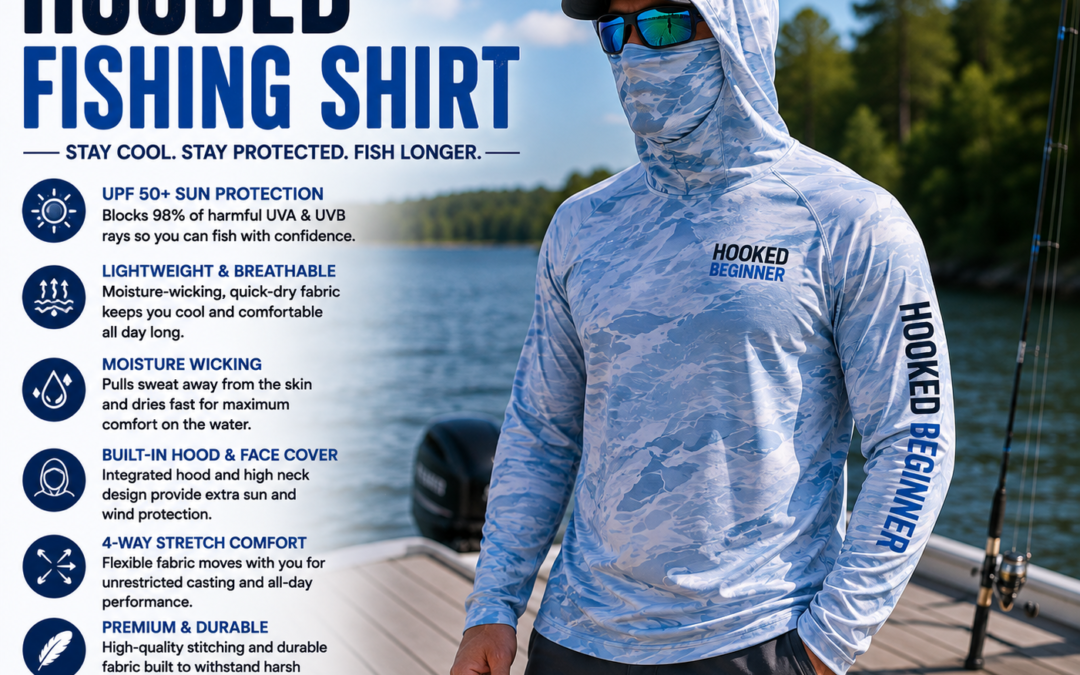
Spend a full day on the water without proper coverage and you'll understand why so many experienced anglers swear by a hooded fishing shirt. Between sun exposure, wind, and spray, what you wear affects your day just as much as what's on the end of your line.
This guide covers what to actually look for in a hooded fishing shirt, and how to choose one that holds up to real conditions rather than just looking the part.
Table of Contents
Why the Hood Actually Matters
It's easy to dismiss the hood on a hooded fishing shirt as an unnecessary extra, but it solves a real problem: neck and ear sun exposure that a standard collar simply doesn't cover. Anglers who fish open water for hours at a time, especially on a boat with reflected sun coming off the surface, get exposure from angles a hat alone doesn't protect against.
A well-designed hooded fishing shirt also doubles as wind protection on cooler mornings, meaning you can often skip an extra layer entirely.
Fabric and Sun Protection
Most quality hooded fishing shirts use a UPF-rated fabric, which measures how effectively the material blocks UV radiation. Beyond sun protection, the best fabrics for a hooded fishing shirt are also quick-drying and moisture-wicking, since getting splashed or sweating through a shirt is inevitable on the water.
Fit and Breathability
A hooded fishing shirt that's too tight restricts casting motion, while one that's too loose can catch wind or snag on gear. Look for a relaxed but not baggy fit, with breathable, often vented fabric panels that help regulate temperature during long days in direct sun.
Choosing for Cold vs. Warm Conditions
Not every hooded fishing shirt is built the same way. For warm-weather fishing, a lightweight, highly breathable option with strong UPF protection is the priority. For colder conditions, a heavier insulated or fleece-lined hooded fishing shirt — or a full jacket with a built-in hood — makes more sense than a lightweight sun shirt alone.
Fishing Apparel Picks
While we don't carry a shirt labeled specifically "hooded fishing shirt," several of our jackets and suits offer the same hood coverage and weather protection for colder or wetter conditions:
- Best lightweight hooded option: Piscifun Fishing Jacket
- Best for serious cold weather coverage: Piscifun Insulated Ice Suit
- Best for wet, offshore conditions: Fladen 891OS-MX Offshore Suit
- Best flotation and hood combination: Westin W6 Flotation Suit
For exact sizing, fabric weight, and insulation ratings, check each product page — specifications vary by size selected.
Care Tips
- Rinse with fresh water after saltwater use to prevent fabric breakdown and salt buildup
- Air dry rather than tumble dry a hooded fishing shirt to preserve UPF coating and elasticity
- Avoid fabric softener, which can reduce moisture-wicking performance over time
- Store fully dry to prevent mildew, especially with insulated or lined options
For general guidance on sun safety while spending long hours outdoors, the EPA's Sun Safety resources offer useful, practical tips beyond just what you wear.
Frequently Asked Questions
Do I really need a hood on a fishing shirt?
It's not essential, but a hooded fishing shirt covers areas like the neck and ears that a hat alone doesn't protect, which matters a lot on long, sunny days on open water.
What UPF rating should I look for?
UPF 50+ is considered excellent sun protection and is common in quality hooded fishing shirts designed specifically for time on the water.
Can I wear a hooded fishing shirt in cold weather?
Lightweight sun-protection shirts are better suited to warm conditions. For cold weather, look for insulated or fleece-lined options, or a full jacket with a built-in hood.
How do I keep a hooded fishing shirt from fading?
Rinse after saltwater exposure, air dry instead of using a dryer, and avoid fabric softener — all of which help preserve both color and UPF protection over time.