
Description
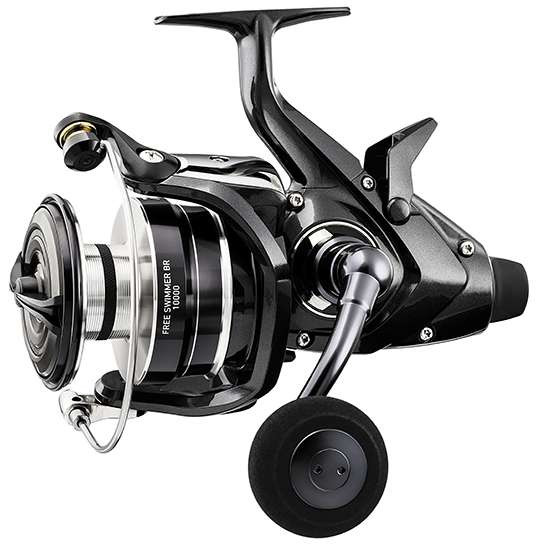
Daiwa Free Swimmer Saltwater Spinning Reels
Daiwa Free Swimmer reels are designed for anglers who want to present live or natural bait with minimal resistance before transitioning quickly into a controlled fight. Instead of leaving the main drag unusually loose, the automatic Bite N’ Run system provides a separate free-spool setting that allows a fish to move with the bait before the primary drag takes over.
This practical design makes the series especially useful for surf fishing, pier fishing, bank fishing, live-baiting and other situations where a rod may remain in a holder while the angler waits for a committed run. Available in 8000 and 10000 sizes, these saltwater spinning reels provide substantial line capacity, dependable drag performance and comfortable cranking power.
A Smarter Way to Fish Natural Baits
Fishing with live or natural bait often requires a different approach from retrieving an artificial lure. A cautious fish may pick up the bait, move slowly and release it when it feels immediate pressure. That is where Daiwa Free Swimmer reels offer a meaningful advantage. The secondary free-spool mechanism allows line to leave the spool under light, adjustable resistance while the main fighting drag remains prepared for the hook-set.
This arrangement is useful when targeting fish that commonly run with a bait before swallowing it or turning away. It can also reduce the risk of a sudden strike pulling a rod from a holder. Once the angler is ready to engage, turning the handle disengages the free-spool system and transfers control to the main drag.
The result is a reel that supports patient bait-fishing techniques without sacrificing the familiar operation of a spinning reel. Anglers who are comparing different reel types can browse our complete selection of fishing reels or explore more spinning reels before choosing a setup.
How the Bite N’ Run System Works
The automatic Bite N’ Run clutch is the defining feature of the Free Swimmer series. A control positioned at the rear of the reel activates a secondary drag system that operates independently from the main front drag. The rear adjustment lets the angler regulate how freely line leaves the spool while a fish carries the bait.
When the handle is turned, the system automatically disengages and transfers the load to the main drag. This transition allows the angler to move from waiting to fighting without stopping to make a major drag adjustment during the strike.
The feature can be particularly useful when fishing large pieces of cut bait, whole baitfish, live bait or bottom rigs from the beach, rocks, pier or boat. It also gives beginners a more organized way to manage bait presentation because the preferred fighting drag can be set before the bait enters the water.
Correct adjustment remains important. The free-spool tension should be light enough for the intended species to move naturally with the bait, but not so loose that wind, current or waves continuously pull line from the spool. The ideal setting will depend on bait size, sinker weight, water movement and the sensitivity of the target fish.
Waterproof Carbon ATD Drag Performance
After the Bite N’ Run mode disengages, Daiwa’s waterproof carbon Automatic Tournament Drag system becomes responsible for controlling the fish. ATD is designed to begin smoothly with low initial resistance and then maintain consistent pressure as the fight develops.
A smooth drag startup is important because a sudden spike in pressure can break a leader, pull a hook or place unnecessary shock on the rod. Controlled drag output is especially valuable when a fish makes a fast first run or suddenly changes direction near the shoreline or boat.
Both the 8000 and 10000 models are rated for a maximum drag of 22 pounds. However, the maximum rating should not automatically become the everyday fishing setting. Drag pressure should be adjusted according to the main line, leader, knots, hook size, rod action and expected size of the target species.
For additional information about the technologies used in this series, visit the official Daiwa Free Swimmer product page. Anglers can also consult Daiwa’s official reel maintenance guide for general care recommendations.
Air Rotor and Digigear Construction
Daiwa Free Swimmer reels combine an Air Rotor with Digigear technology to support balanced rotation and dependable power transfer. Daiwa’s arched Air Rotor design distributes stress across the rotor while reducing weight compared with a conventional rotor. The lower center of gravity is intended to improve balance and reduce unwanted vibration during winding.
Digigear technology uses digitally designed gearing with larger teeth and an enlarged contact area. This construction is intended to support smoother gear meshing, efficient power transfer and dependable operation when the reel is placed under pressure.
Those characteristics matter when retrieving heavy sinkers, working against strong current or gaining line against a determined saltwater fish. Smooth gearing can make a large reel feel more controlled, especially during extended fights.
The machined aluminum screw-in handle creates a direct connection to the drive system. A Power Round EVA knob provides a broad and comfortable gripping surface, helping the angler maintain control when hands are wet or the reel is operating under a heavy load.
An alloy sideplate supports the internal gearing, while an O-ring sealing system improves protection for saltwater use. These features make the reel suitable for saltwater fishing, but they do not make it maintenance-free or designed for deliberate submersion.
Daiwa Free Swimmer reels 8000 vs 10000
The two available models share their principal technologies, bearing configuration, drag rating and gear ratio. The most important differences are line capacity, retrieval rate and a small change in overall reel weight.
| Specification | FRSW8000 | FRSW10000 |
|---|---|---|
| Gear ratio | 4.7:1 | 4.7:1 |
| Bearings | 4BB + 1 | 4BB + 1 |
| Maximum drag | 22 lb | 22 lb |
| Line retrieved per handle turn | 36.1 in | 39.6 in |
| Monofilament capacity | 16 lb/330 yd; 20 lb/280 yd | 20 lb/330 yd; 25 lb/280 yd |
| Braided-line capacity | 40 lb/330 yd; 50 lb/280 yd | 50 lb/330 yd; 65 lb/280 yd |
| Reel weight | 22.2 oz | 22.6 oz |
The Daiwa Free Swimmer 8000 is the more compact option and suits anglers who do not require the highest available line capacity. It holds 330 yards of 40-pound braid or 280 yards of 50-pound braid and retrieves 36.1 inches of line per handle turn.
This model can be a practical match for surf casting, pier fishing and medium-to-heavy live-bait setups where substantial capacity is needed without stepping up to the larger spool of the 10000 model.
The Daiwa Free Swimmer 10000 provides additional capacity for heavier line. It holds 330 yards of 50-pound braid or 280 yards of 65-pound braid and retrieves 39.6 inches of line per handle turn.
The extra capacity may be valuable when targeting fish capable of making longer runs or when heavier main line is preferred. The weight difference between the two models is only 0.4 ounces, so capacity and intended line class will usually be more important selection factors than reel weight.
Recommended Fishing Applications
These reels are best suited to bait-based techniques that benefit from controlled free-spool operation. Common applications include surf fishing with cut bait, pier fishing, fishing from jetties, live-lining from a boat, bottom fishing and presenting natural bait from the bank.
The generous spool capacities can support situations where casting distance, strong current or powerful fish make additional line valuable. The exact species suitability will depend on location and tackle configuration.
Potential targets may include striped bass, red drum, snook, cobia, tarpon, sharks, catfish and other strong fish commonly pursued with live or natural bait. Anglers should always choose the appropriate model, line, leader and rod for the expected fish and fishing environment.
Anglers assembling a full saltwater outfit can pair the reel with one of our spinning rods. Those who prefer a ready-matched setup can explore our collection of saltwater fishing combos.
Choosing a Rod and Fishing Line
The correct rod depends on where and how the reel will be used. A longer surf rod can help improve casting distance and keep the fishing line above breaking waves. A shorter boat rod may provide better control in confined spaces and increased leverage when fighting a fish vertically.
Always check the rod’s recommended line rating, lure rating and power before pairing it with either reel. Reel size alone does not determine whether a combination will feel balanced. Intended sinker weight, bait size, casting style, target species and fishing environment should all influence the final setup.
Braided line offers high strength for its diameter and allows greater spool capacity. Its reduced stretch can also improve bite detection. However, the lack of stretch may place more direct pressure on knots, leaders and hooks.
Monofilament offers additional stretch and may be easier for some beginners to manage. Many saltwater anglers use braided main line with a monofilament or fluorocarbon leader. Always select knots and terminal tackle that are appropriate for the chosen line type and expected load.
Saltwater Care and Maintenance
Even a saltwater-ready reel benefits from regular maintenance. After fishing, tighten the drag enough to reduce the chance of water entering the drag stack, and then gently rinse the exterior with fresh water.
Avoid directing a high-pressure stream into the reel because strong water pressure can force salt, sand and other debris deeper into openings. A gentle rinse is normally more appropriate for removing surface salt.
Wipe the reel with a soft cloth and allow it to dry in a ventilated area. Once dry, return the drag to a relaxed setting before storage. Inspect the line roller, bail, handle, spool lip and visible screws for signs of corrosion, damage or salt accumulation.
Never place the reel directly on wet sand. Fine sand can enter moving components and damage internal or external surfaces. A deeper internal service should be performed according to the manufacturer’s recommendations or by an experienced reel technician, particularly after heavy use or accidental submersion.
Who Should Buy This Reel?
Daiwa Free Swimmer reels are strong choices for anglers who regularly fish with natural or live bait and want a dedicated secondary drag system. They offer a more controlled bait-fishing experience than a standard spinning reel while retaining straightforward spinning-reel operation.
The series may be suitable for an angler who:
- Wants fish to move with a bait before engaging the main drag.
- Frequently fishes from beaches, piers, rocks, banks or boats.
- Needs substantial monofilament or braided-line capacity.
- Values a waterproof carbon ATD drag system.
- Prefers a large EVA knob for grip and cranking leverage.
- Wants a choice between 8000 and 10000 saltwater reel sizes.
An angler who fishes almost exclusively with artificial lures may not use the Bite N’ Run feature frequently. In that situation, a conventional saltwater spinning reel could provide a lighter or more specialized alternative.
For dedicated bait anglers, however, the controlled free-spool system is the primary reason to choose this series. It allows the fish to move naturally with the bait while keeping the main drag prepared for the fight.
Frequently Asked Questions
What are Daiwa Free Swimmer reels designed for?
They are primarily designed for live-bait and natural-bait fishing. Their Bite N’ Run system lets a fish take line under adjustable secondary resistance before the main fighting drag is engaged.
What happens when I turn the reel handle?
Turning the handle disengages the Bite N’ Run system and transfers control to the main front drag. This lets the angler begin fighting the fish without completely resetting the drag.
What is the maximum drag of the 8000 and 10000 models?
Both models are rated for a maximum drag of 22 pounds. Actual fishing drag should be adjusted according to the rod, main line, leader, knots, hook size and target species.
Which Daiwa Free Swimmer model holds more braided line?
The 10000 model holds heavier braided-line classes. It is rated for 330 yards of 50-pound braid or 280 yards of 65-pound braid. The 8000 holds 330 yards of 40-pound braid or 280 yards of 50-pound braid.
Are Daiwa Free Swimmer reels completely waterproof?
The series includes a waterproof carbon drag and an O-ring sealing system for saltwater performance. However, this does not mean the complete reel should be submerged. Normal rinsing, drying and maintenance are still necessary.
Can I use the Daiwa Free Swimmer for surf fishing?
Yes. The Bite N’ Run system, generous line capacity and saltwater-oriented construction make the series suitable for many surf-fishing applications when paired with an appropriate surf rod and rig.
Can these reels be used with braided fishing line?
Yes. Both models have published braided-line capacities. The 8000 supports 330 yards of 40-pound braid, while the 10000 supports 330 yards of 50-pound braid.
Is the 10000 model much heavier than the 8000?
No. The 8000 weighs 22.2 ounces, while the 10000 weighs 22.6 ounces. The difference is only 0.4 ounces, making line capacity a more important deciding factor for most buyers.
Should I loosen the drag before storing the reel?
Yes. After the reel has been rinsed and dried, relaxing the main drag helps avoid leaving the drag washers compressed during extended storage.
Choose Daiwa Free Swimmer Saltwater Spinning Reels when your fishing style requires natural bait presentation, controlled line release and dependable fighting power in one practical setup.
Reviews
There are no reviews yet.