
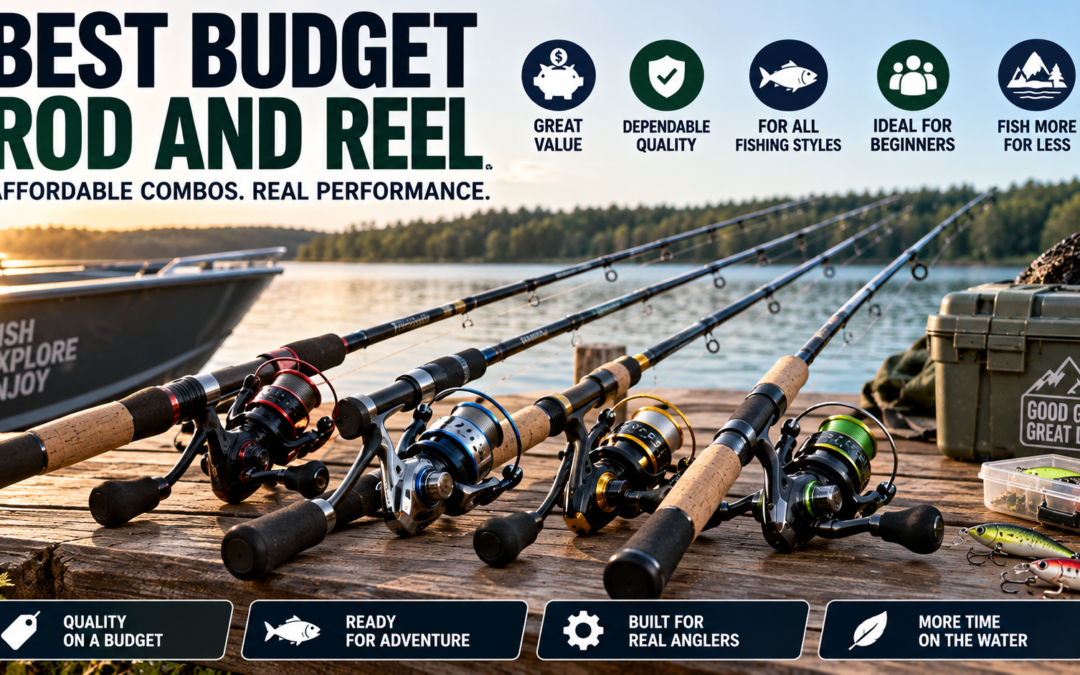
Best Budget Rod and Reel: 10 Affordable Combos Worth Comparing
Finding the best budget rod and reel is less about buying the cheapest fishing equipment and more about finding a setup that gives you the features you actually need without paying for specifications that do not improve your fishing.
A budget-friendly rod and reel combo can be an excellent starting point for beginners, casual anglers, family fishing trips, and anyone who wants a dependable setup without building a rod-and-reel combination from separate components.
The challenge is knowing what to compare. Price is only one part of the decision. Rod length, power, action, reel size, line capacity, balance, construction, target species, and fishing environment all affect whether a combo is suitable.
This guide breaks down 10 budget rod and reel approaches worth comparing, explains what matters at different price levels, and shows how to choose a combo that fits your fishing rather than simply selecting the lowest-priced option.
For a broader beginner resource, start with the beginner rod and reel guide.
What Makes the Best Budget Rod and Reel?
The best budget rod and reel should provide a sensible balance between price, usability, durability, and the type of fishing you plan to do.
A low purchase price is not automatically a good value if the setup is poorly matched to your fishing. Likewise, a more expensive combo is not necessarily a better choice if its features are unnecessary for your application.
For a budget setup, focus on these core factors:
- Rod length and power.
- Rod action.
- Reel size and balance.
- Line capacity.
- Lure-weight range.
- Target species.
- Fishing environment.
- Overall comfort and usability.
Take Me Fishing's guidance for selecting fishing rods emphasizes matching equipment to where you fish and the bait or lures you intend to use. That same principle is useful when shopping on a tighter budget.
10 Budget Rod and Reel Setups Worth Comparing
1. General-Purpose Medium Spinning Combo
A medium spinning combo is one of the most practical places to start when you want a single setup for several common fishing situations.
This type of outfit can be useful for anglers who fish lakes, ponds, rivers, and other freshwater locations and want to avoid buying separate specialized equipment immediately.
A medium setup can offer a useful compromise between light-tackle sensitivity and enough strength for a broader range of fish and lure sizes.
When comparing the best budget rod and reel options, versatility is important because a setup that works across several situations can provide more practical value than one designed for only a very narrow technique.
2. Medium-Light Spinning Combo
A medium-light spinning combo can be a strong choice for anglers who expect to use lighter lures or target smaller fish while still wanting a little more versatility than an ultralight setup.
This configuration can suit freshwater anglers who fish for species such as trout, panfish, and smaller bass where lighter tackle is appropriate.
Check the manufacturer's lure and line ratings before buying. A medium-light label alone does not tell you whether a particular combo will match the tackle you intend to use.
3. Entry-Level Spinning Combo for Beginners
An entry-level spinning combo can simplify the buying process because the rod and reel are already designed to work together.
This can be particularly helpful for someone who has never matched a fishing rod to a reel before. Instead of comparing separate components, you can evaluate the complete package by checking its specifications and intended use.
Take Me Fishing describes pre-matched spinning combinations as a practical starting point for beginners because they reduce some of the equipment-matching decisions involved in building a setup from scratch.
For more beginner information, see the fishing rods for beginners guide.
4. Lightweight Combo for Smaller Freshwater Species
A lighter rod and reel combination can be useful when your fishing focuses on small species and lighter presentations.
The advantage is that lighter tackle can make smaller fish more engaging while allowing you to use lighter lures that are difficult to cast comfortably on heavy equipment.
However, do not select a lightweight combo simply because it is inexpensive. Check its intended lure and line range and make sure it matches the species and techniques you actually plan to use.
5. Budget Combo With a Pre-Spooled Reel
A pre-spooled combo can reduce the amount of equipment preparation needed before your first fishing trip.
This can be useful for beginners, occasional anglers, and families who want a simple setup without separately purchasing line and learning how to spool the reel.
Even with a pre-spooled reel, inspect the included line specifications. Check its type and strength and make sure it suits the fishing you intend to do.
A convenient package can save time, but convenience should not replace checking the actual specifications.
6. Budget Spinning Combo for Bank Fishing
Bank anglers often need a setup that balances casting range, portability, and general versatility.
A medium or medium-light spinning combination can be useful for many common bank-fishing situations, depending on the target species and lure range.
Rod length can also affect your choice. Longer rods may provide more reach and casting distance in open areas, while shorter rods can be easier to manage around trees, vegetation, and tight banks.
For more detail, use the fishing rod length guide.
7. Budget Combo for Family Fishing
Family fishing often benefits from simple, forgiving equipment rather than highly specialized gear.
A straightforward spinning combo can give a new angler a relatively simple way to learn casting, retrieving, and basic fish-fighting techniques.
When comparing budget setups for multiple anglers, consistency can also be useful. Several similar combos can simplify line, reel, and tackle management when a family is fishing together.
Look for comfortable handles, reasonable weight, and a rod power that matches the intended fish and lure range.
8. Budget Combo for Bass Fishing
Bass fishing can require more careful equipment selection because techniques vary widely.
Some anglers use lighter spinning tackle for finesse techniques, while other applications use heavier lures and stronger equipment.
Before selecting a budget bass combo, identify the techniques you actually use. A lighter spinning outfit can be practical for certain applications, while heavier techniques may require a stronger setup.
A budget combo should be matched to the lure range rather than selected simply because its marketing says it is a bass setup.
9. Budget Combo for Trout and Panfish
Trout and panfish often allow anglers to use lighter tackle, although the ideal combination depends on the environment and fishing method.
A light or medium-light spinning combo can provide good control with smaller lures and can make smaller fish more enjoyable to fight.
Stream anglers should also consider rod length and maneuverability. A rod that works well from an open lake shore may be awkward in a narrow stream with overhanging vegetation.
10. Upgrade-Friendly Budget Combo
An upgrade-friendly setup is useful when you want to start affordably but expect your equipment needs to change as you gain experience.
You might begin with a simple spinning combo and later upgrade the reel, line, or rod as you learn which techniques and species you prefer.
This approach can make financial sense because you do not have to purchase specialized equipment before you know how you will use it.
Hooked Beginner's catalog includes several combo configurations that can be compared when evaluating this approach, including the Carbon-X II and Carbon R1 Spinning Combo, Carbon-X and Carbon R1 Spinning Combo, and Carbon-X R1 Spinning Combo.
Budget Rod and Reel Price vs. Value
The cheapest combo is not always the most economical choice over time.
A poorly matched or uncomfortable setup can lead to additional purchases because the angler quickly discovers that the rod is too heavy, the reel is poorly balanced, or the lure range does not fit the intended fishing.
Instead of asking only “How cheap is this combo?” ask:
- Does the rod fit the fish and lure?
- Does the reel balance properly with the rod?
- Is the line capacity appropriate?
- Will the setup work in my normal fishing location?
- Can I use it for more than one technique?
Those questions provide a better foundation for identifying useful value at a lower price.
How to Choose the Rod in a Budget Combo
Rod Length
Length affects casting distance, control, leverage, and portability.
A medium-length spinning rod is often a practical general-purpose choice, while shorter and longer rods each have advantages in specific environments.
Do not choose a rod simply because it is longer. A longer rod can be harder to control around tight vegetation or confined fishing spots.
Rod Power
Power describes how much force the rod is designed to handle before bending significantly.
Light and medium-light powers work with lighter tackle, while medium and heavier powers can handle stronger applications.
For many budget buyers, medium or medium-light can provide useful versatility, but the correct choice depends on the fish and tackle.
For more information, read the fishing rod power guide.
Rod Action
Action describes where the rod bends along the blank.
A faster action generally bends closer to the tip, while slower actions distribute the bend farther down the rod.
Action affects casting feel, lure presentation, and hook-setting characteristics. It should be considered alongside length and power rather than treated as a standalone buying factor.
See the fishing rod action guide for a deeper explanation.
How to Choose the Reel in a Budget Combo
Reel Size
Reel size needs to match the rod, line, lure, and target fish.
A reel that is too large can make a light setup feel unbalanced, while a reel that is too small may lack the line capacity required for a particular application.
Line Capacity
Line capacity matters when deciding how much line you can carry and what line diameter is appropriate for your fishing.
Do not choose a reel solely because its number looks suitable. Check the manufacturer's line-capacity specifications.
Drag
The drag system controls how much resistance the reel applies when a fish pulls line.
A smooth, usable drag is more important than simply chasing the highest maximum number printed in a specification sheet.
Weight and Balance
The rod and reel should feel balanced when held together.
If the reel is disproportionately heavy, the complete setup can become tiring during repeated casting. For beginners and casual anglers, comfort matters because a setup that feels natural is easier to use for longer periods.
Spinning Combo vs. Separate Rod and Reel
| Approach | Advantages | Best For |
|---|---|---|
| Matched combo | Simple equipment matching and convenient setup | Beginners and convenience-focused anglers |
| Separate rod and reel | Greater control over individual specifications | Anglers who already understand their preferences |
A matched combo is often easier when you are trying to keep costs controlled because you can evaluate the complete setup at once.
Buying individual components becomes more attractive when you already know exactly what rod action, reel size, line capacity, and technique you prefer.
How to Match Line to a Budget Combo
Line should match the rod, reel, lure, and target species.
Monofilament is a common beginner-friendly option because it is relatively straightforward to handle. Braided and fluorocarbon lines have different characteristics and may be useful for particular techniques.
Take Me Fishing's freshwater guidance notes that line selection depends on the fish and fishing environment and that strength is commonly expressed in pound-test. See its freshwater fishing FAQ.
Budget Rod and Reel Combos for Freshwater
Freshwater anglers have a broad range of choices because fishing conditions can vary substantially between ponds, lakes, rivers, streams, and boats.
A general-purpose spinning setup can cover many common situations when its lure and line specifications are appropriate.
For beginners, avoiding overly specialized equipment can be useful. It gives you an opportunity to learn which species and techniques you actually enjoy before purchasing more specialized outfits.
Take Me Fishing also provides a beginner freshwater equipment resource that discusses general-purpose rod-and-reel combinations and common freshwater gear. Read the beginner freshwater equipment guide.
Common Mistakes When Buying Budget Fishing Combos
Choosing Only by Price
A lower price does not automatically mean better value. Check specifications, balance, and intended use.
Buying Too Much Power
More power is not always better. Heavy rods can make light lures harder to cast and can be excessive for smaller fish.
Ignoring the Lure Rating
The lure rating tells you the range of lure weights the rod is designed to handle. Stay within that range.
Ignoring Reel Balance
A rod and reel can each look suitable individually but feel awkward once combined.
Buying Specialized Gear Too Early
A beginner may not yet know which fishing techniques they will eventually prefer. A versatile setup can provide more opportunities to learn.
Forgetting Maintenance
Even an affordable combo can provide longer service when properly cleaned, inspected, and stored.
Take Me Fishing provides practical fishing-gear maintenance guidance for keeping equipment in usable condition. Review the fishing gear maintenance guide.
How to Test a Budget Rod and Reel Before Buying
When possible, physically handle the combo before purchasing it.
Hold the rod as if you were preparing to cast. Check whether the grip feels comfortable and whether the reel creates an obvious imbalance.
Inspect the guides, reel seat, handle, spool, bail, and drag control.
Then compare the specifications:
| Specification | What to Check |
|---|---|
| Rod length | Does it fit your fishing environment? |
| Rod power | Does it match your fish and tackle? |
| Rod action | Does it suit your preferred techniques? |
| Lure rating | Does it cover your intended lure weights? |
| Line rating | Does it suit your intended line? |
| Reel size | Does it balance with the rod? |
| Line capacity | Is enough line capacity available? |
| Overall weight | Will the setup remain comfortable during repeated casting? |
Best Budget Rod and Reel for Beginners
For many beginners, a simple spinning combo with versatile specifications is an effective starting point.
Rather than looking for the most powerful or feature-heavy combination, focus on reasonable length, manageable power, comfortable handling, and compatibility with the species and lures you expect to use.
The goal of a first setup is to make it easier to learn casting, retrieve control, hook-setting, and fish fighting.
Take Me Fishing's beginner fishing equipment guidance recommends keeping initial equipment relatively simple and matched to the intended fishing situation.
The Carbon-X II and Carbon R1 Spinning Combo is one catalog option you can examine when comparing spinning-combo configurations, while the spinning rod-and-reel combo category provides a broader selection.
Best Budget Rod and Reel for Casual Anglers
Casual anglers may fish only occasionally, which makes versatility particularly important.
A general-purpose spinning setup can cover multiple trips without requiring a separate rod for every species.
Prioritize comfort, ease of use, and a sensible balance between rod and reel.
If the setup will be shared between family members, also consider the weight and ease of casting for the person most likely to use it.
Budget Rod and Reel Storage
Buying a good combo is only part of the equation. Proper storage helps protect it between trips.
Keep rods away from areas where they can be stepped on or struck by doors, tools, bicycles, or other equipment.
For organized rod storage, see the fishing rod rack guide and fishing pole storage rack guide.
If you transport your combo frequently, a portable fishing pole holder can also help keep rods organized during travel and fishing trips.
Budget Rod and Reel Buying Checklist
| Check | Question |
|---|---|
| Budget | Does the complete setup fit your spending limit? |
| Fishing location | Will it work where you normally fish? |
| Target species | Is the rod power appropriate? |
| Lures | Does the lure rating cover your tackle? |
| Line | Does the line rating fit your intended line? |
| Reel size | Does the reel balance with the rod? |
| Capacity | Is the reel's line capacity appropriate? |
| Comfort | Does the complete setup feel natural in your hands? |
| Versatility | Can it handle more than one common fishing situation? |
Frequently Asked Questions
What is the best budget rod and reel?
The best budget rod and reel depends on your fishing location, target species, lure weights, line, and experience. A versatile spinning combo can be a practical starting point for many freshwater anglers.
Is a cheap rod and reel combo worth buying?
It can be, provided the rod, reel, line, and intended fishing application are appropriately matched. Focus on specifications and usability rather than price alone.
Should beginners buy a rod and reel combo?
A matched combo can simplify the buying process because the rod and reel are already paired. This can be particularly useful for someone who does not yet know how to match separate components.
What rod power is best for a budget setup?
Choose power according to the target species, lure weight, and line. Medium and medium-light configurations can offer useful versatility for many common freshwater applications.
Is spinning gear good for beginners?
Spinning equipment is commonly used by beginners because it is relatively straightforward to operate and can handle lighter lures effectively.
What size reel should a beginner use?
The appropriate reel size depends on the rod, line, lure, and target species. Check the complete manufacturer's specifications instead of relying only on the reel number.
How much should I spend on a budget fishing combo?
The right budget depends on your fishing frequency and intended use. Choose a setup that meets your required specifications without paying for features you do not need.
Can a budget combo catch different fish?
Yes, when the rod and reel are versatile enough and the target species fall within the setup's intended tackle range.
Should I buy a pre-spooled fishing combo?
A pre-spooled combo can be convenient, especially for beginners. Check the included line type and strength before fishing with it.
Can I upgrade a budget rod and reel later?
Yes. As you gain experience, you can replace individual components or purchase a more specialized setup based on the techniques and species you prefer.
Final Thoughts
The best budget rod and reel is the setup that gives you the right combination of price, usability, compatibility, and versatility for the fishing you actually do.
Start with the basics: rod length, power, action, lure rating, line rating, reel size, line capacity, and overall balance. These specifications tell you much more about the usefulness of a combo than the price tag alone.
For many anglers, a versatile spinning combo can cover several freshwater applications without requiring a collection of specialized equipment. That makes a sensible combo particularly useful for beginners, casual anglers, and families.
Hooked Beginner's catalog includes options such as the Carbon-X II and Carbon R1 Spinning Combo, Carbon-X and Carbon R1 Spinning Combo, and Carbon-X R1 Spinning Combo for comparison.
For broader equipment research, continue with the fishing rods guide, fishing reels guide, and beginner rod and reel guide.
The most useful budget setup is not necessarily the cheapest one. It is the one that fits your fishing, feels comfortable in your hands, and gives you enough versatility to keep learning without forcing you into another purchase immediately.