
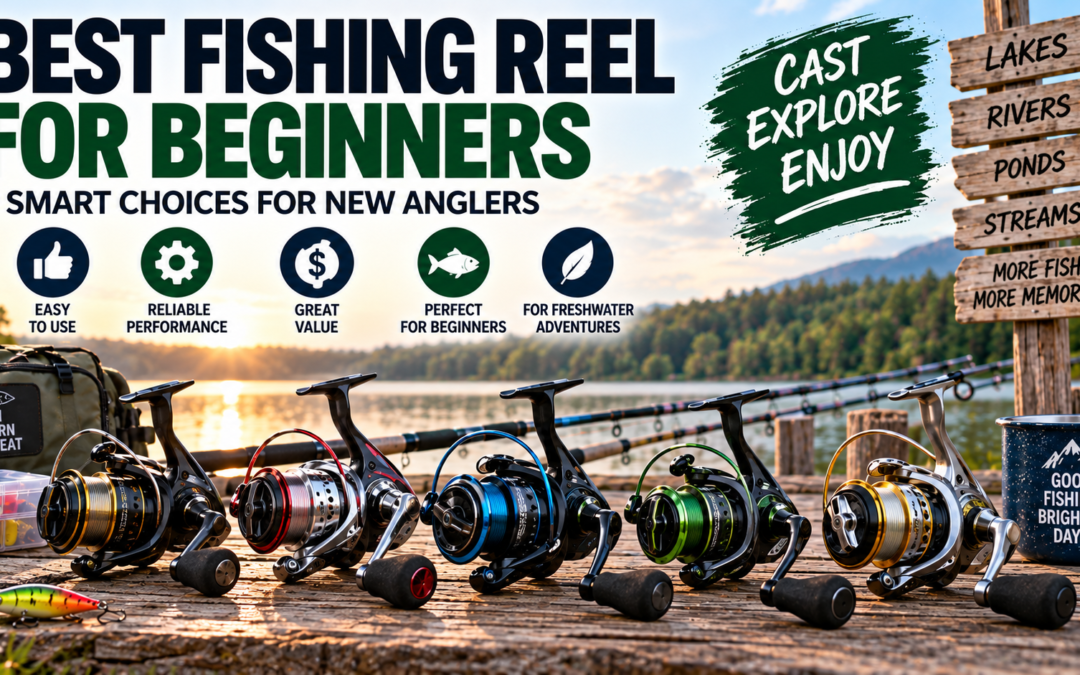
Best Fishing Reel for Beginners: 9 Smart Choices for New Anglers
Finding the best fishing reel for beginners is much easier when you start with the type of fishing you plan to do instead of choosing a reel based only on appearance, price, or the number printed on the spool.
New anglers often encounter spinning reels, spincast reels, baitcasters, and other specialized designs. Each has a different learning curve and works better for certain fishing applications. For many beginners, a simple spinning or spincast setup can provide an approachable way to learn the basics before moving into more specialized equipment.
The right choice also depends on reel size, line capacity, drag, weight, retrieve, and compatibility with your fishing rod.
Take Me Fishing explains that choosing a reel begins with understanding what fish you want to catch and how you want to catch them. Its beginner equipment guidance also describes pre-assembled rod-and-reel combinations as a simple starting point for new anglers.
This guide compares nine practical beginner-reel options and explains the specifications that matter most before you buy.
For broader information, see the fishing reels guide.
What Makes the Best Fishing Reel for Beginners?
The best fishing reel for beginners should be easy enough to learn, appropriate for the fishing you plan to do, and compatible with the rest of your tackle.
That does not necessarily mean buying the simplest or cheapest reel available. A useful beginner reel should have a sensible size, manageable weight, sufficient line capacity, and a drag system appropriate for the fish you intend to target.
| Reel Feature | Why Beginners Should Care |
|---|---|
| Reel type | Determines the basic casting method and learning curve. |
| Size | Affects weight, line capacity, and rod balance. |
| Drag | Controls resistance when a fish pulls line. |
| Line capacity | Determines how much line can be stored on the spool. |
| Weight | Influences comfort during repeated casting. |
| Retrieve | Affects how much line is recovered with each turn of the handle. |
| Construction | Influences durability and handling. |
| Rod compatibility | Helps ensure the complete setup is balanced and usable. |
9 Beginner Fishing Reel Options to Consider
1. General-Purpose Spinning Reel
A general-purpose spinning reel is one of the most useful starting points for anglers who want a versatile setup.
Spinning reels are widely used because they work well with lighter lures and are comparatively straightforward to cast. Take Me Fishing specifically describes spinning reels as versatile and user-friendly, while its beginner gear guidance commonly points new freshwater anglers toward spinning setups.
A general-purpose spinning reel can be a practical choice when you fish ponds, lakes, rivers, or other common freshwater environments and do not yet need specialized equipment.
When evaluating the best fishing reel for beginners, look for a size that balances naturally with your rod and provides enough line capacity for the line you intend to use.
2. Small Spinning Reel for Light Tackle
A smaller spinning reel can make sense when you primarily use light lures and target smaller freshwater fish.
The advantage is lower overall weight and a setup that can pair well with lighter rods. This can make long sessions more comfortable and preserve the feel of lighter tackle.
The trade-off is that a small reel may not provide the line capacity or overall strength required for larger fish or heavier presentations.
Use the reel's line-capacity specifications as part of the decision rather than choosing based only on the reel's external size.
3. Medium Spinning Reel for Broader Freshwater Use
A medium-sized spinning reel can be useful when you want one setup to cover a wider range of freshwater applications.
Take Me Fishing's general reel guidance notes that medium spinning reels can cast a broad range of lures or bait and provide useful general-purpose capability.
This type of reel can be attractive for beginners who do not yet know which fishing styles they will eventually prefer.
It should still be matched to the rod, line, and target fish. “Medium” is not a universal standard across every manufacturer, so check the actual specifications.
4. Spincast Reel for Maximum Simplicity
A spincast reel uses an enclosed spool and a push-button casting system. For someone who finds open-face spinning equipment intimidating, that simplicity can make the first few fishing trips easier.
Take Me Fishing describes spincast equipment as an easy-to-learn option for beginning anglers and notes that its enclosed spool can help reduce tangles during casting.
Spincast reels can therefore be useful for families, younger anglers, and people who want to focus on learning basic fishing skills before moving to an open-face spinning reel.
5. Lightweight Spinning Reel for Stream and Pond Fishing
When fishing small ponds or streams, a lightweight spinning reel can help create a comfortable and responsive setup.
Smaller water often means lighter tackle, shorter casts, and smaller target species. In those situations, a heavy reel can add unnecessary weight without providing a useful advantage.
Pay attention to the reel's line capacity and match it with the rod's recommended line range.
6. Beginner Reel for a Matched Rod-and-Reel Combo
Buying a complete combo is one of the easiest ways to avoid basic compatibility mistakes.
Take Me Fishing recommends pre-spooled, pre-assembled rod-and-reel combinations as a practical freshwater starting point for beginners. Its beginner combo guidance also explains that the components are already paired for balance and function.
A matched combo can be particularly helpful when you have never selected reel size, rod power, and line capacity separately.
For more on complete beginner setups, visit the beginner rod and reel guide.
7. Budget Spinning Reel for Occasional Fishing
If you fish only occasionally, a straightforward budget spinning reel may provide everything you actually need.
Instead of paying for advanced features you may never use, focus on basic usability, appropriate size, acceptable construction, and compatibility with your fishing rod.
A budget reel still needs to feel smooth enough to operate comfortably and provide a drag system and line capacity suitable for the intended fishing.
For additional budget comparisons, see the best fishing reels under $100 guide.
8. Heavier Beginner Reel for Larger Freshwater Applications
Not every beginner targets small fish. Some new anglers start by fishing for stronger freshwater species that require more line capacity and a more robust setup.
In that case, selecting a larger reel may make sense.
Take Me Fishing explains that larger reels are generally associated with greater spool capacity and can be appropriate when targeting larger, stronger fish that require stronger line.
Do not choose a larger reel simply because it appears more powerful. Make sure it balances correctly with the rod and matches the line and lure requirements.
9. Upgrade-Friendly Spinning Reel
An upgrade-friendly reel is useful when you want to begin with straightforward equipment but expect your fishing needs to develop.
You might start with a versatile spinning reel and later move into more specialized equipment as you become comfortable with casting and learn which species and techniques you enjoy.
Hooked Beginner's catalog includes products such as the Piscifun Carbon X II Spinning Reel, Piscifun Carbon X3 Spinning Reel, and Piscifun Nautix Spinning Reel for comparison. Check each product page for its current specifications before choosing.
Spinning Reel vs. Spincast Reel for Beginners
Both reel types can work for new anglers, but they provide different experiences.
| Feature | Spinning Reel | Spincast Reel |
|---|---|---|
| Spool design | Open face | Enclosed |
| Learning curve | Moderate | Very simple |
| Light-lure casting | Strong option | Can handle many beginner applications |
| Growth potential | Broad | More limited for advanced techniques |
| Typical beginner use | General freshwater and developing skills | Simple recreational fishing |
Take Me Fishing notes that spincast reels are especially simple for novice anglers, while spinning reels provide greater versatility and room to progress.
How to Choose Reel Size
Reel size is one of the most important specifications to understand.
Different manufacturers use different sizing systems, so the number on the reel should not be treated as a universal measurement.
Instead, look at spool capacity, recommended line strength, overall weight, and compatibility with the rod.
Take Me Fishing explains that reel size is commonly related to spool capacity and that stronger, thicker line takes up more room on the spool.
For many beginner freshwater setups, Take Me Fishing commonly references spinning reels in the 1000-to-3000 range when paired with a suitable light-to-medium rod.
Use those ranges as a starting reference, not as a universal rule for every fishing situation.
How to Choose the Right Drag
The drag allows a fish to pull line from the spool under controlled resistance.
For beginners, a drag that is easy to adjust and operates consistently can be more useful than chasing the highest maximum drag specification.
Your target fish and line strength should determine how much drag capability you actually need.
After choosing a reel, learn where the drag adjustment is located and practice adjusting it before fishing.
Why Line Capacity Matters
Line capacity indicates how much line the spool can hold for a given line strength or diameter.
For smaller freshwater applications, a modest-capacity reel may be sufficient. Larger fish, longer casts, or stronger line can require a larger spool.
Take Me Fishing gives an example of reel capacity being expressed by line length and pound-test, such as the amount of a specific strength of monofilament that fits on the spool.
When evaluating the best fishing reel for beginners, always look at the actual line-capacity information instead of relying only on the reel-size label.
Match the Reel to the Rod
A reel should be selected as part of a complete fishing setup.
Take Me Fishing recommends matching the reel to a line strength appropriate for the rod and explains that rod-and-reel balance is part of choosing compatible equipment.
Before buying, check:
- Rod length.
- Rod power.
- Rod action.
- Recommended line range.
- Recommended lure range.
- Reel size and weight.
- Reel line capacity.
A well-matched combination should feel comfortable when held together rather than forcing one component to compensate for the other.
For rod-specific guidance, see the fishing rod power guide and fishing rod action guide.
What Line Should a Beginner Use?
Line choice depends on the reel, rod, lure, and fish.
Monofilament is a common beginner choice because it is relatively simple to handle and widely available. More advanced anglers may choose braid or fluorocarbon for particular applications.
Take Me Fishing's beginner gear material frequently uses monofilament as a straightforward starting point and emphasizes keeping early equipment simple.
Stay within the rod and reel manufacturer's recommended line range.
How to Cast a Beginner Spinning Reel
Learning the reel is only part of becoming comfortable with it.
Take Me Fishing's casting guide explains the basic process of casting with spinning and spincast equipment and emphasizes practice as an important part of learning.
For an open-face spinning reel, beginners should learn how the bail works, where the line rests against the finger during the cast, and how to control the line before releasing it.
Start with short, controlled casts in an open area. As your timing improves, gradually work on distance and accuracy.
Common Beginner Reel-Buying Mistakes
Choosing the Largest Reel
A larger reel is not automatically better. It can add weight and make a light rod uncomfortable.
Choosing Only by Price
The cheapest reel may not provide the combination of size, line capacity, drag, and comfort you need.
Ignoring the Rod
A reel should not be purchased independently from the rod's recommended specifications.
Buying Too Much Drag
Maximum drag numbers can look impressive, but most beginners should focus on whether the drag is suitable and usable for the fish and line they actually intend to use.
Ignoring Line Capacity
Always check how much line the spool holds at the line strength you plan to use.
Buying Advanced Equipment Too Early
A highly specialized baitcaster may be useful for certain techniques, but it can add complexity when a new angler is still learning basic casting.
Beginner Fishing Reel Features Worth Paying Attention To
| Feature | What to Look For |
|---|---|
| Smooth operation | Handle and spool movement should feel consistent. |
| Usable drag | Easy adjustment and appropriate range for your target fish. |
| Correct size | Matches rod, line, and intended application. |
| Line capacity | Enough capacity for your chosen line and fishing style. |
| Manageable weight | Comfortable for repeated casting. |
| Simple controls | Easy-to-understand bail, handle, and drag controls. |
| Rod compatibility | Fits the rod and produces a balanced setup. |
How Much Should a Beginner Spend?
There is no single price that defines the correct beginner reel.
Instead, establish a realistic budget around the type of fishing you actually plan to do.
Occasional pond fishing does not require the same equipment as frequent fishing for larger or stronger species.
A matched combo can also provide a practical way to keep costs predictable because the rod and reel are purchased together.
For more reel-price comparisons, see the best fishing reels under $100 guide and best fishing reels under $200 guide.
Beginner Reel Maintenance
Regular care helps keep a fishing reel usable.
After fishing, especially in conditions where dirt, sand, or saltwater may be present, inspect the reel and follow the manufacturer's cleaning and maintenance instructions.
Keep the reel dry before storing it and avoid leaving tackle piled around it.
Take Me Fishing's beginner fishing materials emphasize simple gear care and recommend maintaining equipment so it remains ready for the next trip.
For broader reel information, explore the fishing reel buying guide.
Frequently Asked Questions
What is the best fishing reel for beginners?
The best fishing reel for beginners depends on the fishing situation. A general-purpose spinning reel is often a practical starting point because it is versatile and works well with many common freshwater presentations.
Is a spinning reel good for beginners?
Yes. Spinning reels are widely used by beginners because they are relatively versatile and can handle lighter lures effectively. Take Me Fishing describes spinning reels as user-friendly and suitable for a broad range of fishing situations.
Is a spincast reel easier than a spinning reel?
A spincast reel can be easier to learn because its enclosed spool and push-button system simplify the casting process. Spinning reels offer more flexibility as your skills develop.
What size reel should a beginner use?
The right size depends on the rod, line, lure, and fish. Take Me Fishing commonly references 1000-to-3000 size spinning reels for many beginner freshwater setups, but the manufacturer's actual specifications should guide the final choice.
What type of reel is best for freshwater beginners?
Spinning and spincast reels are common beginner choices for freshwater fishing. The better option depends on how simple you want the casting process to be and how much room you want to grow into more advanced techniques.
How much line should a beginner reel hold?
Enough to match the fishing application, target species, and line strength. Check the spool's published capacity for the specific line you intend to use.
Should beginners buy a reel separately or as a combo?
A matched rod-and-reel combo can simplify the purchasing process because the main components have already been paired. This is one reason Take Me Fishing recommends pre-assembled combinations as a practical beginner option.
Can beginners use baitcasting reels?
Yes, but baitcasters generally have a steeper learning curve than spinning or spincast reels. Take Me Fishing notes that baitcasters can require significant practice and thumb control to manage spool speed and avoid backlashes.
Can one reel work for different fish?
Yes, provided the fish, line, lure, and fishing conditions remain within the reel and rod's intended range.
Final Thoughts
The best fishing reel for beginners is the reel that fits the fishing you actually plan to do while remaining comfortable and simple enough to learn.
For many new freshwater anglers, a versatile spinning reel provides a practical starting point. Those who want the simplest possible casting method can also consider a spincast reel.
Start with the basics: reel type, size, line capacity, drag, weight, retrieve, and compatibility with the rod. Then choose the combination that fits your target fish, fishing environment, and budget.
Hooked Beginner's catalog includes the Piscifun Carbon X II Spinning Reel, Piscifun Carbon X3 Spinning Reel, and Piscifun Nautix Spinning Reel for comparison. Review each product's current specifications before buying.
Continue your research with Hooked Beginner's fishing reels guide, fishing reel buying guide, and best spinning reels guide.
For additional beginner guidance, Take Me Fishing's How to Choose a Fishing Reel explains how reel type, fish species, lure choice, spool capacity, and rod compatibility fit together.
The best beginner reel is not necessarily the most expensive or most powerful option. It is the one that matches your fishing, feels comfortable in your hands, and gives you enough versatility to learn and keep improving.