
Description
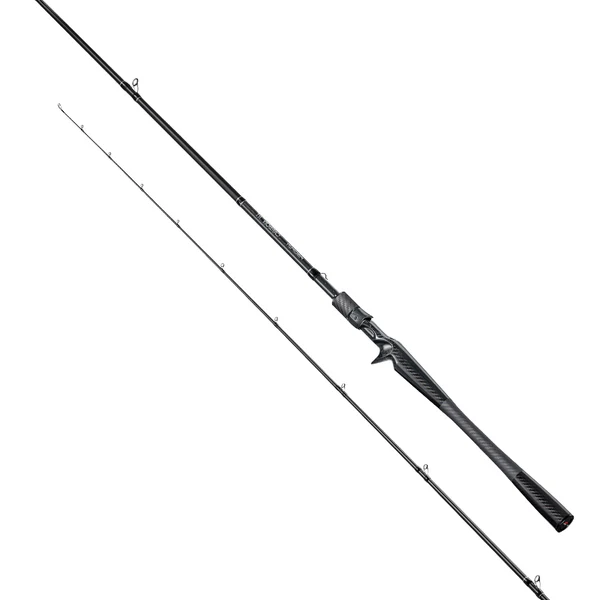
The current casting lineup contains five Carbon R1 Casting Rod options from 6’10” to 7’4″. Medium, medium-heavy and heavy powers are available with moderate, moderate-fast, fast and extra-fast actions, allowing anglers to select a model around the lures and presentations they use most often.
A Lightweight One-Piece Casting Platform
The Carbon R1 Casting Rod is positioned as a premium lightweight rod for active freshwater lure fishing. It is not a travel rod or a multi-section blank. Every current casting model uses one-piece construction to preserve a continuous working blank from tip to handle.
A lighter rod can reduce wrist and forearm fatigue during repeated casting, pitching and lure manipulation. This is especially relevant to bass anglers who may make hundreds of presentations during a full day on the water.
Piscifun states that the integrated carbon grip and reel-seat design reduces weight by 28% compared with a cork handle of the same configuration. This is a manufacturer comparison and may not represent the exact difference against every competing rod.
Customers comparing the Carbon R1 Casting Rod with other products can browse our casting rods collection, explore our casting reels department or view the complete fishing rods collection. These are standard internal dofollow links because they contain no restrictive relationship attributes.
Integrated Carbon-Monocoque Handle and Reel Seat
The most visually distinctive feature of the Carbon R1 Casting Rod is its carbon-monocoque handle. Instead of combining a conventional cork grip, separate reel seat and multiple decorative components, Piscifun integrates the handle and reel-seat area into a carbon structure.
This construction is intended to reduce weight and minimize the amount of material between the angler’s hand and the blank. Fewer soft or disconnected components may allow vibration to travel more directly through the rod.
The streamlined grip is shaped for palming a baitcasting reel and maintaining control during repetitive casts. A firm carbon surface feels different from cork or EVA, but many anglers value the direct feedback and easy-to-clean finish.
Install the reel foot completely inside the seat and tighten the locking system only until the reel remains secure. Excessive force may damage the reel foot or locking threads.
The handle’s rigid structure also means the Carbon R1 Casting Rod should be protected from sharp impact. Avoid dropping it onto concrete or allowing the handle to strike hard boat fittings.
IM8 Toray Carbon-Fiber Blank
The blank used in the Carbon R1 Casting Rod is made from IM8 Toray carbon fiber. This material supports a lightweight and responsive design suited to techniques that depend on accurate casting and clear lure feedback.
Carbon-fiber blanks transmit vibration efficiently. An angler may feel changes in bottom composition, vegetation contact, lure vibration or line pressure through the blank and carbon handle.
The one-piece structure removes the ferrule connection found on a travel rod. This supports a consistent bend profile and reduces the risk of a loose joint interrupting the rod’s action.
Carbon construction must still be handled carefully. A rod can withstand strong progressive bending yet become damaged by a concentrated impact against a rock, vehicle door, boat rail or metal tackle box.
The exact working characteristics of the Carbon R1 Casting Rod vary significantly between the five models. The 7’2″ moderate-action rod bends more deeply than the 7’4″ heavy extra-fast configuration.
SSR Carbon-Nanotube-Resin Reinforcement
The Carbon R1 Casting Rod uses what Piscifun calls SSR, or Super Sensitivity Reinforcement technology. The manufacturer describes this as carbon nanotubes integrated with resin on the blank surface.
The purpose of this technology is to improve resistance to twisting, breaking and temperature-related changes while increasing sensitivity. Reduced twisting can help the blank remain stable during casting, lure movement and fish fighting.
Piscifun states that the Carbon R1 is three times more sensitive than its Serpent series. This is a brand comparison rather than an independently verified universal measurement, so actual sensitivity will also depend on the selected model, reel, line and lure.
Blank reinforcement does not eliminate the need to follow correct fishing practices. Use an appropriate reel drag, avoid high-sticking and never exceed verified line or lure information printed on the physical rod.
Fuji Tangle-Free Guides With Alconite Rings
The Carbon R1 Casting Rod uses Fuji tangle-free guides fitted with Alconite rings. The guide train controls fishing line as it leaves the baitcasting reel and travels along the blank.
A tangle-resistant frame design helps reduce opportunities for loose line to wrap around the guide during casting or lure manipulation. It cannot completely prevent tangles caused by severe slack, wind or incorrect reel adjustment.
Alconite guide rings provide a smooth line-contact surface suitable for commonly used braided, monofilament and fluorocarbon lines when the inserts remain clean and undamaged.
Piscifun associates the guide system and blank construction with stable vibration, smoother line release and increased casting performance. Real casting distance will depend on lure aerodynamics, line diameter, spool setup, braking, wind and angler technique.
Inspect every guide before fishing. Pass a cotton swab around each ring and check whether fibers catch on a crack, groove or rough edge.
Direct Lure Feedback for Technical Fishing
Sensitivity is one of the main selling points of the Carbon R1 Casting Rod. The IM8 carbon blank, rigid carbon grip and integrated reel-seat structure are designed to transfer vibration efficiently.
This can be useful when fishing bottom-contact lures such as jigs, Texas rigs and Carolina rigs. The angler may need to distinguish between gravel, rock, wood, vegetation and a subtle bite.
Moving baits also produce useful feedback. A sudden loss of vibration from a crankbait, chatterbait or spinnerbait may indicate that the lure has contacted vegetation or that a fish has taken it from behind.
Fishing line has a major effect on sensitivity. Braided line offers low stretch, fluorocarbon provides relatively direct feedback, and monofilament adds more cushioning.
A sensitive rod does not automatically set the hook. Anglers must still control slack, maintain appropriate drag pressure and react according to the lure and hook style.
Balanced Casting Control and Accuracy
The light construction of the Carbon R1 Casting Rod can make repeated casting feel less demanding. Lower handle weight may also improve the sensation of balance when the rod is paired with an appropriately sized baitcasting reel.
Piscifun claims up to 35% greater casting distance than the Serpent series under its stated comparison conditions. This should be presented as a manufacturer claim rather than a guaranteed result for every angler.
Rod action plays an important role in casting. Moderate and moderate-fast rods load more deeply, while fast and extra-fast models transfer power through a more responsive upper section.
The baitcasting reel must be adjusted for the lure. Set the spool tension, braking system and drag before making full-force casts. Incorrect adjustment can cause backlashes regardless of the rod’s guide or blank design.
For general fishing education and casting guidance, visit the Take Me Fishing casting resources. This is an authoritative standard dofollow link placed directly inside the description.
Recommended Freshwater Techniques
The five Carbon R1 Casting Rod models cover different lure categories and fishing approaches.
Texas rigs and jigs
Fast and extra-fast models can provide direct lure control, quick line pickup and decisive hook-setting performance for single-hook bottom-contact presentations.
Spinnerbaits and chatterbaits
Medium-heavy fast or moderate-fast rods can support moving baits that create resistance while retaining enough backbone for strong hooksets.
Crankbaits and treble-hook lures
The 7’2″ medium-heavy moderate model can provide a deeper working bend that helps absorb head shakes and reduce the risk of pulling small treble hooks free.
Topwater fishing
Medium and medium-heavy rods may suit walking baits, poppers and other topwater lures when the lure weight matches the markings on the selected rod.
Frogs and heavier cover
The 7’4″ heavy extra-fast model provides the strongest power in the casting lineup. It may suit heavier lures and applications where fish must be moved away from vegetation or structure.
Potential Freshwater Target Species
The Carbon R1 Casting Rod is primarily suited to bass and other freshwater predator fishing when the model and tackle match the application.
Medium-power models can be used for largemouth bass, smallmouth bass, spotted bass and other species with moderate lure presentations.
Medium-heavy rods provide broader versatility for heavier bass techniques, pike, walleye and situations where additional backbone is useful.
The heavy model can support demanding freshwater presentations, but species suitability should not be determined by power alone. Lure weight, hook style, cover, line and reel drag all matter.
Five Verified One-Piece Casting Models
The current official casting lineup of the Carbon R1 Casting Rod contains five configurations.
| Model Option | Length | Power | Action | Pieces | Blank | Guides |
|---|---|---|---|---|---|---|
| Casting Rod 6’10” M F | 6’10” | Medium | Fast | 1 | IM8 Toray Carbon | Fuji Alconite |
| Casting Rod 7’0″ MH F | 7’0″ | Medium Heavy | Fast | 1 | IM8 Toray Carbon | Fuji Alconite |
| Casting Rod 7’2″ MH M | 7’2″ | Medium Heavy | Moderate | 1 | IM8 Toray Carbon | Fuji Alconite |
| Casting Rod 7’3″ M MF | 7’3″ | Medium | Moderate Fast | 1 | IM8 Toray Carbon | Fuji Alconite |
| Casting Rod 7’4″ H EF | 7’4″ | Heavy | Extra Fast | 1 | IM8 Toray Carbon | Fuji Alconite |
Every Carbon R1 Casting Rod variation should clearly display its exact length, power, action and one-piece construction.
Important: Piscifun’s current public product page does not show model-specific line or lure ratings in the readable specification text. Do not invent those values or copy them from the spinning versions. Use markings from the physical rod, package or verified supplier documentation.
How to Choose the Correct Carbon R1 Model
Choose the 6’10” Medium Fast model for compact control
This shorter Carbon R1 Casting Rod can suit accurate casting, topwater presentations and general medium-power lure fishing where maneuverability matters.
Choose the 7’0″ Medium Heavy Fast model for versatility
The 7-foot medium-heavy fast configuration can cover many popular bass techniques, including jigs, Texas rigs, spinnerbaits and larger soft plastics.
Choose the 7’2″ Medium Heavy Moderate model for moving baits
The moderate action provides a deeper bend that can suit crankbaits and other treble-hook lures requiring controlled loading.
Choose the 7’3″ Medium Moderate Fast model for balanced presentations
This model combines medium power with a more progressive action than a standard fast rod, providing a useful option for versatile lure fishing.
Choose the 7’4″ Heavy Extra Fast model for stronger applications
The longest and most powerful Carbon R1 Casting Rod provides the greatest backbone in the current casting lineup. It may suit frogs, heavier soft plastics and fishing around vegetation.
Verified General Specifications
| Store Product Name | Hooked Beginner Carbon R1 One-Piece Casting Rod |
|---|---|
| Original Manufacturer | Piscifun |
| Original Series | Carbon R1 |
| Rod Type | Baitcasting / casting rod |
| Primary Application | Freshwater lure fishing |
| Blank Material | IM8 Toray carbon fiber |
| Reinforcement Technology | SSR carbon-nanotube-resin technology |
| Handle | Carbon monocoque |
| Reel Seat | Integrated with carbon handle |
| Guide Brand | Fuji |
| Guide Design | Tangle-free frames |
| Guide Rings | Alconite |
| Construction | One piece |
| Available Lengths | 6’10”, 7’0″, 7’2″, 7’3″ and 7’4″ |
| Available Powers | Medium, Medium Heavy and Heavy |
| Available Actions | Moderate, Moderate Fast, Fast and Extra Fast |
| Warranty | One-year limited warranty, subject to current manufacturer terms |
Review the official Piscifun Carbon R1 product page for current construction details and availability. Anglers can also compare related lightweight products through the official Piscifun carbon-light rod collection. These are authoritative standard dofollow links placed directly inside the full description.
Choosing a Baitcasting Reel and Fishing Line
Pair the Carbon R1 Casting Rod with a low-profile baitcasting reel that balances the selected rod length and provides enough drag and line capacity for the intended technique.
Browse suitable equipment in our casting reels collection. A lightweight reel can complement the rod’s carbon handle, while a slightly heavier reel may improve balance on the longer models.
Fluorocarbon is useful for bottom-contact and clear-water applications. Braided line provides low stretch and strength for vegetation, while monofilament offers manageable handling and additional cushioning.
Always follow the line and lure ratings printed on the selected physical rod. These model-specific values are not clearly displayed in Piscifun’s current public page text.
Cleaning, Inspection and Safe Storage
After fishing, wipe the Carbon R1 Casting Rod with a clean damp cloth. Remove dirt, moisture and plant material from the blank, guides, carbon handle and reel seat.
Inspect every Fuji Alconite ring for cracks, grooves or rough surfaces. Damaged guide inserts can weaken fishing line during casting or fish fighting.
Remove the baitcasting reel periodically and clean the reel foot and integrated seat. Avoid aggressive solvents or abrasive cleaners on the carbon grip.
Store the one-piece rod vertically in a secure rack or horizontally with even support. Do not bend it into a short vehicle space or place heavy equipment on top of the blank.
During a fish fight, use the rod’s full working curve and the reel drag. Avoid high-sticking or lifting a heavy fish directly from the water with the rod tip.
Frequently Asked Questions
What is the Carbon R1 Casting Rod made from?
It uses an IM8 Toray carbon-fiber blank with Piscifun’s SSR carbon-nanotube-resin reinforcement.
How many casting models are available?
The current lineup contains five one-piece casting configurations.
Which lengths are available?
The casting models measure 6’10”, 7’0″, 7’2″, 7’3″ and 7’4″.
Which powers are offered?
The lineup includes medium, medium-heavy and heavy power.
Which actions are available?
Moderate, moderate-fast, fast and extra-fast actions are available.
Are the rods one piece?
Yes. Every current casting model uses one-piece construction.
What is a carbon-monocoque handle?
It is a rigid carbon handle structure integrated with the reel-seat area to reduce weight and improve vibration transfer.
Which guides are installed?
The rods use Fuji tangle-free guides with Alconite rings.
Is the rod really three times more sensitive?
Piscifun states that it is three times more sensitive than the company’s Serpent series. This is a manufacturer comparison, not an independent guarantee.
Does the Carbon R1 Casting Rod include a reel?
No. This listing covers the rod unless a specific store option clearly states that a baitcasting reel is included.
Which model is best for crankbaits?
The 7’2″ medium-heavy moderate model offers the deepest published action and may suit many treble-hook moving baits.
Which model is the strongest?
The 7’4″ heavy extra-fast Carbon R1 Casting Rod provides the greatest published power in the current lineup.
Choose the Carbon R1 Casting Rod according to your preferred lure style, rod action, fishing cover and required power. A correctly matched model combines lightweight handling, direct carbon feedback and responsive one-piece performance for serious freshwater casting.
Reviews
There are no reviews yet.