
Description
Available in 6-foot Heavy and 7-foot Extra-Heavy configurations, the Saltflow Bent-Butt Rod gives anglers two clearly different levels of offshore strength. The shorter model is rated for 40–100 lb line, while the longer version supports 100–250 lb line and uses full roller guides for the most demanding big-game applications.
Heavy Offshore Performance With Fighting-Chair Control
The Saltflow Bent-Butt Rod is not intended for light casting, inshore spinning or casual freshwater use. It is a dedicated offshore conventional rod for situations involving large reels, heavy line, deep water, trolling pressure and fish capable of placing sustained load on the complete setup.
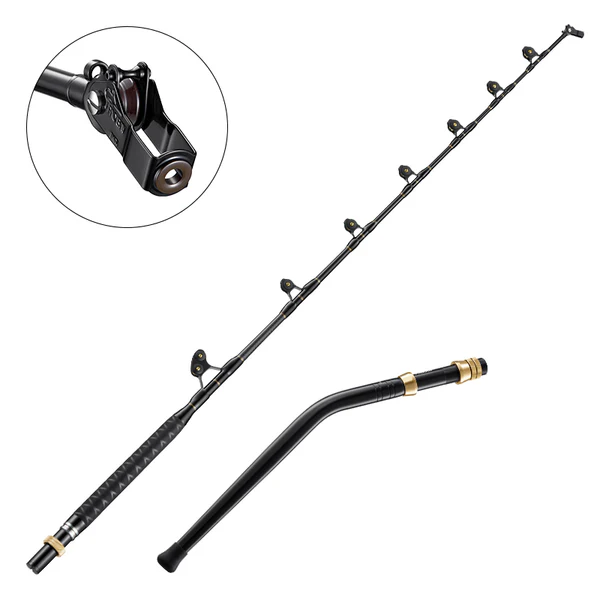
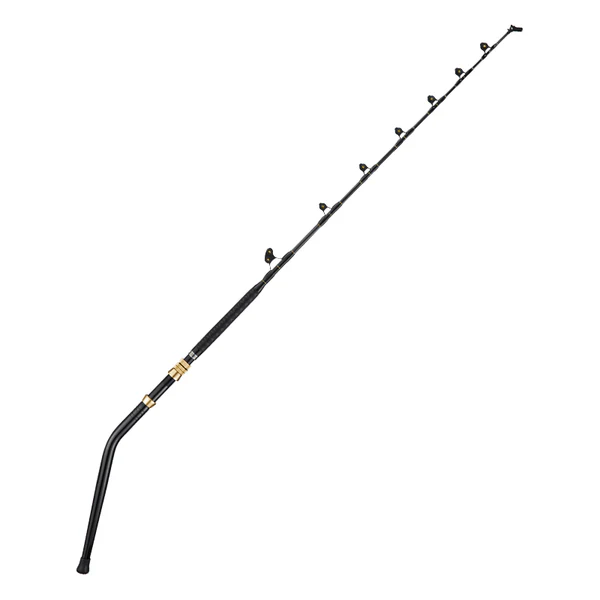
The bent-butt profile positions the reel and handle at an angle that works naturally with fighting chairs and compatible rod holders. This arrangement can improve leverage by helping the rod remain properly seated while the angler or electric reel maintains pressure.
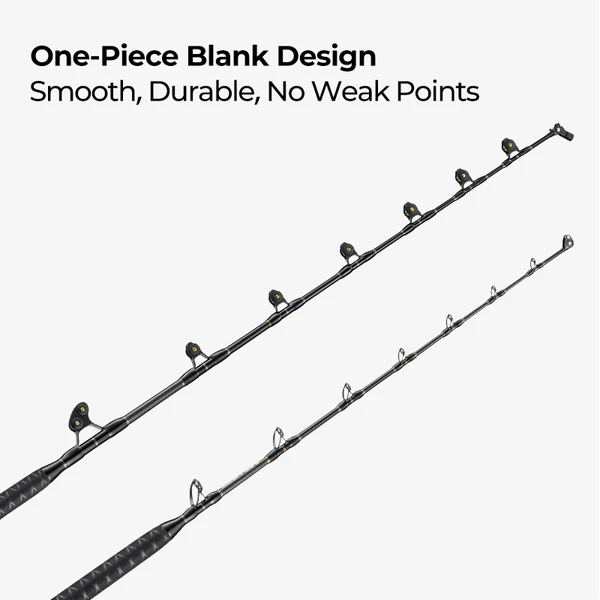
Both current models use one-piece blanks, so the working section does not include a removable ferrule joint. Only the CNC-aluminum butt detaches for transportation. This design preserves a continuous blank while still making the rod easier to store.
Customers comparing the Saltflow Bent-Butt Rod with other heavy equipment can browse our casting and conventional rods, explore our electric reels collection or view the wider fishing rods department.
CG1 Carbon-and-Fiberglass Hybrid Blank
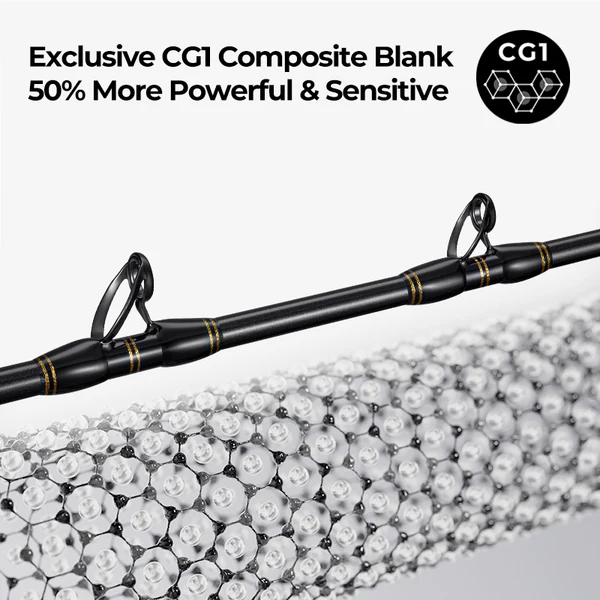
The blank used in the Saltflow Bent-Butt Rod is made from Piscifun’s proprietary CG1 matrix, which combines 30% carbon fiber with 70% fiberglass in a cross-ply structure.
Carbon fiber contributes stiffness, feedback and structural response, while fiberglass supplies elasticity and impact tolerance. This combination is useful for offshore rods because the blank must absorb sudden changes in pressure without feeling completely rigid.
The cross-ply arrangement is intended to reduce twisting and provide a stable backbone under heavy drag. A more stable rod can help transfer pressure directly toward the reel and fighting-chair system rather than allowing excessive blank rotation.
Sensitivity still matters during deep dropping. A strong rod must also help the angler detect subtle bites through heavy sinkers, current and long lengths of line.
The manufacturer presents the CG1 structure as capable of balancing strength, sensitivity and elasticity. The Saltflow Bent-Butt Rod should nevertheless be used within its exact model rating and should never be treated as unbreakable.
Bent-Butt Geometry for Better Offshore Leverage
The angled handle is one of the defining features of the Saltflow Bent-Butt Rod. A bent butt allows the rod to lock into a compatible fighting chair or rod holder while positioning the reel for controlled cranking and drag management.
This geometry can reduce wrist and arm strain during long battles because the boat, fighting chair and rod holder help support the load. It is especially useful when working with electric reels or heavy conventional setups.
The bent section is made from CNC-machined anodized aluminum. Metal construction provides rigidity and resists the deformation that can occur when a large reel is subjected to heavy drag pressure.
The butt can also be removed for transport. The blank itself remains one piece, so anglers gain some portability without adding a ferrule joint to the working rod section.
7+1 Guide Architecture for Smooth Line Tracking
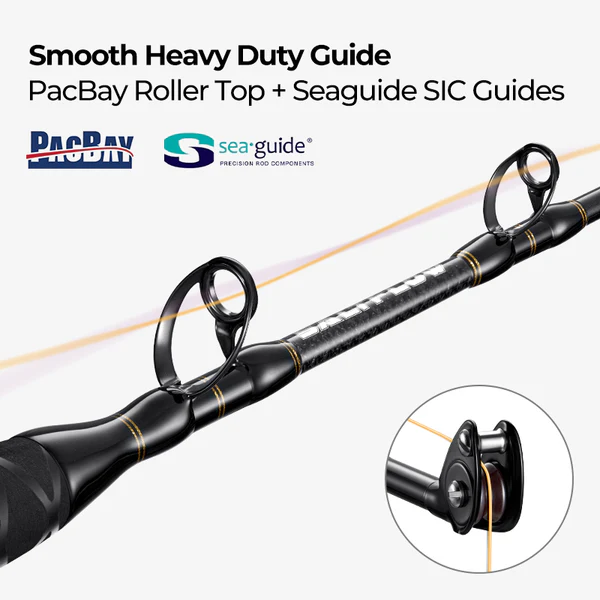
The Saltflow Bent-Butt Rod uses a total 7+1 guide layout. The exact guide configuration changes between the two available models.
The 6-foot Heavy rod uses SeaGuide stainless-steel frames with SiC rings and a PACBAY roller tip. This combination provides smooth line contact while adding a roller at the highest-pressure point near the tip.
The 7-foot Extra-Heavy model uses full PACBAY rollers, including a 270-degree swivel roller tip. Full rollers are relevant to very heavy line, sustained trolling pressure and big-game fish that create continuous friction.
The swivel roller tip helps the line follow changes in direction as the fish moves. This can reduce the risk of the line rubbing against the roller frame during hard side pressure.
Guide alignment and roller condition must be checked regularly. Salt, sand, dried bait and corrosion can prevent rollers from turning freely and may damage heavy monofilament or braided line.
All-Metal PACBAY Reel Seat and Grip
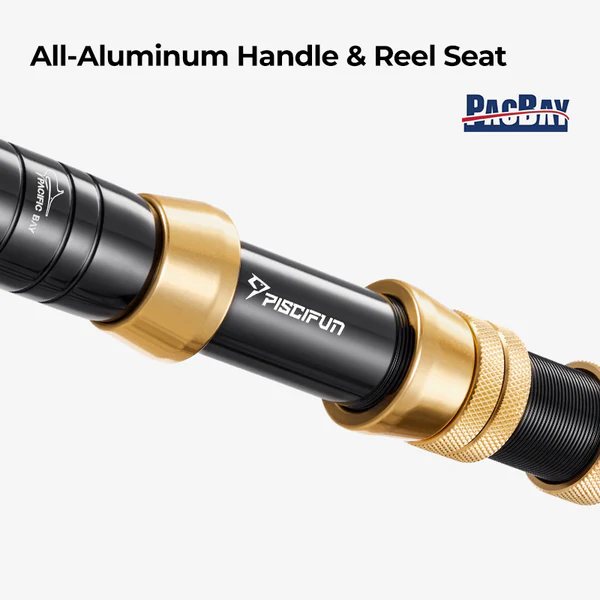
The reel-mounting system on the Saltflow Bent-Butt Rod uses CNC-milled anodized aluminum PACBAY components. This all-metal system is designed to hold large conventional and electric reels securely during heavy offshore use.
A rigid reel seat reduces unwanted movement between the reel foot and rod. This is especially important when high drag pressure or powered retrieval loads the setup for long periods.
The sealed-thread design and smooth surfaces make the hardware easier to rinse after saltwater exposure. However, anglers should still remove the reel periodically and clean the mounting surfaces.
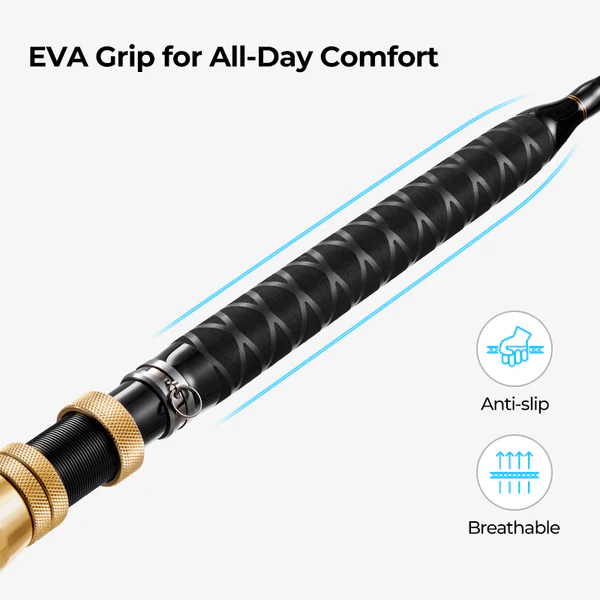
The EVA foregrip provides a cushioned, non-slip area for the forward hand. This is useful when the rod must be controlled manually during trolling, deep dropping or a powerful fish fight.
Cross-Butt, Rubber Cap and Anti-Loss Ring
The tail section of the Saltflow Bent-Butt Rod includes a cross-butt design, protective rubber cap and 360-degree anti-loss safety ring.
The cross-butt helps prevent rotation inside compatible rod holders and fighting-chair hardware. Correct alignment improves stability and keeps the guide train positioned as intended.
The rubber cap protects the metal butt during stand-up handling or temporary deck contact. It also allows the rod to be used outside a fighting chair when conditions and tackle permit.
The anti-loss ring can be clipped to a fighting belt, boat attachment point or suitable safety tether. This adds security when sudden strikes or rough conditions threaten to pull equipment overboard.
Built for Electric and Conventional Reels
The Saltflow Bent-Butt Rod is designed to pair with heavy electric reels as well as suitable conventional reels. The strong reel seat, bent butt and one-piece blank make it relevant to powered deep-drop setups.
Electric reels reduce the effort required to retrieve heavy sinkers and rigs from deep water, but the rod must still absorb boat movement, current, fish pressure and sudden changes in line tension.
The shorter Heavy model may suit medium-to-deep electric-reel work where maneuverability is important. The 7-foot Extra-Heavy version provides significantly higher line capacity and stronger roller-guide support for extreme applications.
Browse compatible products in our electric reels collection or compare heavy options in our conventional reels department.
Recommended Offshore Fishing Techniques
The Saltflow Bent-Butt Rod supports several boat-based applications when it is correctly matched with a reel, line, leader and terminal rig.
Big-game trolling
The bent butt and fighting-chair compatibility make the rod suitable for trolling live baits, dead baits or offshore lures. The 7-foot full-roller model is particularly relevant when heavy line and prolonged drag pressure are expected.
Deep dropping
Heavy sinkers, multi-hook rigs and deep current place sustained pressure on the blank. Electric reels can retrieve the rig, while the rod absorbs movement and transmits bites.
Electric-reel bottom fishing
The rod can remain secured in a compatible holder while an electric reel works deep ledges, wrecks or reef edges. The safety ring provides an additional attachment point.
Live-bait fishing
The setup can be used for bump trolling or presenting large live baits to tuna, marlin and other offshore predators when line strength and rigging are appropriate.
Heavy stand-up fishing
The removable rubber-capped butt allows limited stand-up use, but the rod’s weight and power make correct belt support and technique essential.
For general offshore-fishing education and responsible-angling guidance, visit the Take Me Fishing saltwater resources.
Potential Big-Game Target Species
The Saltflow Bent-Butt Rod may be used for tuna, grouper, snapper, swordfish, marlin, large sharks and other powerful offshore species when the selected model and tackle match the fishing conditions.
The 6-foot Heavy model is a practical choice for reef fish, tuna, deep-drop species and general heavy boat fishing with 40–100 lb line.
The 7-foot Extra-Heavy model is intended for significantly heavier applications using 100–250 lb line. Its full roller system and stronger power make it more appropriate for extreme big-game pressure.
Species names alone do not determine suitability. Fish size, depth, current, cover, drag setting, line type and fighting-chair support all influence the real load placed on the rod.
Two Verified Saltflow Bent-Butt Models
The current Saltflow Bent-Butt Rod lineup contains two verified options.
| Model Option | Length | Power | Line Rating | Guide System | Blank | Butt |
|---|---|---|---|---|---|---|
| H 40–100 lb | 6’0″ | Heavy | 40–100 lb | SeaGuide SiC guides with PACBAY roller tip | One-piece CG1 composite | Removable CNC-aluminum bent butt |
| XH 100–250 lb | 7’0″ | Extra Heavy | 100–250 lb | Full PACBAY rollers with 270° swivel roller tip | One-piece CG1 composite | Removable CNC-aluminum bent butt |
Each variation of the Saltflow Bent-Butt Rod should clearly display its length, power, line rating and guide configuration. Do not apply the full-roller description to the 6-foot model.
How to Choose the Correct Model
Choose the 6-foot Heavy model for broader versatility
The 6-foot Saltflow Bent-Butt Rod uses a 40–100 lb rating and combines SeaGuide SiC guides with a roller tip. Its shorter length can provide maneuverability in boat cockpits and fighting-chair setups.
Choose the 7-foot Extra-Heavy model for maximum line strength
The 7-foot model supports 100–250 lb line and uses full PACBAY rollers. It is the stronger choice for extremely heavy trolling, giant tuna, marlin, sharks and other high-drag applications.
Consider the complete setup before ordering. Reel size, drag capability, rod-holder type, fighting-chair hardware and available deck space should all be compatible with the selected model.
Verified General Specifications
| Store Product Name | Hooked Beginner Saltflow Bent-Butt Offshore Boat Rod |
|---|---|
| Original Manufacturer | Piscifun |
| Series | Saltflow Bent-Butt |
| Rod Type | Conventional offshore trolling and deep-drop rod |
| Available Lengths | 6’0″ and 7’0″ |
| Available Powers | Heavy and Extra Heavy |
| Available Line Ratings | 40–100 lb and 100–250 lb |
| Blank Material | CG1 hybrid: 30% carbon fiber and 70% fiberglass |
| Blank Construction | One piece |
| Guide Count | 7+1 |
| 6-Foot Guide System | SeaGuide SiC guides with PACBAY roller tip |
| 7-Foot Guide System | Full PACBAY rollers with 270° swivel roller tip |
| Reel Seat and Grip | CNC-machined anodized aluminum PACBAY components |
| Foregrip | EVA |
| Butt System | Removable bent butt with cross-butt and rubber cap |
| Safety Feature | 360° anti-loss ring |
| Verified 7-Foot SKU | RD013-BKD-7XH-PN |
| Warranty | One-year limited warranty, subject to current terms |
Review the official Piscifun Saltflow Bent-Butt product page for current specifications and availability. Anglers can also compare other offshore options through the official Piscifun saltwater-rod collection.
Choosing a Reel, Line and Leader
Pair the Saltflow Bent-Butt Rod with a heavy conventional or electric reel that fits the PACBAY seat and provides drag pressure appropriate for the selected line class.
Braided line offers high capacity and smaller diameter for deep dropping. Heavy monofilament remains popular for trolling because its stretch can cushion sudden strikes and head shakes.
Fluorocarbon or abrasion-resistant monofilament leaders can help protect the connection around reefs, wrecks, rough mouths and large offshore hardware.
Every connection must be balanced. Rod power, reel drag, line, leader, hooks, swivels and fighting-chair components should work as a single system.
Saltwater Cleaning and Safe Storage
After every trip, rinse the Saltflow Bent-Butt Rod gently with low-pressure fresh water. Clean the rollers, SiC rings, aluminum reel seat, bent butt, EVA foregrip and safety ring.
Turn each roller by hand after rinsing to confirm that it moves freely. Salt or sand trapped around a roller can damage heavy fishing line.
Remove the reel periodically and clean the reel foot, seat threads and locking components. Dry all metal parts thoroughly before storage.
Unscrew the bent butt only after the rod is clean and dry. Inspect the connection for corrosion, grit or looseness before the next trip.
Store the one-piece blank horizontally with even support or vertically in a secure rack. Avoid placing coolers, batteries or heavy tackle boxes on top of the rod.
Frequently Asked Questions
Which lengths are available?
The current lineup includes 6-foot and 7-foot models.
What line ratings are offered?
The 6-foot model is rated for 40–100 lb line, while the 7-foot model is rated for 100–250 lb.
What is the blank made from?
The CG1 hybrid blank combines 30% carbon fiber with 70% fiberglass.
Is the blank one piece?
Yes. The blank is one piece, although the aluminum bent butt can be removed for transportation.
How many guides are fitted?
The rod uses a 7+1 guide layout.
Do both models use full roller guides?
No. The 6-foot rod uses SeaGuide SiC guides with a PACBAY roller tip. The 7-foot rod uses full PACBAY rollers.
What is the 270-degree swivel roller tip?
It is fitted to the 7-foot model and allows the tip roller to follow line direction during heavy side pressure.
Can the rod be used with electric reels?
Yes. It is designed to work with suitable electric and conventional offshore reels.
What is the anti-loss ring for?
It provides a safety attachment point for a belt, fighting chair or boat tether.
Is the Saltflow Bent-Butt Rod suitable for trolling?
Yes. Its bent butt, heavy line ratings and roller-guide options make it suitable for offshore trolling.
Does the product include a reel?
No. This listing covers the rod unless a store option clearly states that a reel is included.
How should I choose between the two models?
Select the Saltflow Bent-Butt Rod according to line class, reel size, target species, drag pressure and whether full rollers are required.
Choose the Saltflow Bent-Butt Rod for heavy trolling, deep dropping, electric-reel work and big-game battles where strong hardware and fighting-chair leverage matter. Match the exact model to your reel, line class and offshore target for a dependable high-pressure setup.
Reviews
There are no reviews yet.