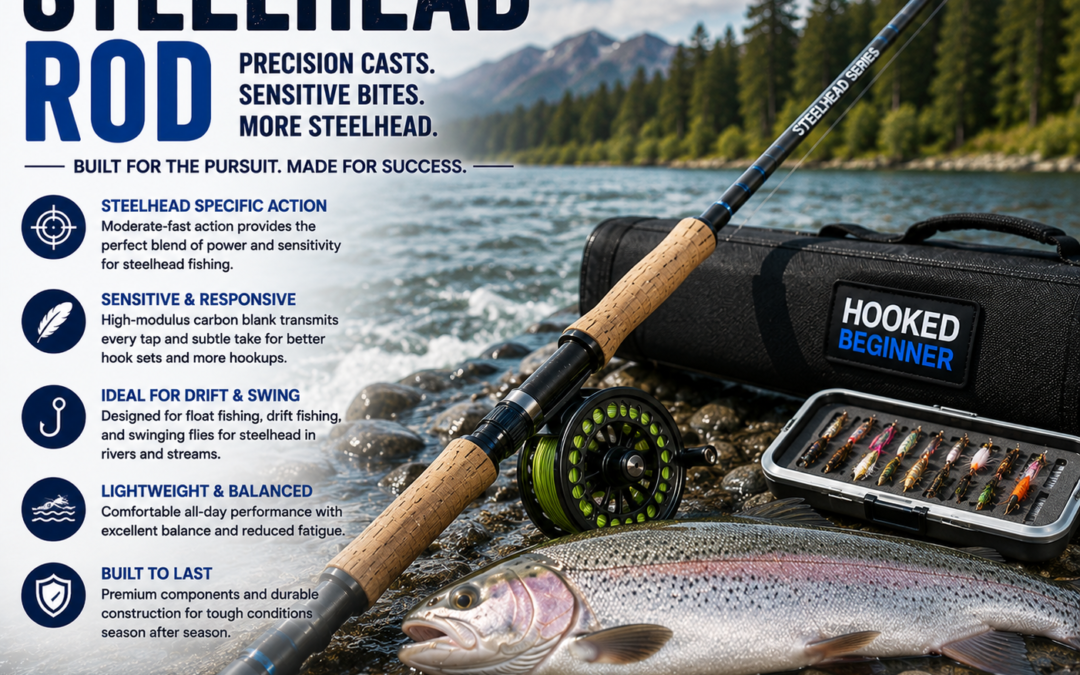
Steelhead have a reputation for being one of the toughest fights in freshwater — explosive runs, aggressive jumps, and a knack for finding the one snag in the river to wrap you around. A steelhead rod needs to walk a fine line: sensitive enough to detect a subtle take, yet powerful enough to control a fish that fights like it's twice its size.
This guide covers what actually matters when choosing a steelhead rod as a beginner, from length to technique.
Table of Contents
Why Steelhead Rods Balance Sensitivity and Power
Steelhead often bite subtly, especially when drift fishing bait or light presentations along the bottom of a river. A steelhead rod needs a sensitive enough tip to register that light take, but that sensitivity can't come at the cost of backbone — the moment a steelhead feels the hook, it typically responds with a hard run or an aerial jump, and a rod that's too soft throughout will struggle to keep the fish under control.
This is why most dedicated steelhead rods use a fast action with a softer tip section that transitions into real backbone through the mid and butt sections of the blank.
Length Considerations for River Fishing
Steelhead rod length is largely driven by the technique and the size of water you're fishing:
- 8'6"–9' rods: the most common steelhead rod length, offering strong line control for drift fishing and better mending on larger rivers
- 7'6"–8' rods: better suited for smaller streams or tighter fishing spots where a shorter rod is easier to maneuver
- 9'6"+ rods: favored by anglers centerpin or float fishing large rivers, where extra length improves drift control
For most beginners, an 8'6" to 9' medium steelhead rod is the safest all-around starting point across most river conditions.
Matching Your Rod to Technique
- Drift fishing: favors a longer rod with a sensitive tip to detect subtle takes as bait moves naturally along the bottom
- Float fishing: pairs well with a longer, softer-tipped steelhead rod that allows precise line control under a float
- Casting spoons or spinners: benefits from a slightly shorter, faster action rod that loads well on the cast while retaining backbone for the hookset
A Reliable Steelhead Rod Pick
The G. Loomis IMX-PRO Steelhead Rod is purpose-built as a dedicated steelhead rod, balancing the sensitivity needed to feel subtle takes with the backbone required to control a hard-fighting fish through a long run. It's a strong choice whether you're drift fishing bait or casting hardware.
For exact power, length, and line ratings, check the product page — specifications vary by size selected.
Pairing With Reel and Line
Steelhead rods pair well with a reel that has a smooth, reliable drag — sudden runs demand consistent resistance rather than a drag that grabs or slips. Many anglers spool their steelhead rod with light monofilament or fluorocarbon in the 8-12lb range, prioritizing stretch and shock absorption over raw strength. Browse our full fishing reels collection, or check our fishing rod buying guide for more on matching gear to your setup. For current steelhead season dates and river-specific regulations, Take Me Fishing is a reliable resource to check before heading out.
Frequently Asked Questions
What length steelhead rod is best for beginners?
8'6" to 9' is the safest all-around starting point, offering strong line control for drift fishing while remaining manageable on most river sizes.
Can I use a salmon rod for steelhead?
Yes — steelhead and salmon rods share very similar power and action requirements, which is why many anglers use the same rod for both species interchangeably.
What action is best for a steelhead rod?
A fast action with a sensitive tip is typical, allowing you to detect light takes while retaining enough backbone in the mid and butt sections to control a hard-fighting fish.
What line strength works best for steelhead?
8-12lb monofilament or fluorocarbon is common, balancing enough strength to land the fish with enough stretch to absorb sudden runs and headshakes.