
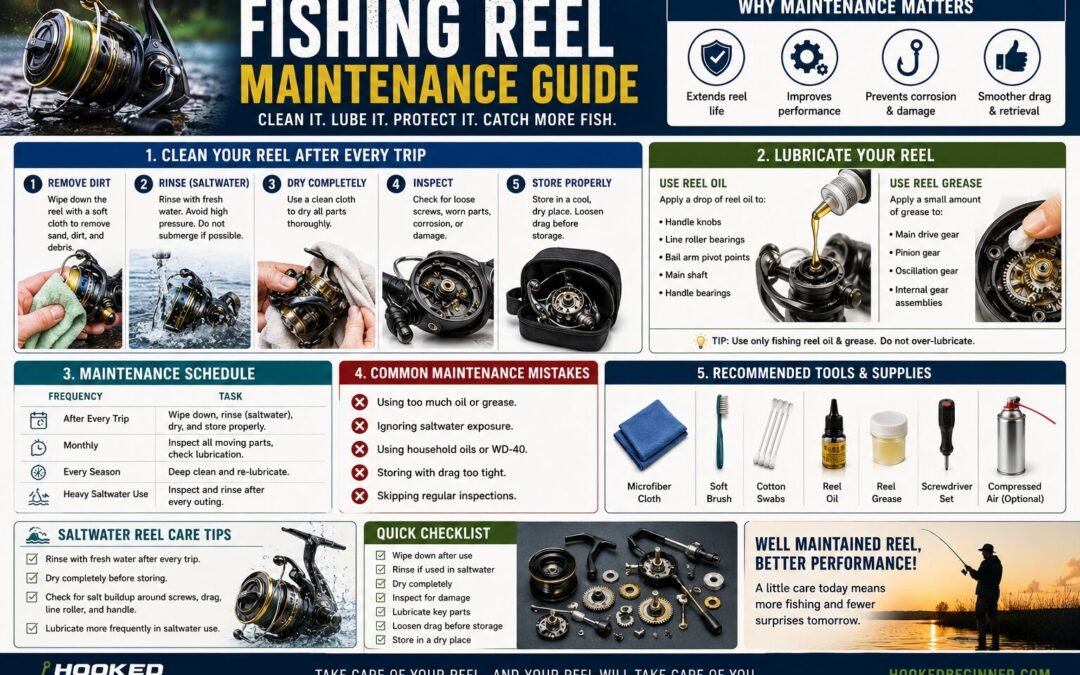
Fishing Reel Maintenance Guide: Keep Your Reel Performing Like New
A complete Fishing Reel Maintenance Guide is essential for every angler who wants to extend the life of their equipment and maintain smooth, reliable performance. Whether you fish freshwater lakes, rivers, inshore flats, or offshore waters, regular maintenance helps prevent corrosion, reduces wear, and ensures your reel performs when it matters most.
This Fishing Reel Maintenance Guide explains how to clean, inspect, lubricate, and store spinning, baitcasting, conventional, and electric fishing reels. By following a simple maintenance routine, you can improve casting performance, protect internal components, and avoid costly repairs.
Table of Contents
Why Fishing Reel Maintenance Matters
A proper Fishing Reel Maintenance Guide starts with understanding why maintenance is important. Dirt, sand, salt, moisture, and old grease gradually reduce reel performance. Without regular care, bearings become rough, gears wear faster, drag systems lose smoothness, and corrosion can permanently damage internal components.
Routine maintenance not only protects your investment but also improves casting distance, retrieval smoothness, and overall reliability. Even anglers who fish only a few times each month should include basic cleaning after every trip.
Browse our collection of Fishing Reels to compare spinning, casting, conventional, and electric models.
How Often Should You Maintain a Fishing Reel?
Every Fishing Reel Maintenance Guide recommends different maintenance intervals depending on how frequently you fish and the environments you fish in.
| Fishing Frequency | Recommended Maintenance |
|---|---|
| After Every Trip | Wipe down and rinse if used in saltwater |
| Monthly | Inspect moving parts and lubrication |
| Every Season | Deep clean and service |
| Heavy Saltwater Use | Inspect after every outing |
Following this Fishing Reel Maintenance Guide schedule helps prevent expensive repairs while keeping your reel operating at peak performance throughout the fishing season.
Essential Cleaning Supplies
Before beginning any maintenance, gather the proper tools. A well-prepared Fishing Reel Maintenance Guide always starts with using the correct cleaning products instead of harsh household chemicals.
- Soft microfiber cloth
- Small soft-bristle brush
- Cotton swabs
- Reel oil
- Reel grease
- Small screwdrivers
- Compressed air (optional)
- Warm fresh water
Always use lubricants specifically designed for fishing reels whenever possible.
How to Clean a Fishing Reel
The most important section of any Fishing Reel Maintenance Guide is the cleaning process. Fortunately, routine cleaning takes only a few minutes and greatly extends the life of your equipment.
Step 1: Remove Dirt and Debris
Use a microfiber cloth to wipe away dirt, mud, and moisture from the reel body.
Step 2: Rinse Saltwater Reels
If your reel was exposed to saltwater, lightly rinse it with fresh water. Avoid high-pressure sprays that may force salt deeper into internal components.
Step 3: Dry Completely
Allow the reel to air dry or wipe it thoroughly before applying any lubricant.
Step 4: Inspect Moving Parts
Look for loose screws, damaged handles, worn line rollers, and signs of corrosion before storing the reel.
How to Lubricate a Fishing Reel
A complete Fishing Reel Maintenance Guide should always include proper lubrication techniques. Cleaning removes dirt and old grease, but lubrication protects internal components from wear and helps your reel operate smoothly. Applying too much oil or grease can attract dirt, so use only small amounts in the recommended areas.
This Fishing Reel Maintenance Guide recommends using reel-specific oil for bearings and moving components, while reel grease should be applied sparingly to gears and drive mechanisms. Never substitute automotive grease or household lubricants, as they can damage fishing reel components.
Where to Apply Reel Oil
- Handle knobs
- Line roller bearings
- Main shaft
- Bail arm pivot points
- Handle bearings
Where to Apply Reel Grease
- Main drive gear
- Pinion gear
- Oscillation gear
- Internal gear assemblies
Following this Fishing Reel Maintenance Guide helps reduce friction while extending the lifespan of your reel's moving parts.
Proper Fishing Reel Storage
Another important part of every Fishing Reel Maintenance Guide is proper storage. Even a perfectly cleaned reel can develop corrosion if stored in damp conditions or left under excessive drag pressure for long periods.
Storage Best Practices
- Store reels in a cool, dry location.
- Loosen the drag before long-term storage.
- Keep reels inside protective covers whenever possible.
- Avoid leaving equipment inside hot vehicles.
- Store rods and reels where they cannot fall or be crushed.
Using these recommendations from our Fishing Reel Maintenance Guide will help preserve bearings, drag washers, and other internal components between fishing trips.
Saltwater Reel Maintenance
Saltwater fishing demands more frequent maintenance than freshwater fishing. Salt crystals attract moisture, accelerate corrosion, and shorten the life of metal components if they are not removed quickly.
This Fishing Reel Maintenance Guide recommends rinsing every saltwater reel with fresh water immediately after each trip. After drying, inspect the reel for salt buildup before applying a light coat of reel oil to exposed moving parts.
| Maintenance Task | Freshwater | Saltwater |
|---|---|---|
| Exterior Cleaning | After trips as needed | After every trip |
| Fresh Water Rinse | Usually unnecessary | Always recommended |
| Lubrication Check | Monthly | Every few trips |
| Complete Service | Yearly | Every season |
Inspecting Your Fishing Reel
A thorough Fishing Reel Maintenance Guide also includes routine inspections. Early detection of worn components can prevent expensive repairs and unexpected equipment failures during fishing trips.
Check for These Problems
- Grinding during retrieval.
- Loose handles.
- Damaged line rollers.
- Uneven drag pressure.
- Corrosion around screws.
- Loose reel seats.
- Damaged spool edges.
If you notice unusual noises or rough operation after cleaning and lubrication, the reel may require professional servicing or replacement parts.
Explore our complete collection of Fishing Reels if it's time to upgrade your current setup.
Recommended Maintenance Products
While every manufacturer provides specific recommendations, this Fishing Reel Maintenance Guide encourages using products specifically designed for fishing reels instead of general-purpose lubricants.
- Quality reel oil
- Premium reel grease
- Microfiber cleaning cloths
- Soft detailing brushes
- Cotton swabs
- Protective reel covers
Using proper maintenance supplies helps protect precision components while ensuring consistent performance season after season.
Common Fishing Reel Maintenance Mistakes
Even experienced anglers can make maintenance mistakes that shorten the life of their equipment. A good Fishing Reel Maintenance Guide not only explains what to do, but also highlights what to avoid. Following this Fishing Reel Maintenance Guide will help you protect your investment and keep your reel performing smoothly for years.
1. Using Too Much Lubricant
One of the most common mistakes covered in this Fishing Reel Maintenance Guide is over-lubricating the reel. Excess oil and grease attract dust, sand, and debris, which canclog bearings and accelerate wear instead of preventing it. Apply only a light amount of reel oil or grease to the recommended components.
2. Ignoring Saltwater Exposure
Saltwater is extremely corrosive. This Fishing Reel Maintenance Guide recommends rinsing your reel with fresh water after every saltwater trip, drying it thoroughly, and inspecting it for salt buildup before storage.
3. Storing Reels with the Drag Tightened
Leaving the drag fully tightened for months can compress drag washers and reduce smooth performance. A reliable Fishing Reel Maintenance Guide recommends backing off the drag before long-term storage.
4. Waiting Too Long Between Services
Many anglers only service their reels after problems appear. Preventive maintenance is always easier and less expensive than repairing damaged gears or bearings.
5. Using Household Oils
Avoid automotive oils, cooking oils, or general-purpose lubricants. This Fishing Reel Maintenance Guide recommends lubricants designed specifically for fishing reels because they protect precision components without damaging seals or attracting excessive dirt.
Fishing Reel Maintenance Checklist
Use this Fishing Reel Maintenance Guide checklist before storing your reel after each trip.
| Maintenance Task | Completed |
|---|---|
| Remove dirt and debris | ✔ |
| Rinse after saltwater use | ✔ |
| Dry the reel completely | ✔ |
| Inspect moving parts | ✔ |
| Lubricate bearings and gears | ✔ |
| Loosen drag for storage | ✔ |
| Store in a dry location | ✔ |
Recommended Reel Categories
If your reel is worn beyond repair or you're looking to upgrade, browse these collections after following the advice in this Fishing Reel Maintenance Guide.
- Spinning Reels
- Casting Reels
- Conventional Reels
- Electric Fishing Reels
- Best Fishing Reels
- Best Spinning Reels
- Best Saltwater Fishing Reels
Frequently Asked Questions
How often should I clean my fishing reel?
This Fishing Reel Maintenance Guide recommends cleaning your reel after every fishing trip, especially after saltwater use. A deeper inspection and lubrication should be performed several times each season depending on how frequently you fish.
Can I use WD-40 on my fishing reel?
No. WD-40 is not a replacement for reel oil or reel grease. A proper Fishing Reel Maintenance Guide recommends using lubricants specifically formulated for fishing reels.
Why does my reel feel rough when retrieving?
Rough retrieval is commonly caused by dirty bearings, worn gears, insufficient lubrication, or corrosion. Following this Fishing Reel Maintenance Guide can help identify and correct many of these issues before permanent damage occurs.
How long should a fishing reel last?
With proper cleaning, lubrication, and storage, a quality fishing reel can provide many years of dependable service. Routine maintenance is the key to maximizing performance and lifespan.
Final Thoughts
A consistent Fishing Reel Maintenance Guide routine protects your investment, improves reel performance, and helps prevent unexpected failures on the water. Simple habits like cleaning after each trip, applying the correct lubricants, inspecting moving parts, and storing reels properly will keep your equipment operating smoothly season after season.
Whether you own spinning, baitcasting, conventional, or electric reels, following this Fishing Reel Maintenance Guide will help you spend more time fishing and less time dealing with avoidable repairs.
Trackbacks/Pingbacks