
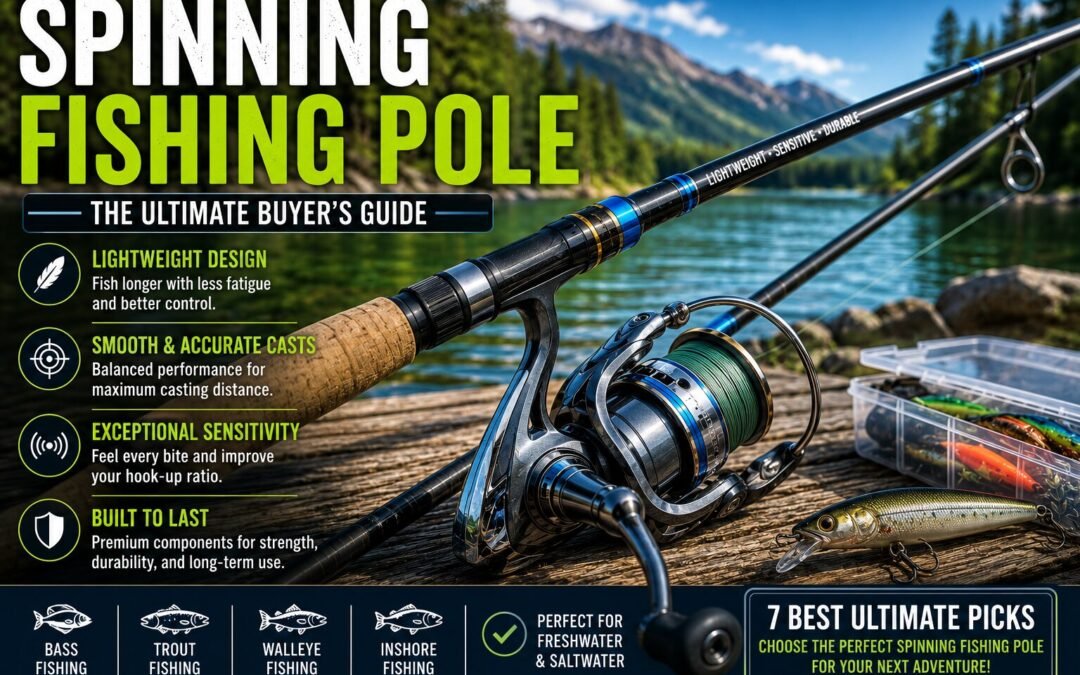
A This Fishing Pole is one of the most versatile and beginner-friendly fishing tools available today. Whether you're targeting bass, trout, crappie, walleye, redfish, or inshore saltwater species, a quality spinning fishing pole offers excellent casting distance, superior accuracy, and smooth line management.
The Fishing Pole has remained a favorite among anglers because it handles lightweight lures exceptionally well while remaining easy to learn. Unlike baitcasting setups that require more experience, spinning gear is forgiving, making it an excellent choice for beginners while still providing the performance experienced anglers demand.
This comprehensive guide explains everything you need to know about choosing the Spinning Fishing Pole, including rod construction, length, power, action, applications, buying tips, maintenance, and how to select the perfect setup for your next fishing adventure.
Table of Contents
- Why Choose a Spinning Fishing Pole?
- Key Features
- Construction and Materials
- Best Fishing Applications
- Choosing the Right Length
- Rod Power and Action
- Buying Guide
- Maintenance Tips
- Frequently Asked Questions
Why Choose a Spinning Fishing Pole?
This Fishing Pole is designed to provide effortless casting, excellent versatility, and dependable performance across many fishing environments. It works exceptionally well with lightweight lures, soft plastics, live bait, and finesse presentations that require precision and sensitivity.
Whether you're fishing from shore, a kayak, a boat, or a dock, a Spinning Fishing Pole offers excellent control while minimizing line twists and casting difficulties that beginners sometimes experience with other reel types.
Key Features of a Spinning Fishing Pole
Lightweight Design
A quality Spinning Fishing Pole reduces fatigue during long fishing trips while improving casting comfort and accuracy.
Exceptional Sensitivity
Modern graphite blanks allow anglers to detect subtle bites, making spinning poles ideal for finesse fishing and targeting cautious fish.
Smooth Casting Performance
The guide placement and spinning reel configuration allow fishing line to flow smoothly during casts, improving both distance and accuracy.
Comfortable Handle
Premium cork and EVA foam handles provide excellent grip in both dry and wet conditions while reducing hand fatigue throughout the day.
Durable Components
Quality guide inserts, corrosion-resistant reel seats, and reinforced blanks help extend the lifespan of a Spinning Fishing Pole even under demanding fishing conditions.
Construction and Materials
Graphite Blanks
Most premium Fishing Pole models use high-modulus graphite because it delivers lightweight performance and outstanding sensitivity.
Fiberglass Construction
Fiberglass spinning poles offer increased flexibility and durability, making them excellent choices for beginners or anglers targeting larger hard-fighting fish.
Composite Blanks
Composite spinning poles combine graphite and fiberglass to provide an ideal balance between sensitivity, strength, and long-term durability.
Best Fishing Applications
- Bass fishing
- Trout fishing
- Crappie fishing
- Bluegill fishing
- Walleye fishing
- Inshore saltwater fishing
- River fishing
- Lake fishing
The versatility of the Pole allows anglers to target numerous freshwater and saltwater species using a wide range of fishing techniques.
Choosing the Right Rod Length
- 5'6"–6'0" — Small streams and close-quarter fishing.
- 6'6" — General-purpose freshwater fishing.
- 7'0" — Bass fishing and versatile applications.
- 7'6"–8'0" — Longer casting distance and inshore fishing.
Selecting the correct length helps your Fishing Pole perform more efficiently based on your fishing environment and preferred techniques.
Understanding Rod Power and Action
Rod Power
- Ultra Light
- Light
- Medium Light
- Medium
- Medium Heavy
- Heavy
Rod Action
- Slow
- Moderate
- Moderate Fast
- Fast
- Extra Fast
Matching the appropriate rod power and action to your fishing style allows your Spinning Fishing Pole to cast more accurately, improve lure presentation, and increase hook-up success.
How to Choose the Right Spinning Fishing Pole
Choosing the ideal Spinning Fishing Pole depends on several important factors, including the fish you target, the waters you fish, the lures you use, and your experience level. A properly matched spinning setup delivers smoother casts, better sensitivity, and greater overall enjoyment on every fishing trip.
Identify Your Target Species
The first step when selecting a Spinning Fishing Pole is deciding what fish you plan to catch most often. Bass, trout, panfish, walleye, pike, and inshore saltwater species all benefit from different rod powers and lengths.
- Ultra Light — Panfish and trout.
- Light — Crappie and perch.
- Medium Light — Walleye and finesse bass fishing.
- Medium — General freshwater fishing.
- Medium Heavy — Larger bass, pike, and inshore species.
Pair It with the Right Reel
A balanced setup is essential for comfort and performance. Match your Spinning Fishing Pole with a properly sized spinning reel to improve casting distance, reduce fatigue, and create a smoother fishing experience.
Common reel sizes include:
- 1000–2000 — Panfish and trout.
- 2500 — Bass and all-purpose freshwater fishing.
- 3000–4000 — Larger freshwater species and light saltwater fishing.
- 5000+ — Heavy inshore and offshore applications.
Choose the Correct Line
The line you use significantly affects the performance of your Spinning Fishing Pole.
- Monofilament for versatility.
- Fluorocarbon for sensitivity and invisibility.
- Braided line for maximum strength and casting distance.
Advantages of a Spinning Fishing Pole
There are many reasons anglers continue to choose the Spinning Fishing Pole over other rod styles.
- Easy to learn.
- Excellent casting distance.
- Superior accuracy with lightweight lures.
- Minimal backlash compared to baitcasters.
- Outstanding sensitivity.
- Comfortable for all-day fishing.
- Versatile across multiple fishing techniques.
- Ideal for beginners and experienced anglers alike.
Freshwater vs. Saltwater Spinning Fishing Pole
Freshwater Models
Freshwater spinning poles are generally lighter and designed for finesse presentations. They excel when targeting bass, trout, walleye, crappie, bluegill, and other freshwater species.
Saltwater Models
Saltwater versions of the Spinning Fishing Pole feature corrosion-resistant guides, stronger reel seats, reinforced blanks, and additional lifting power to handle aggressive saltwater fish.
Who Should Buy a Spinning Fishing Pole?
- Beginning anglers.
- Weekend fishermen.
- Bass anglers.
- Trout fishermen.
- Kayak anglers.
- Boat fishermen.
- Dock anglers.
- Travel anglers.
Because of its versatility and ease of use, the Spinning Fishing Pole remains one of the best all-around fishing setups available today.
Common Mistakes to Avoid
- Using a reel that's too large.
- Selecting the wrong rod power.
- Ignoring lure weight ratings.
- Overfilling the spool with fishing line.
- Using the wrong line type for the technique.
- Buying based only on price.
- Neglecting rod maintenance.
Avoiding these mistakes will help your Spinning Fishing Pole perform at its best while extending its lifespan.
Why Anglers Prefer a Spinning Fishing Pole
The Spinning Fishing Pole continues to be one of the highest-rated fishing setups because it combines simplicity, versatility, sensitivity, and dependable performance. Whether you're casting soft plastics for bass, drifting live bait for trout, or targeting redfish along the coast, a quality spinning pole provides exceptional control and confidence.
How to Maintain Your Spinning Fishing Pole
Taking proper care of your Spinning Fishing Pole ensures it performs at its best for many fishing seasons. Routine maintenance helps preserve casting accuracy, rod sensitivity, guide condition, and overall durability, whether you fish in freshwater or saltwater.
Rinse After Every Trip
Always rinse your Spinning Fishing Pole with clean fresh water after fishing, especially after exposure to saltwater. This removes salt, sand, dirt, and debris that may damage guides, reel seats, and other components.
Inspect the Guides
Check each guide for cracks, loose inserts, or sharp edges. Damaged guides can quickly wear fishing line and reduce casting performance. Replacing worn guides early helps protect your equipment.
Clean the Reel Seat
Periodically wipe down the reel seat and locking mechanism to remove dirt and moisture. A clean reel seat keeps your spinning reel securely attached and functioning smoothly.
Store Properly
Store your Spinning Fishing Pole vertically in a rod rack or inside a protective rod sleeve. Avoid placing heavy objects on top of the rod or storing it in extremely hot environments.
Protect During Transport
Rod sleeves and hard travel tubes provide excellent protection during transportation. They help prevent broken tips, bent guides, and cosmetic damage when traveling to your favorite fishing destination.
Frequently Asked Questions
Is a Spinning Fishing Pole good for beginners?
Yes. The Spinning Fishing Pole is widely considered one of the easiest fishing setups to learn. It offers smooth casting, fewer line management issues, and outstanding versatility for new anglers.
What fish can I catch with a Spinning Fishing Pole?
A Spinning Fishing Pole can be used to target bass, trout, crappie, bluegill, walleye, perch, pike, redfish, snook, and many other freshwater and inshore saltwater species.
What length Spinning Fishing Pole is best?
For most anglers, a 6'6" to 7'0" Spinning Fishing Pole offers the best balance of casting distance, versatility, and accuracy for general freshwater fishing.
Can I use braided line?
Yes. Braided fishing line works exceptionally well with a Spinning Fishing Pole, especially when paired with a fluorocarbon leader for improved abrasion resistance and reduced visibility.
How long will a quality Spinning Fishing Pole last?
With proper care and maintenance, a premium Spinning Fishing Pole can provide dependable performance for many years of regular fishing.
Final Thoughts
The Spinning Fishing Pole remains one of the most versatile and dependable choices available for anglers of every experience level. Its lightweight design, exceptional sensitivity, effortless casting, and ability to handle countless fishing techniques make it an outstanding investment for both freshwater and inshore saltwater fishing.
By selecting the correct rod length, power, action, reel size, and fishing line, you'll maximize the performance of your Spinning Fishing Pole while increasing your confidence and success on every trip.
Related Guides on Hooked Beginner
- Fishing Rod
- Best Fishing Rod
- Best Rated Fishing Rod
- Spinning Fishing Rods
- Spinning Fishing Rod
- Fishing Rod Brands
- Bass Fishing Rods
- Casting Rods
- Budget Friendly Fishing Rod
- Affordable Fishing Rods
Recommended External Resources
Continue Learning
Choosing the right Spinning Fishing Pole is only the beginning of becoming a more successful angler. Improving your casting technique, understanding seasonal fish behavior, selecting the right lures, and matching your equipment to specific fishing conditions will greatly increase your success on the water.
Continue exploring Hooked Beginner for expert buying guides, tackle reviews, fishing tips, and educational resources designed to help anglers of every skill level catch more fish and enjoy every adventure.