
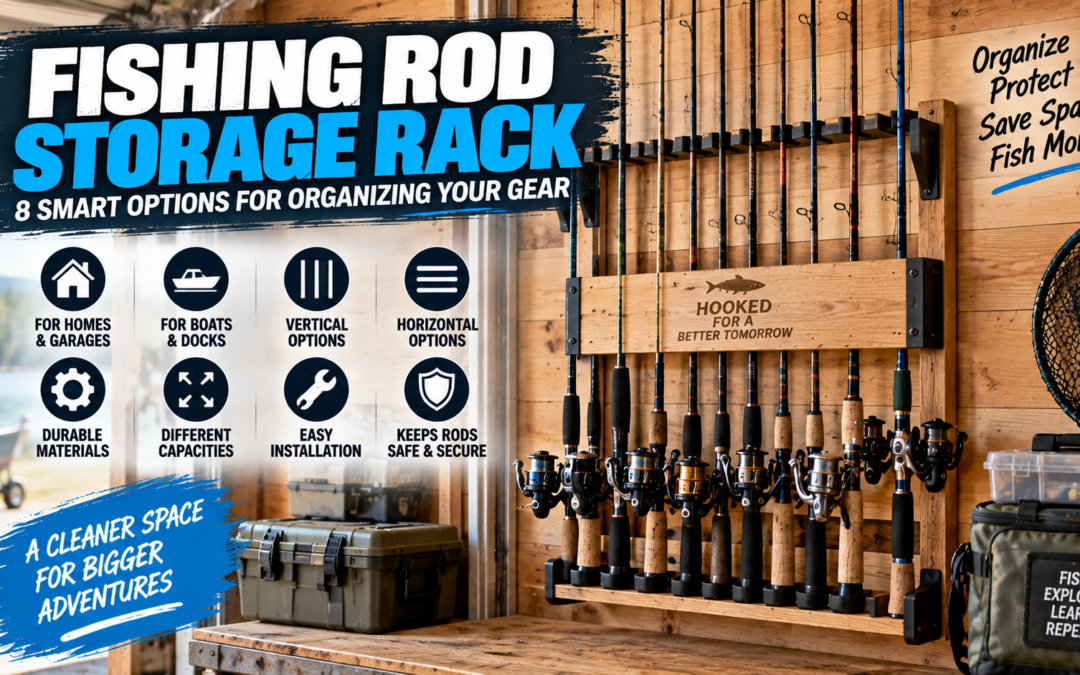
Fishing Rod Storage Rack: 8 Smart Options for Organizing Your Gear
A fishing rod storage rack gives your fishing equipment a dedicated place instead of leaving rods leaning against walls, scattered across a garage, or piled together in a corner. The right rack can protect rod tips, reduce tangles, create more usable floor space, and make it easier to find the exact setup you want before a fishing trip.
But choosing a storage rack is not simply a matter of finding one that holds the most rods. Rod length, reel size, rack capacity, mounting location, available wall space, material, accessibility, and the type of fishing you do all influence the best design for your setup.
A small freshwater collection may work perfectly with a compact wall-mounted rack, while a serious angler with long rods and multiple reels may need a larger freestanding or mobile system. A boat setup also has different requirements from a garage or bedroom.
This guide examines eight practical fishing rod storage rack options and explains how to choose the right capacity, orientation, material, mounting method, spacing, and location for your fishing equipment.
- Why Use a Fishing Rod Storage Rack?
- 8 Fishing Rod Storage Rack Options
- How Much Rack Capacity Do You Need?
- Vertical vs. Horizontal Storage
- Best Rack Materials
- Where to Install a Rod Rack
- Rod Spacing and Reel Clearance
- How to Organize Rods on a Rack
- Protecting Rods in Storage
- DIY Fishing Rod Rack Ideas
- Storage Rack Mistakes to Avoid
- Frequently Asked Questions
Why Use a Fishing Rod Storage Rack?
Fishing rods are long, relatively delicate pieces of equipment that can become difficult to manage as your collection grows. Without a dedicated storage system, rods often end up leaning against walls, stacked horizontally on the floor, or mixed together with tackle, nets, tools, and other equipment.
A rack gives each setup a defined position.
That can make several everyday tasks easier:
- Removing one rod without moving the rest of the collection.
- Keeping rod tips away from hard surfaces.
- Reducing contact between blanks and guides.
- Keeping reels away from the floor.
- Using vertical wall space more efficiently.
- Organizing rods by fishing style or frequency of use.
Take Me Fishing's DIY rod-holder guidance highlights the problems associated with leaning rods against walls or leaving them in corners, including unnecessary stress, tangled lines, and potential damage to tips and guides. See the DIY fishing rod holder guide from Take Me Fishing.
A rack also becomes more valuable as your equipment collection grows. Instead of treating every rod as an individual item, you can create a complete storage system that organizes rods according to how you actually fish.
8 Fishing Rod Storage Rack Options
1. Vertical Wall-Mounted Fishing Rod Rack
A vertical wall-mounted rack is one of the most space-efficient options for many anglers. The rods stand upright, with supports holding the lower and upper sections in place.
This configuration works particularly well in garages, workshops, storage rooms, and utility areas where floor space is limited.
The main advantage is that several rods can occupy a relatively narrow section of wall.
A vertical rack is especially useful when you own rods of different lengths. You can organize longer rods on one side and shorter setups in another section.
When installing a vertical system, make sure the mounting surface is strong enough for the combined weight of the rods and reels. The upper support should prevent rods from falling sideways while the lower support should keep the butt sections stable.
2. Horizontal Wall-Mounted Rack
A horizontal fishing rod storage rack holds rods parallel to the wall.
This design can work well when you have a long section of unused wall space but do not want rods extending vertically toward the ceiling.
Horizontal storage also makes it easy to see your entire collection at once. You can group rods by technique, species, length, or reel type.
Before installation, measure the full length of your longest rods and the available wall space. Leave enough room around reel handles and spools so you can lift individual setups out without striking neighboring rods.
3. Freestanding Fishing Rod Rack
A freestanding rack is useful when you cannot drill into a wall or want a storage system that can be moved.
It can be placed in a garage, workshop, fishing room, basement, or other area where a permanent mounting solution is inconvenient.
One benefit of a freestanding rack is flexibility. You can reposition it as your fishing area changes.
However, stability is extremely important. A tall rack carrying several rods and reels should have a stable base and should not wobble when one rod is removed.
4. Mobile Fishing Rod Rack with Wheels
A mobile rack combines storage capacity with portability. Wheels allow the complete collection to be moved around a garage, workshop, dock, or storage room.
This type of rack can be useful for anglers who frequently rearrange equipment or need to move fishing gear closer to a vehicle before a trip.
A locking wheel mechanism is particularly useful because the rack should remain stationary while rods are being removed or replaced.
Capacity becomes important with mobile racks. A larger rack can become heavy once fully loaded, so check the structure and wheel design before filling it with equipment.
IGFA's 2025 new-product coverage included a mobile rod rack designed to hold up to 16 rod-and-reel combinations, demonstrating how freestanding mobile designs can be built around larger collections. See the IGFA rod-rack example.
5. Garage Fishing Rod Storage Rack
The garage is one of the most practical places to create a dedicated fishing equipment area.
A garage rack can be combined with shelves, tackle storage, hooks, workbenches, and other organization systems. The key is to keep the rods away from vehicle traffic, tools, moisture, and areas where they can easily be knocked over.
A good garage layout can divide the space into zones:
- Rod zone: fishing rods and reels.
- Tackle zone: tackle boxes and lure storage.
- Work zone: line, tools, hooks, and maintenance supplies.
- Accessory zone: nets, rod holders and other equipment.
For broader information about different rod types before organizing them, see the types of fishing rods guide.
6. Corner Fishing Rod Rack
Corners are often wasted areas in garages and storage rooms.
A corner rack can use that otherwise difficult space while keeping rods out of walkways.
Corner storage is particularly useful when most wall space is already occupied by shelves or tools. A compact rack can turn an unused corner into a dedicated fishing zone.
Before installing a corner rack, measure the angle, wall clearance, rod length, and reel clearance carefully. The goal is to create storage that uses the corner without making it difficult to retrieve the rods.
7. Ceiling-Mounted Rod Storage Rack
Ceiling storage can make use of overhead space when walls and floors are already occupied.
It can be particularly effective in garages and workshops with high ceilings. However, ceiling-mounted storage requires more planning because rods should remain safely away from garage doors, lights, vehicles, fans, and walkways.
Use ceiling storage mainly for rods that are not needed every day. Frequently used rods should remain easy to reach.
Always check the mounting points and the total load before installing a ceiling rack. Long fishing rods also need enough clearance so their tips cannot strike surrounding objects.
8. Compact Storage Rack for Small Spaces
Not every angler has a garage or dedicated fishing room.
A compact fishing rod storage rack can work inside apartments, small homes, closets, workshops, or compact storage rooms.
Vertical organization is particularly useful in these situations because it uses wall height instead of valuable floor space.
For a small collection, prioritize access over maximum capacity. A rack that holds ten rods but makes each one difficult to remove may be less useful than a rack that comfortably holds six.
How Much Rack Capacity Do You Need?
Capacity should be based on your actual collection rather than the largest number advertised on a rack.
Start by counting:
- Fully assembled rods.
- Spare rods.
- Specialty rods.
- Long rods.
- Rods you plan to purchase soon.
If you own eight rods, buying an eight-position rack leaves no room for growth. A small amount of additional capacity can make the system easier to use as your collection expands.
However, capacity should never come at the expense of spacing. A rack designed to hold 20 rods may not be practical if every setup is packed tightly against the next one.
A good rack balances three things:
- Enough positions for your collection.
- Enough spacing to remove individual rods.
- Enough structural strength to support the complete load.
Vertical vs. Horizontal Fishing Rod Storage
| Storage Style | Advantages | Best For |
|---|---|---|
| Vertical | Uses narrow wall space and is easy to expand upward | Garages, workshops, small spaces |
| Horizontal | Uses long wall sections and keeps rods visually accessible | Garages, fishing rooms, workshops |
| Freestanding | Portable and does not require permanent wall mounting | Flexible storage areas |
| Ceiling | Uses otherwise unused overhead space | High-ceiling garages and workshops |
Best Materials for a Fishing Rod Storage Rack
Wood
Wood can be attractive for home workshops and fishing rooms. A well-built wooden rack can also be customized to your exact rod count and available space.
The surface should be smooth, particularly around areas that contact rod blanks or handles.
PVC
PVC can be useful for inexpensive DIY storage because it is lightweight and easy to cut.
Take Me Fishing's DIY rod-holder project uses PVC along with plywood to create a simple garage storage system. The project is designed to keep rods organized and reduce the damage associated with leaning them against walls or leaving them in corners. See the PVC and plywood DIY rod-holder project.
Metal
Metal racks can provide strong structural support and are useful for larger collections. Powder-coated or appropriately protected metal can work well in garages and workshops.
Plastic
Plastic racks are lightweight and can be convenient for small collections. Check the load rating and rigidity before filling a plastic rack with heavier rod-and-reel combinations.
Where Should You Install a Fishing Rod Storage Rack?
The best location is one that protects the equipment while keeping it accessible.
Garage
A garage is usually one of the easiest places to create a dedicated fishing storage zone. Keep the rack away from vehicles and areas where doors, tools, or equipment may strike the rods.
Workshop
A workshop can provide excellent access to tools and tackle, particularly if you regularly repair or modify fishing equipment.
Fishing Room
A dedicated fishing room allows you to combine rod storage with tackle shelves, lure organization, reels, line, and other accessories.
Boat or Dock Area
Boat storage requires additional attention to moisture, movement, saltwater exposure, and secure mounting.
Bedroom or Closet
For anglers without garage space, a narrow vertical rack can work in a closet or other low-traffic area.
Before installation, measure the complete rod and reel setup rather than measuring the blank alone.
Rod Spacing and Reel Clearance
A common mistake is choosing a rack based only on rod capacity.
Reels add considerable width to a stored setup. Bail arms, spool lips, handles, and drag knobs can all require clearance.
If rods are placed too close together, retrieving one setup can cause the reel to collide with neighboring equipment.
Leave enough space for:
- Reel bodies.
- Reel handles.
- Line guides.
- Rod grips.
- Rod tips.
- Your hands when removing the setup.
This is particularly important when storing different types of rods together. A thin ultralight setup requires less space than a heavy surf or offshore rod with a large reel.
How to Organize Rods on a Storage Rack
The easiest storage system is one based on how you fish.
Organize by Fishing Style
Keep spinning rods together, casting rods together, surf rods together, and specialty rods in their own sections.
Organize by Species
Another option is grouping rods according to target fish. Bass equipment can occupy one section while trout, catfish, or other species are organized separately.
Organize by Frequency of Use
Put your most frequently used rods where they are easiest to reach. Specialty and seasonal rods can go into less accessible positions.
Organize by Rod Length
Grouping rods by length can make it easier to design a rack layout and prevent long rods from interfering with shorter equipment.
For more information on matching rod length to fishing applications, use the fishing rod length guide.
How to Protect Rods on a Storage Rack
A storage rack should support rods without putting unnecessary pressure on the blank.
Protect the most delicate areas first:
- Rod tips.
- Guides.
- Reel seats.
- Handles.
- Blank surfaces.
Use smooth contact surfaces and avoid sharp edges. If the rack is DIY, sand or protect any surface that touches the equipment.
Rod sleeves can also help when several rods are stored close together because they reduce direct contact and can help prevent line tangles.
A rack should never be used as a shelf. Do not place tackle boxes, tools, bags, or heavy equipment on top of stored rods.
Fishing Rod Rack Organization Beyond the Rods
A better fishing storage area separates rods from the smaller equipment used with them.
Place tackle boxes, line, hooks, tools, pliers, and other accessories close enough to be convenient but not in a way that creates clutter around the rod rack.
IGFA's tackle organization guidance recommends a disciplined storage approach in which equipment is categorized, labeled, and returned to its proper location after fishing. See the IGFA tackle organization guide.
That principle works well for rod storage too. If every rod has a designated position, putting equipment away becomes much easier.
You can organize the supporting equipment through the fishing accessories section.
DIY Fishing Rod Storage Rack Ideas
A DIY rack can be useful when commercial storage does not fit your exact collection or available space.
One advantage of building your own rack is customization. You can choose the exact number of positions, spacing, height, orientation, and dimensions.
A basic DIY design can use PVC sections attached to a secure backing board. Another option is a wooden rack with individual slots sized for rod handles.
Take Me Fishing's DIY project uses PVC pipe and plywood and specifically recommends designing the holder to keep rods separated and protected from unnecessary contact with walls and corners. View the DIY instructions.
When building your own rack:
- Measure your longest rods.
- Measure your largest reel combinations.
- Determine how many rods you need to store.
- Choose the mounting surface.
- Plan the spacing before cutting materials.
- Remove sharp edges.
- Secure all mounting points.
- Test the rack before fully loading it.
Do not design around rod capacity alone. The loaded structure needs to remain stable when individual rods are removed.
Fishing Rod Storage Rack for Different Rod Collections
2–4 Rods
A small wall-mounted or compact vertical rack is usually enough. Prioritize convenience and easy access rather than large capacity.
5–10 Rods
A medium wall-mounted system or compact freestanding rack can provide enough room while allowing you to separate fishing styles.
10–20 Rods
At this point, organization becomes more important. A larger rack should provide dedicated positions and enough clearance around reels.
20+ Rods
A large freestanding, mobile, or modular rack can make more sense than several small racks scattered around the room. Consider organizing the collection into sections based on fishing style.
Fishing Rod Storage Rack vs. Fishing Rod Holder
The terms are sometimes used interchangeably, but they can describe different storage functions.
| Feature | Storage Rack | Rod Holder |
|---|---|---|
| Main purpose | Organize multiple rods | Hold a rod in a particular position |
| Typical location | Garage, room, workshop | Boat, dock, bank or workstation |
| Capacity | Usually multiple rods | Often individual or small groups |
| Priority | Organization | Position and access |
Hooked Beginner currently carries several rod-holder options that can complement a larger storage system, including the Scotty 290-R 5 Rod Holder, Cannon Rod Holder, and Savage Gear MP Rodholder.
Fishing Rod Storage Rack Maintenance
The rack itself needs occasional inspection.
Check the mounting hardware, support points, screws, brackets, wheels, and contact surfaces.
Look for:
- Loose screws.
- Cracks.
- Warped materials.
- Rust.
- Worn padding.
- Broken plastic supports.
- Unstable bases.
If the rack becomes unstable, remove the rods before repairing or replacing it.
Your rods should also be maintained before being placed into long-term storage. Take Me Fishing recommends cleaning and inspecting rods, guides, reel seats, and other fishing equipment before seasonal storage. Review the fishing gear maintenance checklist.
Common Fishing Rod Storage Rack Mistakes
Overloading the Rack
Do not exceed the rack's intended capacity. Weight and spacing both matter.
Installing on Weak Material
A strong rack is useless if the surface holding it cannot support the load.
Placing It in a Walkway
Long rods can become dangerous obstacles when installed where people regularly walk.
Ignoring Reel Size
Large reels require more clearance than bare rod blanks.
Storing Wet Equipment
Clean and dry equipment before long-term storage.
Using Sharp Contact Points
Any edge touching the rod should be smooth and free of burrs.
Keeping Every Rod in One Unsorted Group
Organization becomes much easier when rods are separated according to fishing style, species, length, or frequency of use.
How to Build a Complete Fishing Storage Station
A rack can become the foundation of a larger fishing storage area.
Position the rod rack beside the equipment you use most often while keeping the area clear enough to remove rods safely.
A practical storage station can include:
- Fishing rod rack.
- Tackle shelves.
- Line storage.
- Small-box storage.
- Tool storage.
- Fishing reel storage.
- Rod sleeves.
- Cleaning supplies.
Keep frequently used equipment at accessible heights and move seasonal equipment to less convenient locations.
IGFA's broader storage guidance emphasizes having an orderly location for fishing equipment so gear is easier to access and maintain. See IGFA's off-season organization guidance.
Choosing a Fishing Rod Storage Rack: Final Checklist
Before buying or building your rack, answer these questions:
- How many rods do I own?
- How many rods will I likely own in the future?
- Are my rods stored with reels attached?
- What is my longest rod?
- What is my largest reel?
- How much wall or floor space is available?
- Should the rack be vertical or horizontal?
- Do I need a mobile rack?
- Will the rack be exposed to moisture?
- Can the mounting surface safely support the load?
- Can I remove one rod without disturbing the others?
- Are all rod-contact surfaces smooth?
If you answer these questions first, it becomes much easier to choose a rack that actually fits your collection.
Frequently Asked Questions
What is the best fishing rod storage rack?
The best rack depends on the number of rods, available space, reel size, rod length, and location. A vertical wall rack is useful for narrow spaces, while horizontal and freestanding systems can be better for larger collections.
How many rods should a rack hold?
Choose a capacity slightly above your current collection when possible, but do not sacrifice spacing simply to increase the number of rods stored.
Is vertical or horizontal rod storage better?
Both can work. Vertical storage usually saves wall width and floor space, while horizontal storage can make long wall sections useful and keep the collection at a convenient viewing height.
Can I store rods with reels attached?
Yes. Many anglers do, but the rack must provide sufficient reel clearance and structural support for the complete rod-and-reel combination.
Can I build my own fishing rod storage rack?
Yes. PVC, plywood, and wood can be used for DIY storage. The most important factors are secure mounting, smooth contact surfaces, sufficient spacing, and stability.
Where should I put a fishing rod rack?
Garages, workshops, fishing rooms, closets, and other low-traffic areas can work well. The location should protect the rods from impacts, excessive moisture, and heavy equipment.
How do I keep rods from getting tangled on a rack?
Give each rod adequate spacing, keep loose line secured, and organize rods so handles, reels, and guides do not overlap neighboring setups.
Should fishing rods be stored vertically?
Vertical storage is a practical choice when wall width and floor space are limited. The rod should be supported at appropriate points and the tip should remain protected.
Does a fishing rod rack protect rods?
A properly designed rack can reduce contact between rods and help keep them away from floors, corners, and other equipment. It still needs to be installed and loaded correctly.
Conclusion
A fishing rod storage rack can turn a messy collection into an organized fishing station. The important decision is not simply how many rods the rack can hold. You need to consider spacing, rod length, reel size, mounting strength, accessibility, materials, and the environment where the rack will be used.
Vertical wall racks are useful when space is limited. Horizontal systems work well along long walls. Freestanding and mobile racks provide flexibility, while ceiling systems can use otherwise wasted overhead space.
For smaller collections, keep the system simple. For larger collections, organize rods by fishing style, species, length, or frequency of use. Most importantly, make sure every rod can be removed without forcing neighboring equipment out of the way.
For more rod information, explore Hooked Beginner's fishing rods section, fishing pole guide, and fishing rod buying guide.
Then build the storage system around the rods you actually use. A rack that protects your equipment, keeps everything visible, and makes preparation easier is ultimately more valuable than a rack chosen only for its advertised capacity.