
Tackle Box Cooler: 8 Powerful Fishing Storage Options
A tackle box cooler can make a fishing trip much easier when you need to organize tackle while also carrying drinks, food, bait, or other gear. Instead of treating storage and cooling as completely separate jobs, a combined setup can give you a practical way to keep frequently used equipment together while making better use of limited space.
The right tackle box cooler depends on how you fish. A bank angler carrying everything by hand may prioritize portability, while a boat angler may prefer larger trays and compartments. Someone fishing all day may also want insulated space for drinks or food, while another angler may care more about lure organization and quick access.
Modern tackle storage can include traditional boxes, modular trays, tackle bags, backpacks, cooler combinations, and soft-sided systems. Take Me Fishing notes that tackle boxes and bags can provide compartments for hooks, lures, bobbers, swivels, snaps, jig heads, and other fishing equipment, while tackle bags can also hold multiple storage boxes and fishing tools. See the Take Me Fishing tackle box and tool guide.
This guide explains what a tackle box cooler is, why combined storage can be useful, eight practical storage options to consider, how the systems compare, how to choose one for your fishing style, how to organize tackle efficiently, common mistakes, and what to check before buying.
What Is a Tackle Box Cooler?
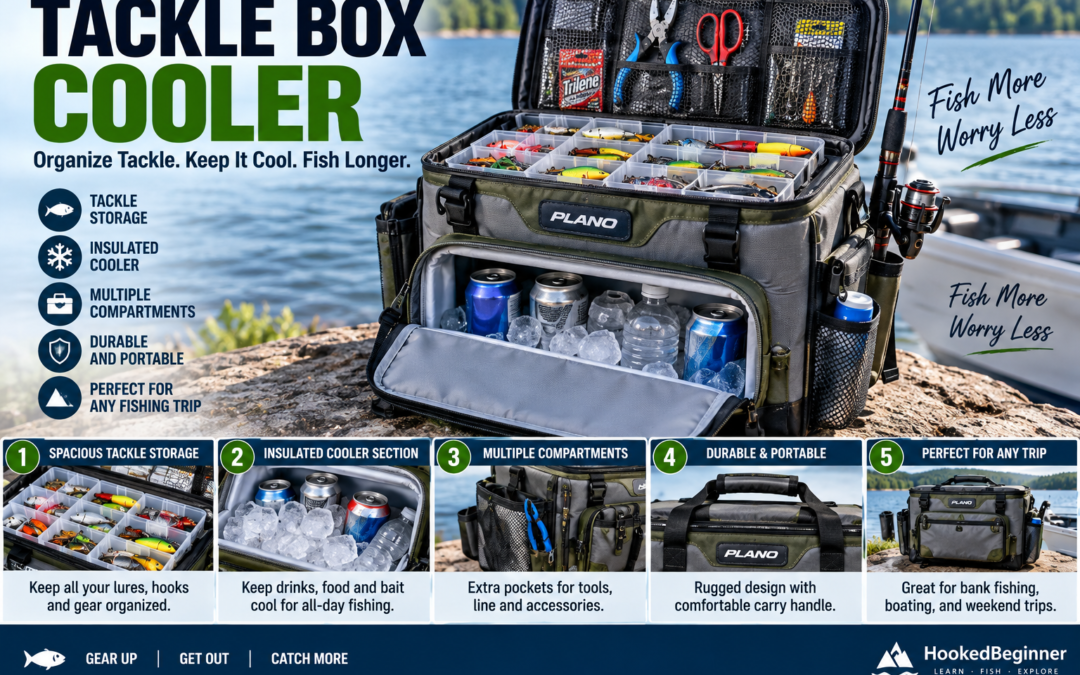
A tackle box cooler combines fishing-tackle storage with some form of insulated or cooler-style storage. The exact design varies widely. Some products are hard-sided containers with a dedicated cooler section, while others are soft-sided fishing bags with insulated compartments and space for tackle trays.
The important distinction is that a combined system has two different storage jobs. The tackle side is designed to organize fishing equipment, while the cooler side is intended for items that benefit from insulation or temperature control.
Depending on the design, tackle storage can include removable trays, adjustable dividers, transparent compartments, zippered pockets, external tool holders, and larger open sections.
A cooler section may be completely separate from the tackle compartment or integrated into the same main body. The construction determines how easy it is to clean, carry, access, and organize.
There is no single universal design. The best system is the one that provides enough tackle organization while remaining practical for the way you travel to and fish your chosen water.
Why a Tackle Box Cooler Matters
The biggest advantage of a combined system is organization. Fishing becomes frustrating when hooks, lures, line, tools, drinks, and other equipment are all scattered throughout a boat, vehicle, or bank-fishing bag.
Better Organization
A well-designed tackle box cooler gives each category of gear a designated location. You can separate terminal tackle from lures, tools from line, and food or drinks from fishing equipment.
Take Me Fishing recommends organizing tackle by the species and techniques you target, using compartments and labels so the equipment you need can be located quickly. See its tackle organization guide.
Less Clutter
Combining storage functions can reduce the number of separate containers you carry. This can be particularly useful when space is limited.
Faster Access
A good organization system means you can reach a lure, hook, pair of pliers, line cutter, or other item without searching through several bags.
Convenient Food and Drink Storage
For longer fishing sessions, having an insulated compartment can reduce the need to carry a separate cooler.
Better Trip Preparation
A dedicated system also makes it easier to prepare before leaving home. Once you know where every category belongs, it becomes easier to check that nothing important has been forgotten.
8 Tackle Box Cooler Options to Consider
1. Hard-Sided Tackle Box Cooler
A hard-sided tackle box cooler is designed for anglers who want a more rigid storage system. The hard exterior can provide protection for tackle while giving the container a stable shape.
This style can be useful in boats, vehicles, or other environments where equipment may be exposed to movement or pressure from other gear.
The tradeoff is portability. A rigid box can be less convenient to carry than a soft-sided bag, especially when you are walking from a parking area to a remote fishing location.
Look for a design that separates fishing tackle from the cooler compartment so melting ice or condensation does not contact hooks, lures, line, or other equipment.
2. Soft-Sided Tackle Cooler Bag
A soft-sided tackle box cooler combines flexible storage with an insulated compartment. This design can be particularly useful for anglers who walk, travel, or need to carry equipment over some distance.
Soft-sided bags can also provide exterior pockets for pliers, line cutters, leader spools, sunglasses, tools, and other frequently used items.
Take Me Fishing notes that tackle bags can hold multiple tackle boxes while providing room for fishing tools and other gear, making them a flexible alternative to traditional hard tackle boxes.
When comparing soft bags, pay attention to zipper quality, stitching, handles, shoulder straps, waterproofing, and how the internal tackle storage is arranged.
3. Tackle Box Cooler Combo
A cooler tackle box combo is designed specifically to combine two storage functions within a single unit.
This can be a useful choice for anglers who want to minimize the number of separate containers they take to the water.
The main question is capacity. A combination unit that looks compact may not provide enough room for both your tackle and your food or drinks. Check the internal arrangement rather than judging capacity solely from the outside dimensions.
4. Tackle Box With Cooler Compartment
A tackle box with cooler can be especially useful when you want conventional tackle organization but also need a separate insulated section.
This design is ideal when fishing equipment is your priority. The tackle section can provide trays and dividers, while the cooler section handles drinks, snacks, or other items that should remain separate from hooks and tackle.
Separation is important because wet or melting ice should not be allowed to soak terminal tackle or rust-prone equipment.
5. Fishing Tackle Bag With Cooler
A fishing tackle bag with cooler is often a practical option for bank anglers, kayak anglers, and anyone who prefers flexible storage.
Look for multiple compartments and a stable base. External pockets are helpful for tools that need to be accessed frequently.
One benefit of a bag-style system is that you can often remove or rearrange tackle trays according to the fishing trip. This lets you carry only the lures and terminal tackle you expect to use.
6. Camo Tackle Bag With Cooler Storage
A camo tackle bag can combine fishing organization with a rugged outdoor appearance. When the bag also contains insulated storage, it can function as a compact fishing-and-refreshment system.
The camouflage pattern itself should not determine your purchase. Focus instead on capacity, construction, compartment layout, waterproofing, carrying comfort, and access.
A visually attractive bag that is uncomfortable to carry or difficult to organize is less useful than a simpler bag with a better layout.
7. Modular Tackle Tray and Cooler System
A modular system separates the fishing tackle into removable trays while maintaining a larger storage or cooler compartment.
This approach can be especially useful for anglers who target multiple species. You can prepare one tray for bass, another for panfish, another for saltwater equipment, and only take the appropriate tray to the water.
Modular organization also makes it easier to replace or reorganize a specific tackle category without emptying the entire storage system.
8. Large-Capacity Tackle Cooler for Boat Fishing
A larger tackle box cooler can make sense for boat anglers who carry more equipment and do not need to walk long distances with the container.
Larger storage can accommodate multiple lure categories, spare line, tools, terminal tackle, and additional accessories while providing a cooler compartment for refreshments.
The important consideration is how the container fits into the boat. Measure the available storage area before buying a large unit, especially if it needs to fit beneath a seat or into a dedicated compartment.
Tackle Box Cooler Comparison Table
| Storage Type | Best For | Main Advantage | Main Consideration |
|---|---|---|---|
| Hard-sided tackle box cooler | Boat and vehicle anglers | Rigid protection | Less portable |
| Soft-sided cooler bag | Bank and mobile anglers | Easy to carry | Less rigid protection |
| Cooler tackle box combo | General fishing | Two functions in one unit | Check total capacity |
| Tackle box with cooler | Organized tackle storage | Separate storage zones | Cooler size may be limited |
| Tackle bag with cooler | Mobile fishing | Flexible organization | Quality varies by construction |
| Camo tackle bag | Outdoor fishing | Portable and versatile | Pattern matters less than function |
| Modular tray system | Multi-species anglers | Removable organization | Requires planning |
| Large-capacity system | Boat anglers | Maximum storage | Bulk and weight |
How to Choose a Tackle Box Cooler
Choosing the right tackle box cooler starts with understanding how and where you fish.
Start With Your Fishing Style
Bank anglers, kayak anglers, boat anglers, and surf anglers have very different storage needs.
If you walk a long distance carrying your equipment, weight and comfort are major considerations. If the container stays in a boat, capacity may matter more than portability.
Consider Tackle Capacity
Think about the actual tackle you carry rather than simply choosing the largest available container.
Too little storage forces you to leave important equipment behind. Too much storage encourages you to carry unnecessary gear and makes the entire system heavier.
Look at Compartment Design
Adjustable dividers can be valuable because lure and terminal-tackle sizes vary.
Small compartments are useful for hooks, swivels, snaps, weights, and other small components, while larger spaces work better for bulky lures and tools.
Check Cooler Capacity
If the cooler section is one of the primary reasons for buying the system, check its usable capacity separately from the tackle-storage capacity.
A container can have a large exterior footprint but relatively limited insulated space once trays and dividers are installed.
Check Water Resistance
Fishing environments involve water, spray, rain, wet hands, and condensation. Look for construction appropriate to your conditions.
Do not assume that water-resistant automatically means waterproof. Review the manufacturer's specifications and construction details.
Consider Carrying Comfort
Handles, shoulder straps, backpack straps, padding, and weight distribution can make a major difference when transporting fishing equipment.
Check Cleaning and Maintenance
A fishing storage system should be reasonably easy to clean. Mud, bait residue, fish slime, spilled drinks, and wet tackle can accumulate quickly.
Measure Your Storage Space
Before buying a larger unit, measure your boat compartment, vehicle trunk area, kayak storage area, or home storage space.
Tackle Box Cooler Use Cases
Bank Fishing
For bank fishing, portability should be one of the highest priorities. A soft-sided tackle cooler bag or backpack-style system can be easier to carry than a large hard box.
Only bring the tackle categories you realistically expect to use. A smaller organized setup can be more useful than carrying every lure you own.
Boat Fishing
Boat anglers generally have more space, but organization still matters. A larger tackle box cooler can consolidate tackle, tools, drinks, and other fishing-day essentials.
Make sure the container will not block walkways, interfere with seating, or create an unsafe obstruction on the deck.
Kayak Fishing
Kayak fishing requires careful attention to size and stability because storage space is limited.
A compact soft-sided system or modular tray setup can allow you to take the tackle you need without occupying unnecessary deck space.
Freshwater Fishing
Freshwater anglers can organize tackle by species and technique. For example, separate trays can be used for bass, panfish, trout, or general-purpose freshwater tackle.
This approach makes it easier to select one prepared tray for a particular trip rather than carrying every item in your collection.
Saltwater Fishing
Saltwater equipment requires additional attention to corrosion, rinsing, drying, and material selection.
After saltwater trips, inspect hooks, swivels, tools, trays, zippers, and hardware for salt residue. Rinse and dry equipment according to the manufacturer's recommendations.
Long Fishing Days
A combined cooler and tackle system becomes particularly practical on longer trips because you may need snacks, drinks, tackle changes, extra leaders, additional hooks, and replacement lures.
Organization becomes more important as the number of items increases.
Materials and Setup for a Tackle Box Cooler
The most useful storage system is one that is prepared before you leave home. Start by separating tackle into categories and then decide which categories need to travel with you.
1. Tackle Trays
Use trays for lures and terminal tackle that benefit from compartmentalization.
Clear trays can make it easier to see what is inside without opening multiple containers.
2. Adjustable Dividers
Adjustable dividers allow compartments to be resized for different lure and tackle dimensions.
3. Tool Compartment
Keep pliers, scissors, line cutters, de-hookers, and similar tools in an easily accessible location.
Take Me Fishing recommends including tools such as pliers and scissors as part of a practical tackle setup. Review its tackle-box equipment recommendations.
4. Soft-Bait Storage
Soft plastics should generally remain in appropriate packaging or storage rather than being mixed randomly with incompatible materials.
Take Me Fishing advises keeping soft plastic baits separated and recommends using their original packaging where possible.
5. Line Storage
Keep spare line and leader material in a dry, organized compartment. Side pockets can be useful when the storage system provides them.
6. Cooler Compartment
Use the cooler section for drinks, food, or other suitable items. Keep wet or melting ice away from hooks and tackle whenever possible.
7. Labels
Labels can save time when several trays look similar. Labeling by species or technique is particularly useful for larger tackle collections.
How to Organize a Tackle Box Cooler
A well-organized tackle box cooler should make your most frequently used equipment easiest to reach.
Organize by Species
Group equipment according to the species you target. A bass tray, panfish tray, and general-purpose tray can be easier to manage than one large mixed collection.
IGFA's tackle-organization guidance similarly describes keeping categories of lures organized in dedicated storage and separating equipment by use.
Organize by Technique
Another approach is to create trays for techniques. For example, you might have separate storage for crankbaits, soft plastics, terminal tackle, topwaters, or other lure categories.
Keep Small Tackle Separate
Hooks, swivels, snaps, weights, and similar components should have dedicated compartments so they do not become mixed together.
Keep Tools Accessible
Place pliers, line cutters, and other frequently used tools in an external pocket or top compartment when possible.
Do Not Overfill
Overfilled compartments are harder to use and can make it difficult to remove individual lures without disturbing everything else.
Return Gear After the Trip
At the end of the trip, return each item to its designated compartment. This small habit makes your next trip much easier to prepare.
Common Tackle Box Cooler Mistakes
Buying Too Much Storage
A giant tackle system is not necessarily better. Excess storage can encourage you to carry unnecessary equipment and create additional weight.
Ignoring Cooler Capacity
Some buyers focus on tackle storage and later discover that the cooler section is too small for their needs.
Mixing Wet and Dry Equipment
Wet equipment should not be allowed to sit against items that need to remain dry. Separate wet gear and allow tackle to dry properly after fishing.
Mixing Soft Plastics Carelessly
Different soft plastic baits can react with each other, bleed color, or become damaged when stored incorrectly. Keep them separated and, where practical, in their original packaging.
Leaving Hooks Loose
Loose hooks can damage bags, hands, other tackle, or the storage system. Use dedicated compartments or containers for them.
Ignoring Rust and Corrosion
Water and salt can accelerate corrosion. Inspect hooks, swivels, tools, and metal hardware regularly.
Forgetting to Clean the Cooler
A cooler compartment needs cleaning just like any other container. Spills and food residue can create odors and sanitation problems if ignored.
Choosing Looks Over Function
A camouflage pattern or attractive design does not make a tackle bag better. Prioritize construction, layout, capacity, comfort, and accessibility.
Tackle Box Cooler Buying Checklist
| Check | What to Look For |
|---|---|
| Total capacity | Is there enough space for the tackle you actually use? |
| Cooler capacity | Is the insulated section large enough for your needs? |
| Tackle trays | Are removable or adjustable trays included? |
| Compartments | Are small tackle and larger lures separated? |
| Tool storage | Can pliers and line cutters be reached quickly? |
| Water resistance | Can the system handle your fishing environment? |
| Carry system | Are handles or shoulder straps comfortable? |
| Construction | Will the materials withstand repeated outdoor use? |
| Cleaning | Can the tackle and cooler sections be cleaned easily? |
| Boat or vehicle fit | Will the container fit the space where you plan to store it? |
| Weight | Is the loaded system practical to carry? |
| Organization | Can you arrange tackle by species or technique? |
Related Fishing Guides
Use these HookedBeginner resources to build a more organized fishing setup:
- Fishing Accessories — explore fishing gear and accessories.
- Fishing Rod Buying Guide — compare rod specifications before building your tackle setup.
- Fishing Reel Buying Guide — understand reel selection and compatibility.
- Fishing Reel Size Guide — match reel size to the fishing application.
- Types of Fishing Rods — compare different fishing rod categories.
- Fishing Rod Length Guide — understand how rod length affects your complete setup.
Tackle Box Cooler FAQs
What is a tackle box cooler?
A tackle box cooler combines fishing-tackle storage with an insulated or cooler-style compartment. The exact design varies between hard-sided boxes, soft-sided bags, backpacks, and modular storage systems.
Is a tackle box cooler better than a regular tackle box?
It depends on your needs. A combined system can be useful when you want tackle storage and cooler space in one container. A traditional tackle box may be better when your main priority is maximum tackle organization.
What should I keep in a tackle box cooler?
Typical tackle storage can include lures, hooks, sinkers, swivels, snaps, bobbers, spare line, leaders, pliers, scissors, and other fishing tools. The cooler section can be reserved for suitable food and beverages.
Can a tackle box cooler keep drinks cold?
Some models are designed with insulated compartments intended to keep drinks and food cooler. Actual performance depends on the construction, insulation, closure, ambient temperature, and how the compartment is used.
What is a cooler tackle box combo?
A cooler tackle box combo is a combined fishing-storage system that incorporates tackle organization and insulated cooler storage into one unit.
Are soft tackle bags better for bank fishing?
Soft-sided tackle bags can be convenient for bank fishing because they are often easier to carry and can provide flexible storage. The best choice depends on the distance you walk, the amount of tackle you carry, and the terrain.
How should I organize a tackle box cooler?
Organize it by species, technique, or tackle category. Keep hooks and other small terminal tackle in dedicated compartments, use removable trays for lures, keep tools accessible, and separate wet or insulated storage from tackle that should remain dry.
Should soft plastics be kept in a tackle box?
Soft plastics should be stored carefully. Keeping them in their original packaging can help prevent unwanted interaction between different soft plastics and makes it easier to identify colors and types.
What size tackle box cooler should I buy?
Choose the smallest system that comfortably holds the tackle and cooler capacity you actually need. For mobile fishing, prioritize portability. For boat fishing, you can generally consider larger storage if the boat has sufficient space.
Should I choose a hard or soft tackle box cooler?
Choose a hard system when rigid protection and structure are priorities. Choose a soft system when portability, flexible storage, and comfortable carrying are more important.
How do I prevent hooks from rusting?
Keep hooks dry whenever possible, avoid storing wet tackle in sealed compartments for extended periods, and inspect hooks regularly. Rinse appropriate equipment after saltwater use and allow it to dry thoroughly.
Final Thoughts
A tackle box cooler can be a practical way to combine fishing organization with insulated storage. Instead of carrying a separate tackle box and cooler, a combined system can reduce clutter and make frequently used gear easier to manage.
The right choice depends on how you fish. Bank anglers may prioritize portability, boat anglers may prefer larger capacity, and multi-species anglers may benefit from removable trays and modular organization.
Before buying, compare tackle capacity, cooler capacity, compartment design, construction, water resistance, carrying comfort, cleaning requirements, and the space available in your boat, vehicle, kayak, or storage area.
Most importantly, organize the system around your actual fishing habits. Group tackle by species or technique, keep small components separated, store tools where they are easy to reach, and avoid carrying unnecessary equipment.
A well-organized storage system will not replace good fishing technique, but it can make every trip simpler by helping you find the right tackle when you need it and keeping your gear ready for the next day on the water.