
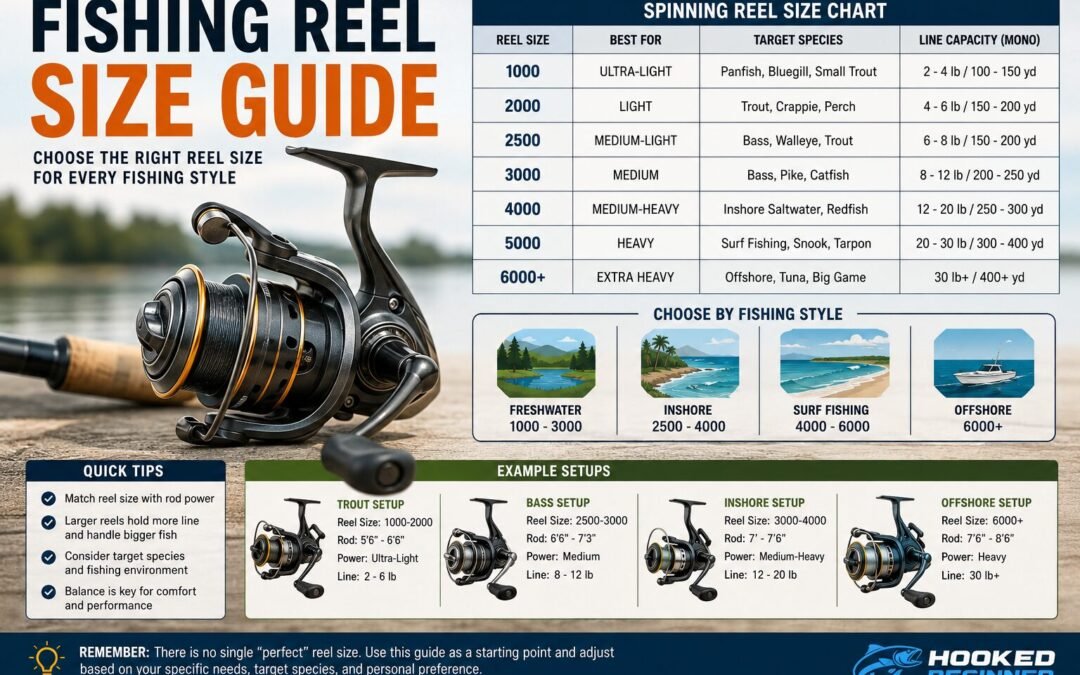
Fishing Reel Size Guide: Choose the Right Reel Size for Every Fishing Adventure
A reliable Fishing Reel Size Guide is one of the most valuable resources for anglers looking to build a balanced fishing setup. Choosing the correct reel size affects casting distance, retrieval speed, line capacity, comfort, and overall fishing performance. Whether you're targeting trout in mountain streams, bass in freshwater lakes, redfish along the coast, or tuna offshore, selecting the proper reel size is just as important as choosing the right rod.
This Fishing Reel Size Guide explains how reel sizes work, what the numbers mean, how to match a reel to your rod, and which sizes are best for different fish species. By understanding reel sizing, you'll avoid buying equipment that feels unbalanced or performs poorly on the water.
Table of Contents
Understanding Fishing Reel Sizes
A Fishing Reel Size Guide begins with understanding how manufacturers classify reel sizes. Most spinning reels use numbers such as 1000, 2000, 2500, 3000, 4000, 5000, 6000, 8000, and larger. These numbers generally represent the reel's overall size, spool capacity, and intended fishing application.
Although exact specifications vary slightly between manufacturers, reel sizes are similar enough that anglers can confidently compare models from different brands. A larger number usually indicates a larger spool capable of holding heavier fishing line and providing greater drag performance.
Browse our collection of Fishing Reels to compare different reel sizes and fishing applications.
What Fishing Reel Size Numbers Mean
One of the biggest misconceptions is that reel size numbers refer to physical measurements. In reality, they identify the reel's capacity and intended use. A Fishing Reel Size Guide helps anglers understand these differences before purchasing new equipment.
| Reel Size | Recommended Fishing | Target Species |
|---|---|---|
| 1000 | Ultra-Light | Panfish, Bluegill |
| 2000 | Light | Trout, Crappie |
| 2500 | Medium-Light | Bass, Walleye |
| 3000 | Medium | Bass, Pike |
| 4000 | Medium-Heavy | Redfish, Snook |
| 5000+ | Heavy Duty | Surf & Offshore |
This Fishing Reel Size Guide is intended as a general reference because manufacturers may vary slightly in spool design and overall dimensions.
Fishing Reel Size Guide for Freshwater Fishing
Freshwater anglers generally use smaller reels because the fish are lighter and the required line capacity is lower. Choosing the proper reel size makes casting easier while reducing fatigue throughout the day.
1000–2000 Size Reels
Small reels excel when fishing for panfish, crappie, perch, and trout using lightweight lines and finesse presentations.
2500 Size Reels
The 2500 is considered one of the most versatile sizes in any Fishing Reel Size Guide. It balances well with medium-light and medium spinning rods while providing enough line capacity for bass, walleye, and larger trout.
3000 Size Reels
A 3000-size reel provides slightly greater line capacity and drag performance without adding excessive weight. Many anglers consider it the ideal all-around freshwater spinning reel.
Recommended Internal Links
- Spinning Reels
- Best Spinning Reels
- Shimano Stella FK
- Piscifun Carbon X3
- Penn Spinfisher VII
- Daiwa Saltist MQ
Fishing Reel Size Guide for Saltwater Fishing
A Fishing Reel Size Guide becomes even more important in saltwater because larger fish demand stronger drag systems, greater line capacity, and corrosion-resistant construction. Saltwater reels are commonly paired with braided line and heavier rods to handle hard-fighting species.
| Fishing Style | Recommended Reel Size |
|---|---|
| Inshore Fishing | 3000–4000 |
| Surf Fishing | 5000–7000 |
| Offshore Jigging | 6000–8000 |
| Big Game Fishing | 8000+ |
If you frequently fish in saltwater, prioritize reels with sealed bearings, corrosion-resistant materials, and durable drag systems for long-term reliability.
Matching Your Reel Size with the Right Fishing Rod
A Fishing Reel Size Guide isn't complete without explaining rod balance. Even the highest-quality reel won't perform properly if it's paired with the wrong rod. A balanced setup improves casting accuracy, lure control, sensitivity, and reduces fatigue during long days on the water.
When using this Fishing Reel Size Guide, remember that reel size should match the rod's length, power, action, line rating, and intended fishing technique. A lightweight reel on a heavy offshore rod creates poor balance, while an oversized reel on an ultralight rod makes casting uncomfortable and less efficient.
Recommended Rod Pairings
| Reel Size | Recommended Rod Length | Typical Rod Power |
|---|---|---|
| 1000–2000 | 5'6"–6'6" | Ultra Light / Light |
| 2500 | 6'6"–7'0" | Medium-Light |
| 3000 | 6'10"–7'3" | Medium |
| 4000 | 7'0"–7'6" | Medium-Heavy |
| 5000+ | 7'6"–10' | Heavy |
Our Fishing Reel Size Guide recommends balancing the complete setup instead of choosing a reel based only on line capacity. A balanced rod and reel combination provides better casting distance and greater comfort throughout the day.
Helpful categories:
Understanding Line Capacity
Every Fishing Reel Size Guide should explain why line capacity matters. The spool size determines how much fishing line your reel can hold, which directly affects casting distance and your ability to fight larger fish.
Smaller reels generally carry lighter monofilament or braided line, making them ideal for finesse fishing. Larger reels hold significantly more line and are designed for surf fishing, offshore fishing, and targeting powerful saltwater species.
General Recommendations
- 1000–2000 reels for light monofilament or braid.
- 2500–3000 reels for versatile freshwater fishing.
- 4000–5000 reels for inshore saltwater applications.
- 6000+ reels for surf fishing and offshore species.
A Fishing Reel Size Guide should always be used alongside the manufacturer's recommended line capacity for the exact reel model you plan to purchase.
How Reel Size Affects Casting Performance
Reel size influences much more than line capacity. Larger spools reduce line memory and often allow longer casts, especially when using braided fishing line. Smaller reels excel with lightweight lures because they reduce overall setup weight and improve handling.
Within this Fishing Reel Size Guide, it's important to understand that there is no universally "best" reel size. The ideal choice depends on your target species, lure weight, rod, fishing environment, and personal preference.
| Fishing Situation | Recommended Reel Size |
|---|---|
| Trout Streams | 1000–2000 |
| Bass Fishing | 2500–3000 |
| Inshore Saltwater | 3000–4000 |
| Surf Fishing | 5000–7000 |
| Offshore Big Game | 8000+ |
Choosing a Reel Size by Target Species
This Fishing Reel Size Guide can also help anglers narrow their options by focusing on the species they fish most often.
| Species | Suggested Reel Size |
|---|---|
| Bluegill | 1000 |
| Trout | 1000–2000 |
| Bass | 2500–3000 |
| Walleye | 2500–3000 |
| Pike | 3000–4000 |
| Redfish | 3000–4000 |
| Snook | 4000 |
| Salmon | 4000–5000 |
| Tuna | 8000+ |
Using this Fishing Reel Size Guide alongside the recommended rod and line setup will help create a balanced outfit capable of handling your target fish efficiently while maximizing casting performance and comfort.
Common Fishing Reel Size Mistakes
Even with a detailed Fishing Reel Size Guide, many anglers still choose the wrong reel because they focus only on price or brand. Selecting the correct reel size is about balancing your entire fishing setup rather than buying the biggest or most expensive reel available.
A Fishing Reel Size Guide should help you avoid common mistakes that reduce casting performance, increase fatigue, and shorten the life of your fishing equipment.
1. Buying a Reel That Is Too Large
Oversized reels add unnecessary weight and can make a lightweight rod feel uncomfortable after hours of casting. Unless you're targeting large saltwater species, bigger is not always better.
2. Choosing a Reel That Is Too Small
Using an undersized reel limits line capacity and drag performance. This becomes a problem when targeting strong fish that make long runs or require heavier fishing line.
One of the most overlooked recommendations in any Fishing Reel Size Guide is balancing the reel with the rod. A balanced outfit casts farther, feels lighter in your hands, and improves lure control.
4. Forgetting About Fishing Conditions
Freshwater anglers often need smaller reels, while surf and offshore fishing usually require larger models with greater line capacity and stronger drag systems.
5. Buying Without Considering Target Species
Always choose your reel based on the fish you plan to catch most often rather than selecting a general-purpose model that may not perform well for your preferred fishing style.
Recommended Reel Sizes for Popular Fishing Styles
This Fishing Reel Size Guide provides general recommendations that work well for many anglers. Always check the manufacturer's specifications for your exact reel before making a purchase.
| Fishing Style | Recommended Reel Size |
|---|---|
| Ultralight Fishing | 1000–2000 |
| General Freshwater | 2500–3000 |
| Bass Fishing | 2500–3000 |
| Inshore Saltwater | 3000–4000 |
| Surf Fishing | 5000–7000 |
| Offshore Jigging | 6000–8000 |
| Big Game Fishing | 8000+ |
Explore Fishing Reels by Category
If you're still deciding which reel is right for you, this Fishing Reel Size Guide recommends comparing several reel categories before purchasing.
Helpful Buying Resources
Continue learning with these Hooked Beginner buying guides and comparison articles.
- Best Fishing Reels
- Best Spinning Reels
- Best Saltwater Fishing Reels
- Best Fishing Reels for Beginners
- Best Fishing Reels for Bass
- Best Fishing Reels Under $100
- Best Fishing Reels Under $200
Authoritative External Resources
- Take Me Fishing – Learn more about fishing equipment, techniques, and beginner education.
- International Game Fish Association (IGFA) – Explore ethical angling practices, species information, and world fishing records.
- NOAA Fisheries – Stay informed about marine conservation, regulations, and sustainable fishing.
Frequently Asked Questions
What is the best fishing reel size for beginners?
According to this Fishing Reel Size Guide, a 2500 or 3000 spinning reel is the best starting point for most beginners. These sizes are versatile enough for bass, walleye, trout, and many inshore saltwater species while remaining lightweight and easy to handle.
Is a 2500 or 3000 reel better?
This Fishing Reel Size Guide recommends a 2500 reel for finesse fishing and lighter tackle, while a 3000 reel offers additional line capacity and drag for larger fish. Both are excellent all-around choices depending on your preferred fishing style.
Can I use one reel size for both freshwater and saltwater?
Yes. A quality 3000 or 4000 spinning reel is suitable for many freshwater and inshore saltwater applications. This Fishing Reel Size Guide also recommends choosing reels with corrosion-resistant components if they will regularly be used in saltwater.
Does a larger reel cast farther?
In many situations, larger spools reduce line friction and improve casting distance. However, this Fishing Reel Size Guide recommends selecting a reel that balances your rod instead of simply choosing the largest available model.
How do I know if my reel is too large for my rod?
If the setup feels front-heavy, difficult to cast, or uncomfortable after extended use, the reel may be oversized. Following the recommendations in this Fishing Reel Size Guide helps create a balanced combination that improves casting comfort and overall fishing performance.
Final Thoughts
A dependable Fishing Reel Size Guide helps anglers make informed buying decisions by matching reel size to fishing style, rod power, target species, and line capacity. Instead of focusing only on price or brand, selecting the proper reel size creates a balanced outfit that performs better and lasts longer.
Whether you're targeting trout with an ultralight setup, chasing bass with a versatile 2500 or 3000 reel, fishing the surf with larger spinning reels, or preparing for offshore adventures, this Fishing Reel Size Guide provides the foundation for choosing equipment with confidence.
Before purchasing your next reel, compare specifications, line capacity, drag performance, and intended applications to ensure you choose the right model for your fishing needs.
Trackbacks/Pingbacks