
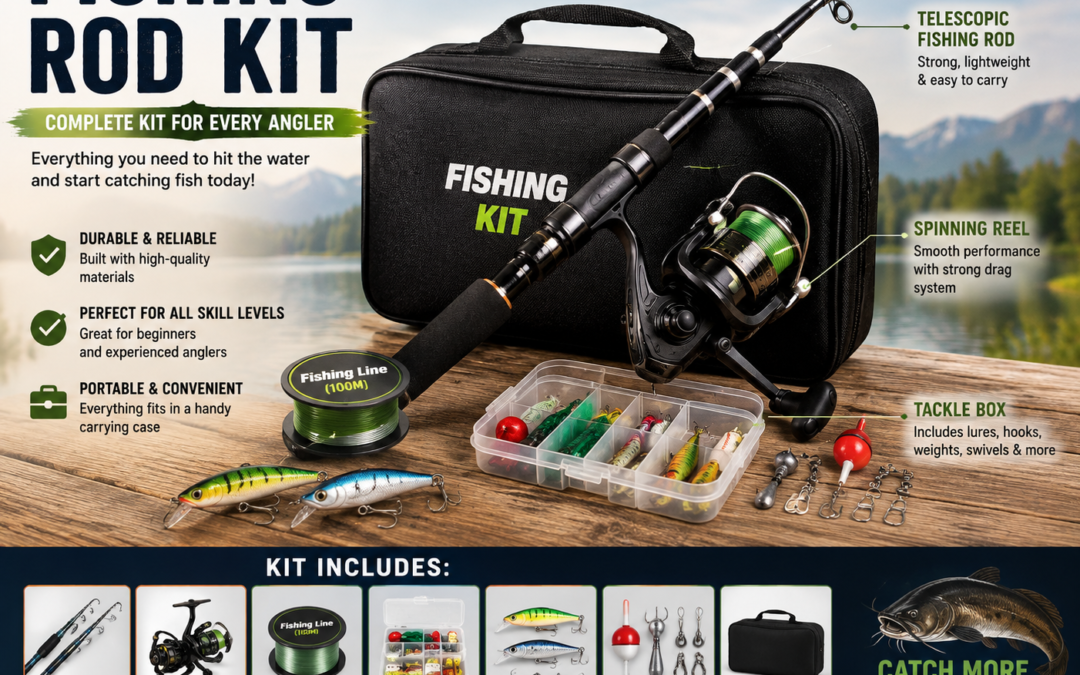
Buying a rod and reel separately makes sense once you know what you want — but if you're just getting started, matching power, action, gear ratio, and line capacity on your own can feel overwhelming. A good fishing rod kit solves that problem by pairing everything correctly from the start, so you can focus on fishing instead of research.
This guide covers what actually makes a fishing rod kit worth buying, and how to avoid the common trap of a cheap, mismatched bundle.
Table of Contents
Why a Fishing Rod Kit Makes Sense for Beginners
The biggest advantage of a fishing rod kit isn't just convenience — it's that the rod and reel are already matched correctly. A rod that's too stiff for its paired reel, or a reel with the wrong gear ratio for the rod's intended technique, creates a frustrating experience that has nothing to do with your actual skill as an angler. A well-built fishing rod kit removes that risk entirely.
This matters most for beginners who don't yet have the experience to judge whether a rod and reel pairing actually makes sense together.
What to Check Before Buying
- Component quality, not just price: the cheapest fishing rod kit on the shelf often uses low-grade guides or reel internals that fail quickly under real use
- Technique match: confirm the kit is actually built for how you plan to fish — a bass-focused kit isn't ideal for saltwater, for example
- What's actually included: some kits include extras like tackle or a case, while others are just the rod and reel — know what you're paying for
Choosing a Kit by Technique
Not every fishing rod kit is built the same way, and picking one that matches your intended technique matters more than picking the cheapest option available:
- Spinning combos: the most beginner-friendly option overall, easier to cast and maintain than baitcasting setups
- Baitcasting combos: better suited to anglers ready for more casting control, common in bass-specific kits
- Fly fishing combos: a completely different casting technique, bundled specifically for fly anglers rather than conventional gear
Fishing Rod Kit Picks
Several of our combos take the guesswork out of matching a rod and reel correctly, covering a range of techniques and species:
- Best all-around beginner spinning kit: Carbon X R1 Spinning Combo
- Best beginner baitcasting kit: Abu Garcia Beast Pro2 Combo
- Best fly fishing starter kit: Sage Foundation 7wt Outfit
- Best catfish-specific kit: Chaos XS Catfish Combo
- Best budget-friendly starter kit: Wolfcreek Damn You Rod Combo
For exact power, length, and included accessories, check each product page — specifications vary by kit selected.
When to Upgrade From a Kit
A fishing rod kit is a great starting point, but as you narrow down which techniques and species you enjoy most, upgrading to dedicated, technique-specific gear usually improves performance noticeably. There's no rush — many anglers happily fish a good kit for years — but don't be surprised if you eventually want a rod built more specifically around one style of fishing once you know what that is. Browse our full fishing rods and fishing reels collections when you're ready to build a more specialized setup, or check our fishing rod buying guide for guidance on what to look for next. For a broader introduction to techniques and species as you grow into the hobby, Take Me Fishing is a genuinely useful ongoing resource.
Frequently Asked Questions
Is a fishing rod kit good enough for a beginner, or should I buy separately?
A quality fishing rod kit is genuinely good enough for most beginners — the real risk is buying a cheap, poorly matched kit rather than buying a kit at all.
What's included in a typical fishing rod kit?
This varies — some kits include only the rod and reel, while others add extras like tackle, line, or a carrying case. Always check the specific listing.
Should I choose a spinning or baitcasting kit as a beginner?
Spinning combos are generally easier to learn and maintain, making them the more beginner-friendly choice unless you're specifically targeting bass with baitcasting techniques in mind.
When should I upgrade from a fishing rod kit?
Once you've identified a specific technique or species you're drawn to, upgrading to dedicated gear for that purpose usually improves performance — but there's no strict timeline to do so.