
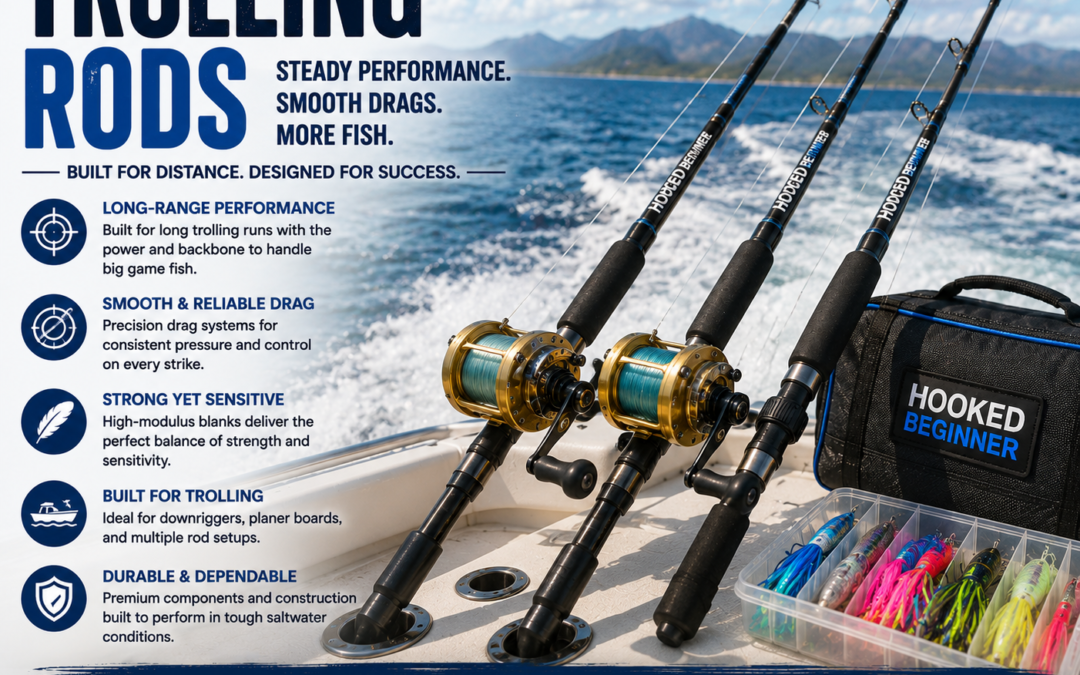
Trolling puts a different kind of stress on a rod than casting ever will. Instead of a single moment of tension on the hookset, trolling rods stay under constant load for hours — dragging a lure or bait behind a moving boat, absorbing wave action, and holding steady in a rod holder long before a fish ever strikes.
This guide covers what actually matters when choosing trolling rods as a beginner, from action to setup.
Table of Contents
Why Trolling Rods Are Built Differently
Casting rods are optimized for a single moment — the cast and the hookset. Trolling rods are optimized for endurance. They spend most of their time sitting in a rod holder under steady tension from the moving boat, only springing into action once a fish actually strikes. That's why trolling rods typically favor a more parabolic, softer action throughout the blank rather than the stiff, fast action common on casting rods.
This softer, more forgiving action in trolling rods acts as a natural shock absorber, which matters both for holding a hook in place during the strike and for protecting light line or delicate hooksets from sudden boat movement.
Action and Power for Trolling
Choosing the right power and action for trolling rods depends mostly on target species and lure weight:
- Medium, moderate action: a solid all-around choice for general trolling with crankbaits or spoons
- Medium-heavy, moderate-fast: better suited for larger species or heavier diving lures that add more resistance while trolling
- Heavy, offshore-rated trolling rods: needed for serious offshore trolling targeting larger gamefish, often paired with conventional reels and fighting chairs or rod holders
Beginners trolling in freshwater for species like walleye or salmon typically do well with a medium, moderate-action rod, while offshore trolling calls for genuinely heavier-duty trolling rods built to handle sustained strain.
Rod Holders and Downriggers
Trolling rarely happens with the rod in hand the whole time — a secure rod holder is just as important as the rod itself. A poorly mounted holder can lose a rod overboard the moment a big fish strikes. The Scotty 290 R-5 Rod Holder and Cannon Rod Holder are both built to keep trolling rods secure under constant tension, and are worth pairing with any dedicated trolling setup.
Trolling-Ready Rod Picks
While we don't carry a rod labeled specifically "trolling rod," several of our boat and offshore rods are well-suited to trolling thanks to their action and backbone:
- Best for general boat trolling: Rogue V Boat Rod
- Best alternative boat rod option: Rogue V Boat Rod
- Best for heavier offshore trolling: Saltflow Offshore Rod
- Best for serious big-game trolling: Saltflow Bent Butt Rod
For exact power, action, and length options, check each product page — specifications vary by size selected.
Pairing With Reel and Line
Trolling rods are typically paired with line counter reels or conventional reels, since knowing exactly how much line is out matters a lot for controlling lure depth while trolling. Braided line is common for its thin diameter and lack of stretch, though many anglers add a fluorocarbon leader for reduced visibility. Browse our full fishing reels collection, or check our fishing rod buying guide for more on matching gear to your setup. For species-specific trolling regulations, Take Me Fishing is a solid resource to check before heading out.
Frequently Asked Questions
What action is best for trolling rods?
A moderate to moderate-fast action is typical, since the softer bend throughout the blank absorbs strain better than a stiff, fast-action rod built for casting.
Do I need special rod holders for trolling?
Yes — a secure rod holder is essential, since trolling rods spend most of their time under load in a holder rather than in your hands, and a weak mount risks losing the rod entirely on a strike.
Can I use a regular casting rod for trolling?
You can occasionally, but a true casting rod's stiffer action isn't ideal for the sustained tension trolling puts on a blank, and it's more likely to pull hooks or feel harsh on a strike.
What line is best for trolling rods?
Braided line is common for its thin diameter and control, often paired with a fluorocarbon leader to reduce visibility to fish trailing behind the boat.