
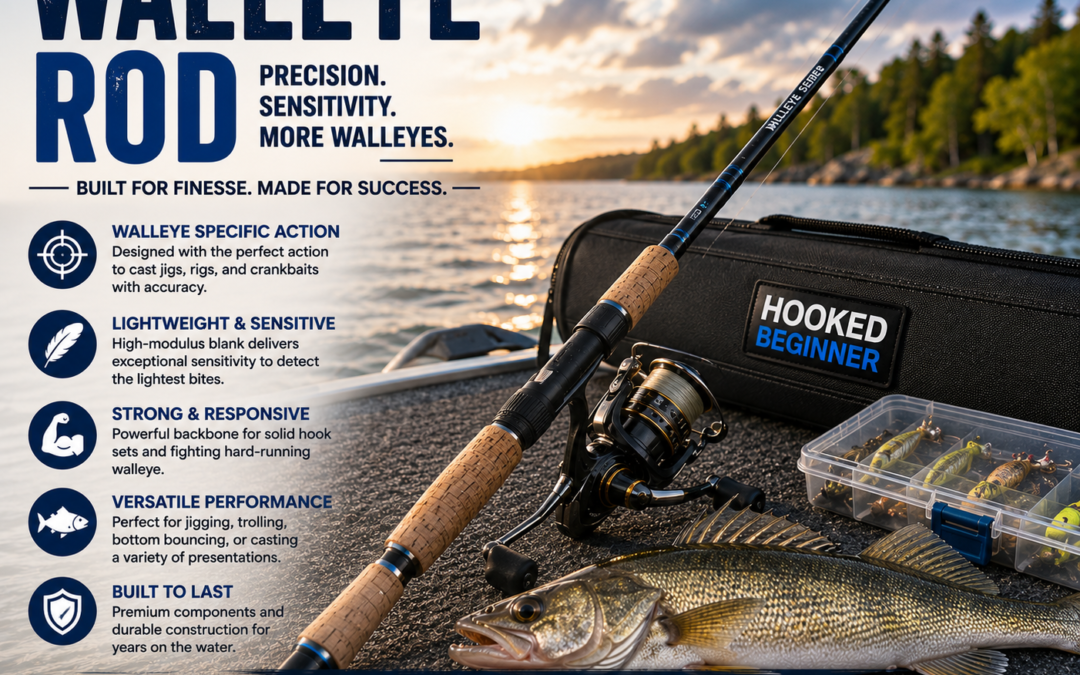
Walleye have a reputation for being finicky biters — light taps, subtle pickups, and a tendency to drop bait the moment they feel resistance. A walleye rod built for this kind of finesse fishing makes the difference between a good day on the water and a frustrating one where you keep missing fish you never even knew bit.
This guide covers what actually matters when choosing a walleye rod as a beginner, without assuming you already know the terminology.
Table of Contents
Why Sensitivity Matters Most
Walleye don't hit like bass. Most bites feel like a light tick or a slight change in weight, and a rod that's too stiff or insensitive will mask that feeling entirely. A good walleye rod prioritizes tip sensitivity above almost everything else, since detecting the bite is usually the hardest part of the whole process.
That said, a walleye rod still needs enough backbone in the lower half to set the hook properly once you do feel that bite — an overly soft rod throughout will struggle to drive the hook home, especially with heavier jigs or live bait rigs.
Length and Power for Walleye
Most walleye rods fall into a fairly narrow range compared to other species:
- 6'–6'6" Medium-Light: the most common walleye rod setup, balancing sensitivity with enough backbone for typical jigging and live bait presentations
- 6'6"–7' Medium: better suited for trolling or fishing deeper water where a bit more backbone helps drive hooksets at distance
- Longer rods (7'+): useful for casting distance when fishing shallow, weedy areas from shore or a drifting boat
For most beginners, a 6'6" medium-light walleye rod is the safest starting point — versatile enough to handle jigging, live bait rigging, and light trolling without needing a second setup right away.
Matching Your Rod to How You Fish
How you plan to target walleye should influence your walleye rod choice more than any single spec:
- Jigging: favors a sensitive tip with a fast action, so you can feel subtle bites and react quickly
- Live bait rigging: often pairs with a slightly softer tip that lets fish take line without feeling resistance before the hookset
- Trolling with crankbaits: benefits from a rod with more parabolic bend throughout, which acts as a natural shock absorber against a moving boat
Walleye-Ready Rod & Combo Picks
While we don't carry a walleye-specific labeled rod, several of our spinning setups suit walleye fishing well thanks to their sensitivity and medium-light power range:
- Best all-around spinning setup for jigging: Carbon X R1 Spinning Combo
- Best for live bait rigging: Daiwa Kenzaki Spin Combo
- Best premium sensitivity option: Carbon X-II and Carbon R1 Spinning Combo
- Best budget-friendly walleye setup: Carbon X and Carbon R1 Spinning Combo
For exact power, action, and length options, check each product page — specifications vary by size selected.
Pairing With Line and Reel
Walleye rods pair best with a reel that has a smooth, reliable drag system, since walleye often make short, sharp runs once hooked. Many anglers spool their walleye rod with a light fluorocarbon leader over braided main line, since fluorocarbon's low visibility helps in the clear water walleye are often found in. Browse our full fishing reels and fishing rods collections, or check our fishing rod buying guide for more on matching gear to your target species. For regional walleye regulations and season dates, Take Me Fishing is a reliable resource to check before heading out.
Frequently Asked Questions
What length walleye rod is best for beginners?
A 6'6" medium-light walleye rod is the most versatile starting point, handling jigging, live bait rigging, and light trolling without needing a second setup.
Do I need a special walleye rod, or will any spinning rod work?
A dedicated sensitive spinning rod works well — the key feature to prioritize is tip sensitivity, since walleye bites are often very subtle compared to other species.
What action is best for jigging walleye?
A fast action with a sensitive tip is ideal for jigging, since it lets you feel light bites quickly while still having enough backbone lower in the blank for a solid hookset.
Can I troll with a walleye rod?
Yes, though a slightly longer rod with more parabolic bend performs better for trolling, since it absorbs the shock of a moving boat better than a stiffer jigging-focused rod.