
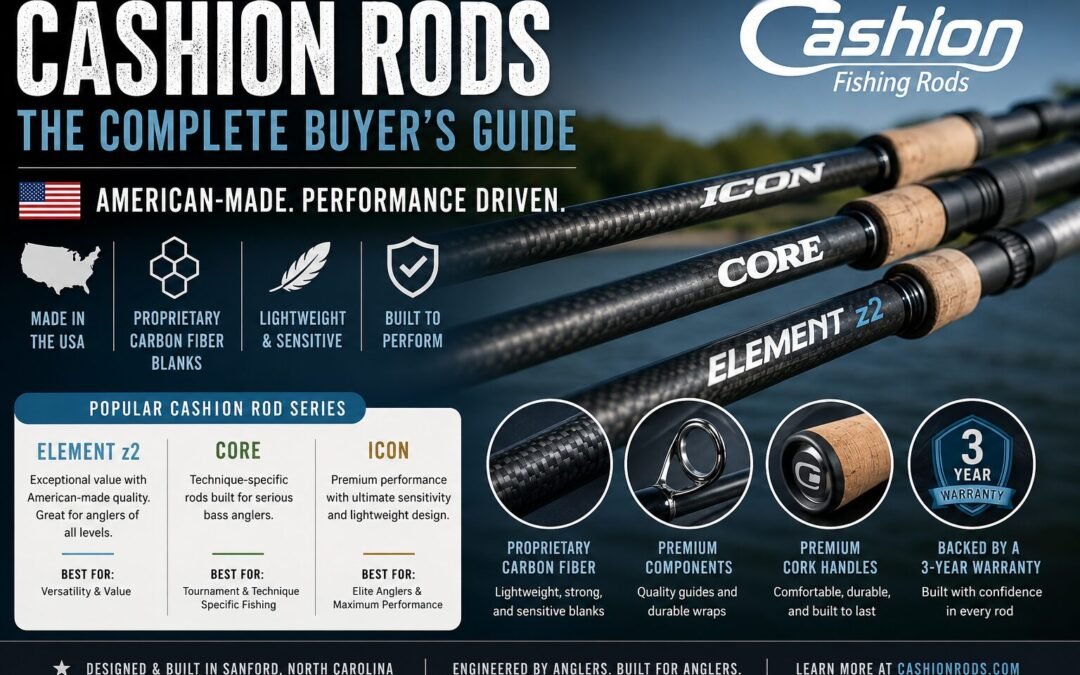
Whether you are chasing trophy largemouth bass in heavy vegetation, casting delicate dry flies for wary trout in pristine mountain streams, or battling heavy saltwater game fish along the coastal flats, your choice of equipment dictates your level of success. While mass-produced factory rods serve a purpose for casual weekend anglers, discerning fishermen increasingly turn to custom fishing rods to achieve unmatched levels of precision, sensitivity, ergonomics, and aesthetic beauty. When you commission or build custom fishing rods, every single physical attribute—ranging from the raw graphite or composite blank and the precise guide train to the custom handle configuration, reel seat placement, and intricate decorative thread wraps—is engineered entirely around your individual mechanics and fishing style.
Unlike off-the-shelf production models that must cater to the lowest common denominator of a broad consumer market, high-performance custom fishing rods are meticulously tailored to your preferred techniques, target species, casting cadence, and physical comfort. Whether you require an ultra-light spinning build for technical finesse applications, a heavy-power baitcasting custom rod designed to pull big fish out of deep timber, or a specialized saltwater offshore stick capable of withstanding immense drag pressure, custom fishing rods provide a distinct advantage on the water. Professional custom rod builders and experienced anglers understand that these tools function as an extension of your own arm, translating underwater vibrations directly to your fingertips and maximizing every ounce of mechanical leverage during a fight.
In this exhaustive, long-form guide, we will explore every facet of custom fishing rods. From understanding blank moduli, backbone spine alignment, and dynamic balance points to evaluating guide spacing charts, handle materials, and advanced thread art, this comprehensive resource is designed to give you complete mastery over custom fishing rods.
The Evolution and Philosophy of Custom Fishing Rods
The history of custom fishing rods traces back generations, rooted in the tradition of master craftsmen hand-planing bamboo splits or wrapping single-strand guides onto custom wooden dowels. Today, the philosophy behind custom fishing rods remains steadfast: perfection through hyper-specialization. Mass-manufactured factory rods are inherently constrained by production line efficiencies. Factories must build rods that are "good enough" for a massive array of casting styles, meaning compromises must be made in weight distribution, wall thickness, taper design, and component selection.
Conversely, custom fishing rods eliminate these compromises. When working with custom fishing rods, an angler can dictate the exact distance from the butt cap to the reel seat (rear grip length), ensuring that the rod balances perfectly with their specific reel model. This eliminates tip-heaviness, which is a primary contributor to wrist fatigue during long days of repetitive casting. Furthermore, custom fishing rods allow for meticulous spine alignment. Every tubular graphite blank possesses a natural spine or stiffness seam due to the rolling process of carbon sheets. Factory rods are frequently wrapped off-spine to speed up assembly, whereas premium custom fishing rods are always wrapped directly on the spine to maximize lifting power, structural integrity, and casting accuracy.
Core Advantages of Custom Fishing Rods Over Factory Models
Investing in high-end custom fishing rods yields tangible benefits that directly translate to higher catch rates and a more enjoyable fishing experience. Below are the primary performance pillars that set custom fishing rods apart:
- Unrivaled Dynamic Balance: Factory rods often feel front-heavy because handle lengths and weight distribution are standardized. Custom fishing rods are balanced dynamically with your exact reel mounted, reducing torque and wrist fatigue.
- Maximized Blanks Sensitivity: By utilizing high-modulus carbon fiber blanks paired with minimalist exposed-blank reel seats and lightweight titanium guide trains, custom fishing rods transmit microscopic underwater feedback instantly.
- Technique-Specific Optimization: Whether drop-shotting deep structure or throwing heavy swimbaits, custom fishing rods can be optimized with custom taper rates, tip speeds, and power ratings tailored to a single niche.
- Exceptional Structural Integrity: Master builders hand-inspect every guide foot for burrs, ensure epoxy coverage is thin and even to prevent deadening blank action, and test structural loads thoroughly.
- Personalized Aesthetics and Ergonomics: Custom fishing rods offer complete customization over grip diameters, cork grades, EVA densities, thread art colors, and personalized owner inscriptions.
Anatomy of High-End Custom Fishing Rods: Component Breakdown
To truly understand how custom fishing rods function, one must examine the individual components that comprise a finished build. Each part plays a critical role in the overall harmonic resonance, weight, and durability of custom fishing rods.
1. The Rod Blank
The blank is the beating heart of all custom fishing rods. Sourced from premier rolling facilities, blanks are categorized by material modulus (such as intermediate, high, or ultra-high modulus graphite), wall thickness, and inner core architecture. Selecting the right blank determines whether custom fishing rods will feature a lightning-fast extra-fast tip or a parabolic slow flex.
2. The Guide Train
Guides manage line flow, dissipate friction heat, and dictate how weight is distributed along the upper sections of custom fishing rods. Modern builds favor single-foot or double-foot titanium frames outfitted with ultra-hard ceramic rings like Silicon Carbide (SiC) or Zirconia. Proper static and dynamic guide placement ensures that the line follows the natural curve of the blank under heavy loads without touching the carbon walls.
3. Reel Seats and Arbors
The reel seat locks your spinning or casting reel securely onto the custom fishing rods. Builders often utilize exposed blank reel seats (such as ACS, ECS, or TVS styles) that feature cutouts exposing the raw graphite blank directly beneath your fingers, drastically increasing bite detection sensitivity. Arbors made from polyurethane, drywall tape, or graphite shims ensure a rigid, void-free connection between the blank outer diameter and the reel seat inner diameter.
4. Handle Assemblies and Grips
Handle configurations on custom fishing rods can range from full-length high-grade Flor cork to modular split-grips constructed from high-density EVA foam, rubberized cork composites, or textured carbon fiber tubes. The outer diameter and contour of these grips are often custom-shaped on a lathe to fit the specific hand size and gripping preference of the end user.
Selecting Materials for Custom Fishing Rod Blanks
The choice of material dictates the foundational characteristics of custom fishing rods. Different polymers and carbon structures offer distinct trade-offs in weight, recovery speed, and shock absorption:
- Graphite (Carbon Fiber): The undisputed king of sensitivity and recovery speed in custom fishing rods. High-modulus graphite fibers packed tightly with minimal resin allow custom fishing rods to transmit vibrations instantly and recover from a cast with zero oscillation.
- Fiberglass: Traditional e-glass and modern S-glass materials provide incredible impact resistance, parabolic flexing curves, and shock absorption. These materials are heavily favored in custom fishing rods built for crankbaits, jerkbaits, and deep-sea trolling where fish strike aggressively on moving baits.
- Composite Blanks: Blending graphite and fiberglass into a single blank creates versatile custom fishing rods that harness the backbone and sensitivity of carbon fiber combined with the forgiving tip section of fiberglass.
Specialized Techniques and Applications for Custom Fishing Rods
Because custom fishing rods are designed without mass-production limitations, they excel in highly specialized angling disciplines where standard factory options fall short:
Freshwater Bass and Tournament Angling
Tournament bass fishermen rely heavily on custom fishing rods for techniques like drop-shotting, Neko rigging, heavy flipping in dense mats, and throwing oversized glide baits. A custom bass rod can be engineered with a micro-tuned tip for imparting subtle action to soft plastics while retaining massive lower-register lifting power.
Inshore and Saltwater Game Fishing
Inshore saltwater species like redfish, seatrout, and snook require custom fishing rods equipped with corrosion-resistant titanium hardware, saltwater-safe reel seats, and robust blank walls capable of handling blistering runs against harsh tidal currents.
The Step-by-Step Crafting Process for Custom Fishing Rods
Building professional-grade custom fishing rods is an intricate art form that requires patience, specialized machinery, and precise measurements. The typical workflow followed by master builders involves several critical stages:
- Spine Finding and Alignment: Flexing the blank under load to locate its natural straightness seam and stiffest axis.
- Grip and Reel Seat Fitting: Reaming cork or EVA grips, mounting arbors, and gluing the reel seat securely onto the calculated balance point.
- Static Guide Spacing Test: Taping guides onto the custom fishing rods temporarily and flexing the blank under line tension to check for smooth line flow and stress distribution.
- Thread Wrapping: Utilizing a motorized wrapping machine to bind guide feet to the blank using high-tensile nylon or metallized polyester threads.
- Epoxy Application and Curing: Mixing two-part structural epoxy precisely and applying it to thread wraps while the custom fishing rods rotate slowly on a drying motor to achieve a flawless, bubble-free glass finish.
Long-Term Maintenance and Care for Custom Fishing Rods
To preserve the pristine condition, structural integrity, and aesthetic brilliance of your custom fishing rods, adhere to the following maintenance protocols:
- Freshwater Rinsing: Always wash down custom fishing rods and titanium guide frames with clean freshwater immediately after exposure to brackish or saltwater environments.
- Blank Inspection: Periodically check guide rings for microscopic chips or micro-fractures that could abrade high-end braided fishing lines.
- Proper Storage: Store your custom fishing rods vertically in specialized wall racks or securely suspended in padded ceiling clips to prevent permanent blank warping.
- Transport Protection: Utilize hard-shell travel tubes or thickly padded rod sleeves whenever transporting custom fishing rods in vehicles or aircraft.
Frequently Asked Questions About Custom Fishing Rods
Why are custom fishing rods more expensive than factory models?
Custom fishing rods command higher price points because every step of construction—from blank spine finding and custom grip shaping to individual guide wrapping and hand-applied epoxy finishes—is performed manually by an expert artisan using superior components.
Can novice anglers truly benefit from using custom fishing rods?
Yes, absolutely. While experienced tournament anglers appreciate the nuanced performance gains, novice anglers benefit immensely from the enhanced balance, reduced fatigue, and superior strike detection offered by well-balanced custom fishing rods.
How long does it take to commission custom fishing rods?
Production timelines vary depending on component availability, builder backlog, and design complexity, typically ranging anywhere from three to eight weeks from initial consultation to final delivery.