
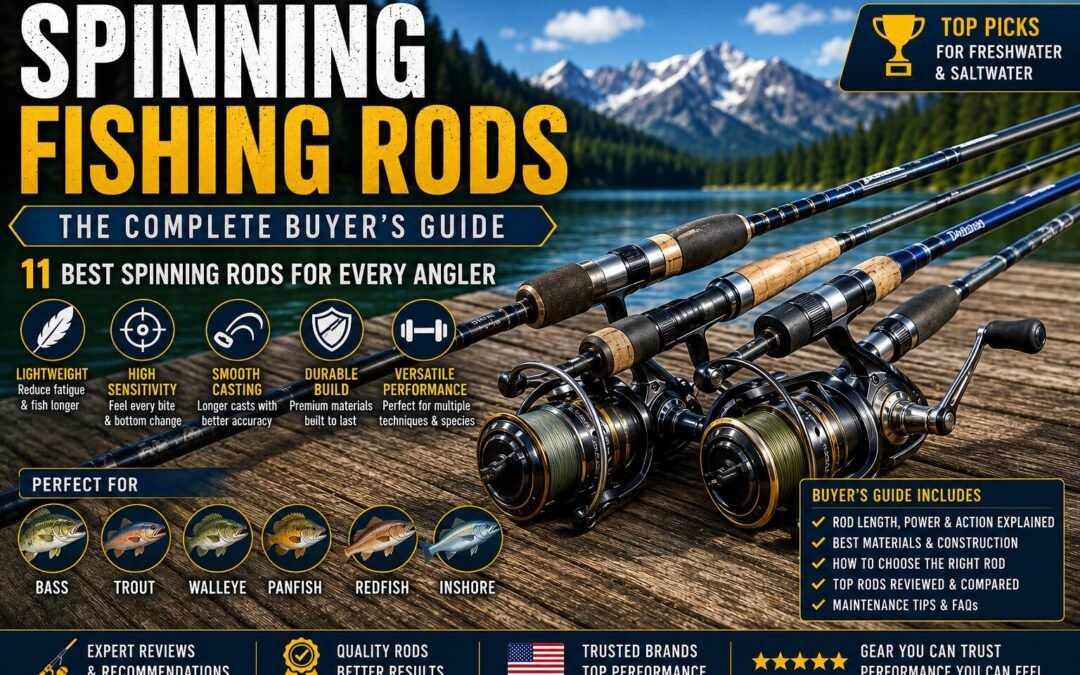
Spinning Fishing Rods: The Complete Buyer’s Guide
These Fishing Rods are among the most versatile and beginner-friendly fishing rods available today. Their easy casting mechanics, lightweight design, and exceptional accuracy make them a favorite choice for anglers targeting bass, trout, walleye, panfish, redfish, and countless other freshwater and inshore saltwater species. Whether you’re casting lightweight soft plastics, live bait, crankbaits, or finesse lures, spinning rods deliver excellent control and consistent performance.
Unlike baitcasting setups, the Spinning Fishing Rod uses a spinning reel mounted beneath the rod, allowing the fishing line to flow smoothly from a fixed spool. This design reduces backlash while improving casting distance, making spinning tackle an excellent option for beginners and experienced anglers alike.
This complete buyer’s guide explains everything you need to know about Spinning Fishing Rods, including rod lengths, power, action, materials, applications, buying tips, and maintenance recommendations to help you choose the perfect rod for your next fishing adventure.
Table of Contents
- Why Choose Spinning Fishing Rods?
- Key Features
- Rod Materials
- Best Fishing Applications
- Choosing the Right Rod Length
- How to Choose the Right Spinning Rod
- Buying Guide
- Maintenance Tips
- Frequently Asked Questions
Why Choose Spinning Fishing Rods?
They are designed to provide effortless casting, superior lure control, and excellent versatility. Because the reel hangs beneath the rod, line flows naturally during the cast, significantly reducing line twists and backlash compared to many casting setups.
These rods excel when using lightweight lures, finesse presentations, live bait, and artificial baits, making Spinning Fishing Rods one of the most popular choices for anglers of every experience level.
Key Features of Spinning Fishing Rods
Lightweight Construction
Most modern Spinning Fishing Rods are built using graphite or composite blanks that provide lightweight performance while maintaining excellent strength and responsiveness.
Exceptional Sensitivity
Premium spinning rods transmit vibrations efficiently, allowing anglers to detect subtle strikes, bottom changes, and lure movement with greater precision.
Smooth Casting Performance
The spinning reel design allows line to leave the spool freely, making long, accurate casts much easier, especially with lightweight lures.
Comfortable Balance
Properly balanced Spinning Fishing Rods reduce fatigue during long fishing sessions while improving casting control and hook-setting power.
Versatile Design
Whether targeting bass, trout, walleye, panfish, or inshore saltwater species, These Fishing Rods are available in numerous lengths, powers, and actions to match virtually every fishing technique.
Rod Blank Materials
Graphite
Graphite blanks offer outstanding sensitivity, lightweight performance, and fast recovery, making them ideal for finesse fishing and artificial lure presentations.
Fiberglass
Fiberglass rods provide increased flexibility and durability, making them popular for crankbaits, live bait fishing, and larger fish species.
Composite
Composite blanks combine graphite and fiberglass to provide an excellent balance of strength, flexibility, sensitivity, and durability.
Best Fishing Applications
- Bass fishing
- Trout fishing
- Walleye fishing
- Panfish fishing
- Crappie fishing
- Inshore saltwater fishing
- Finesse fishing
- Live bait fishing
The versatility of Spinning Fishing Rods makes them an excellent choice for anglers who enjoy fishing multiple species using a wide variety of techniques.
Choosing the Right Spinning Rod Length
- 5’6″–6’0″ — Tight casting around docks, creeks, and heavy cover.
- 6’3″–6’6″ — Excellent all-around freshwater fishing.
- 6’8″–7’0″ — Ideal for bass, trout, and walleye fishing.
- 7’1″–7’6″ — Longer casting distance and improved hook-setting power.
- 7’6″+ — Surf fishing and specialized long-distance applications.
Choosing the correct rod length allows your Spinning Fishing Rods to maximize casting accuracy, lure control, and fish-fighting performance for your preferred fishing style.
How to Choose the Right Spinning Fishing Rods
Selecting the best Spinning Fishing Rods depends on several important factors, including your target species, fishing techniques, lure weights, and preferred fishing locations. Matching your rod to your style of fishing improves casting distance, lure presentation, bite detection, and overall fishing success.
Select the Proper Rod Power
The power of Spinning Fishing Rods determines how much force is required to bend the rod blank. Choosing the correct power ensures better hooksets and improved fish control.
- Ultra Light — Best for trout, bluegill, and small panfish.
- Light — Excellent for crappie, perch, and finesse fishing.
- Medium Light — Perfect for drop-shot rigs, small soft plastics, and walleye.
- Medium — Ideal all-around choice for bass, trout, and freshwater fishing.
- Medium Heavy — Great for larger bass, heavier lures, and inshore species.
- Heavy — Built for larger fish, heavy cover, and saltwater applications.
Choose the Right Rod Action
The action of Spinning Fishing Rods determines where the rod flexes while casting and fighting fish.
- Slow Action
- Moderate Action
- Moderate Fast Action
- Fast Action
- Extra Fast Action
Fast and extra-fast actions provide greater sensitivity and quicker hooksets, while moderate actions perform exceptionally well with moving lures like crankbaits and spinnerbaits.
Spinning Fishing Rod Buying Guide
Before purchasing Spinning Fishing Rods, consider these important factors.
- Fishing location (freshwater or saltwater).
- Target fish species.
- Rod length.
- Power rating.
- Action.
- Blank material.
- Guide quality.
- Handle material.
- Overall balance with your reel.
- Budget.
Benefits of Spinning Fishing Rods
Millions of anglers prefer Spinning Fishing Rods because they offer exceptional versatility and ease of use.
- Easy to learn for beginners.
- Excellent casting accuracy.
- Reduced backlash.
- Outstanding sensitivity.
- Lightweight and comfortable.
- Suitable for lightweight lures.
- Versatile across many fishing techniques.
- Available in a wide range of prices.
- Ideal for freshwater and inshore saltwater fishing.
Who Should Buy Spinning Fishing Rods?
- Beginning anglers.
- Bass fishermen.
- Trout anglers.
- Walleye fishermen.
- Crappie anglers.
- Inshore saltwater anglers.
- Travel anglers.
- Experienced tournament fishermen.
Whether you’re buying your first fishing setup or upgrading to premium equipment, Spinning Fishing Rods provide outstanding versatility for virtually every fishing situation.
Common Buying Mistakes
- Choosing the wrong rod length.
- Selecting incorrect power.
- Ignoring rod action.
- Using an oversized spinning reel.
- Purchasing low-quality guides.
- Ignoring lure weight ratings.
- Not balancing the rod with the reel.
- Buying based only on price.
Avoiding these mistakes will help your Spinning Fishing Rods perform at their highest level while providing years of dependable service.
Popular Uses for Spinning Fishing Rods
Spinning Fishing Rods are trusted by anglers because they excel in numerous fishing situations. They perform exceptionally well with soft plastics, live bait, crankbaits, jerkbaits, swimbaits, spinnerbaits, spoons, and finesse presentations. Their versatility makes them one of the most valuable tools in any angler’s collection.
How to Maintain Spinning Fishing Rods
Proper care helps Spinning Fishing Rods maintain their casting performance, sensitivity, and durability for years. Whether you fish freshwater lakes, rivers, or coastal waters, a few simple maintenance habits will keep your equipment performing like new.
Clean After Every Fishing Trip
After each outing, wipe your Spinning Fishing Rods with a clean microfiber cloth. If you’ve been fishing in saltwater, rinse the rod thoroughly with fresh water to remove salt, sand, and debris that can damage guides, reel seats, and the rod blank.
Inspect the Guides
Check each guide regularly for cracks, chips, or loose inserts. Damaged guides can quickly wear through fishing line and reduce casting distance. Replacing damaged guides early helps prevent costly repairs.
Protect the Rod Blank
The blank is the foundation of every Spinning Fishing Rods setup. Avoid impacts against hard surfaces, stepping on the rod, or storing heavy equipment on top of it, as these can weaken or permanently damage the blank.
Store
Store Your Rod Properly
Store your Spinning Fishing Rods vertically in a rod rack or inside protective rod sleeves whenever possible. Keeping rods in a cool, dry location away from direct sunlight helps prevent unnecessary wear and protects the rod blank, guides, and handle materials.
Transport Safely
When traveling, use a rod tube or padded rod sleeve to protect your Spinning Fishing Rods from impacts that can bend guides or break rod tips. Proper transportation extends the lifespan of your fishing equipment.
Frequently Asked Questions
Are Spinning Fishing Rods good for beginners?
Yes. Spinning Fishing Rods are widely recommended for beginners because they are easy to cast, produce fewer line tangles than baitcasting setups, and work well with a wide variety of lures and live bait.
What fish can I catch with Spinning Fishing Rods?
Spinning Fishing Rods are suitable for catching bass, trout, walleye, crappie, bluegill, perch, catfish, redfish, snook, and many other freshwater and inshore saltwater species.
What rod length is best?
A 6’6″ to 7’0″ spinning rod is one of the most versatile options for general freshwater fishing. Longer rods provide greater casting distance, while shorter rods offer better accuracy in tight spaces.
Can Spinning Fishing Rods be used in saltwater?
Yes. Many Spinning Fishing Rods are designed specifically for saltwater fishing. Choose corrosion-resistant guides, reel seats, and components, and always rinse the rod with fresh water after use.
How long do Spinning Fishing Rods last?
With proper care and regular maintenance, quality Spinning Fishing Rods can provide many years of reliable performance while maintaining their sensitivity and casting accuracy.
Final Thoughts
Spinning Fishing Rods continue to be one of the most popular choices for anglers because they combine versatility, lightweight performance, smooth casting, and excellent sensitivity. From beginners learning the basics to experienced tournament competitors, spinning rods offer dependable performance across countless fishing techniques and species.
By selecting the proper rod length, power, action, and materials, you’ll enjoy better lure presentation, improved hooksets, and greater confidence on every fishing trip. Investing in high-quality Spinning Fishing Rods will help you fish more effectively for years to come.
Related Guides on Hooked Beginner
- Fishing Rod
- Best Fishing Rod
- Best Fishing Rod Brands
- Good Fishing Rods
- Spinning Fishing Pole
- Spinning Reel Rod
- Bass Fishing Rods
- Carbon Fiber Fishing Rods
- Casting Rods
- Trout Fishing Rods
Recommended External Resources
Continue Learning
Continue exploring Hooked Beginner for expert fishing rod reviews, reel buying guides, tackle comparisons, and educational articles designed to help anglers choose the best equipment. Whether you’re purchasing your first setup or upgrading to premium Spinning Fishing Rods, our comprehensive guides will help you fish with greater confidence and success.