
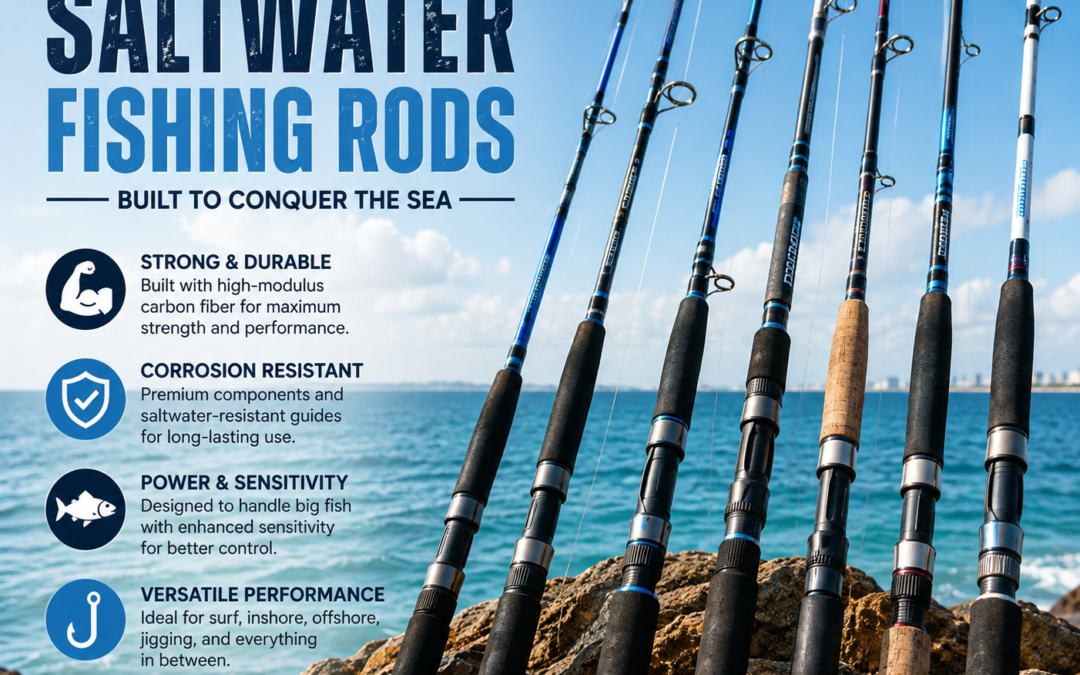
Saltwater fishing isn't like casting into your local pond. Between corrosive salt spray, bigger and stronger fish, and unpredictable surf, your gear either holds up or it gets embarrassing fast. If you're new to saltwater fishing, picking the right saltwater fishing rod is the single biggest decision that determines whether your first few trips feel like progress or frustration.
This guide breaks down everything a beginner actually needs to know about saltwater fishing rods — from inshore skiffs to deep sea boat trips — without the jargon overload.
Table of Contents
- Why Saltwater Fishing Rods Are Built Differently
- Inshore vs. Offshore vs. Surf: What's the Difference?
- Materials That Actually Matter
- Choosing the Right Length and Power
- Top Saltwater Fishing Rod Picks for Beginners
- Pairing Your Saltwater Fishing Rod With the Right Reel and Line
- Saltwater Fishing Rod Care and Maintenance
- Frequently Asked Questions
Why Saltwater Fishing Rods Are Built Differently
Freshwater rods and saltwater fishing rods might look similar on a rack, but they're built for very different punishment. Saltwater fishing rods are engineered to resist corrosion, since salt spray attacks exposed metal guides, reel seats, and hardware within a single season if the components aren't rated for it.
Beyond corrosion resistance, saltwater species simply hit harder and fight longer. A rod that feels perfectly capable on a lake can fold under the first real run from a redfish, striper, or anything offshore. That's why quality saltwater fishing rods generally use:
- Stainless steel or corrosion-resistant guides
- Sealed or coated reel seats
- Heavier-duty blank construction to handle sustained fighting pressure
Skipping these features might save money upfront, but a rod that isn't built as a true saltwater fishing rod will typically corrode or fail within a season of regular ocean use.
Inshore vs. Offshore vs. Surf: What's the Difference?
"Saltwater fishing rod" is a broad category — where you're actually fishing changes what you need.
Inshore Rods
Built for skiffs, bays, flats, and nearshore structure. These saltwater fishing rods are typically lighter and more sensitive, since inshore fishing often relies on feeling subtle bites. The Legend Xtreme Inshore Rod and Triumph Inshore Casting Rod are both built with this lighter, more precise inshore application in mind.
Offshore & Deep Sea Rods
These are the workhorses — built to handle bigger fish, deeper water, and longer fights. Offshore saltwater fishing rods tend to be heavier in both blank strength and backbone, since they're often paired with conventional reels for trolling or bottom fishing. The Saltflow Offshore Rod and Shimano Trevala B both fall into this heavier-duty category, built for jigging and deep water work.
Boat & Bent-Butt Rods
For serious offshore trolling, a bent-butt style saltwater fishing rod like the Saltflow Bent Butt Rod or the Rogue V Boat Rod makes fighting big fish from a rod holder or fighting chair far more manageable.
Materials That Actually Matter
You'll see saltwater fishing rods described with terms like graphite composite, E-glass, or hybrid blanks. Rather than chasing a specific material, beginners should focus on two things: corrosion-rated hardware and a power rating that matches the species you're targeting. A mid-range saltwater fishing rod with quality guides will outlast a "premium" rod with cheap hardware every time it goes near salt water.
Choosing the Right Length and Power
Rod length and power rating affect casting distance, sensitivity, and how much fight your saltwater fishing rod can handle. As a general starting point for beginners:
- 7' Medium — Medium Heavy: a versatile inshore length, good for redfish, snook, and general nearshore casting
- 7'6"–8' Medium Heavy — Heavy: better for surf casting and larger inshore species
- Offshore/Boat rods: length matters less than backbone strength — these are chosen more by target species weight than by casting distance
If you're unsure, a 7' medium-heavy inshore saltwater fishing rod is the safest all-around starting point for most new saltwater anglers.
Top Saltwater Fishing Rod Picks for Beginners
Based on the categories above, here's where to start depending on how you plan to fish:
- Best all-around inshore saltwater fishing rod: Legend Xtreme Inshore Rod
- Best for casting from a skiff: Triumph Inshore Casting Rod
- Best for deep water jigging: Shimano Trevala B
- Best slow-pitch jigging option: Shimano Grappler Slow J
- Best for structure/bottom fishing offshore: Shimano Grappler Type J
- Best budget offshore saltwater fishing rod: Saltflow Offshore Rod
- Best for serious trolling: Saltflow Bent Butt Rod
- Best boat rod for heavier tackle: Rogue V Boat Rod
- Best premium all-around saltwater fishing rod: IMX-PRO Blue Saltwater Rod
For exact specs (length, power, line rating) on any of these saltwater fishing rods, check the product page — specifications vary by model and size selected.
Pairing Your Saltwater Fishing Rod With the Right Reel and Line
A saltwater fishing rod is only half the setup. Inshore rods typically pair well with a corrosion-resistant spinning reel, while offshore and boat rods are usually matched with conventional or lever-drag reels built for heavier drag pressure. Browse our full fishing reels and fishing rods collections to find a matching combo, or check our fishing rod buying guide for more on matching gear to your target species.
Saltwater Fishing Rod Care and Maintenance
Saltwater fishing rods need more attention than freshwater tackle. A few habits make a big difference in how long your rod lasts:
- Rinse your saltwater fishing rod with fresh water after every trip — salt residue accelerates corrosion even on "saltwater-rated" hardware
- Check guides periodically for grooves or rough spots that can fray your line
- Store rods horizontally or in a rod rack, not leaned against a wall under tension
- Loosen drag on your reel before long-term storage
For official guidance on regulations and sustainable saltwater fishing practices, the NOAA Fisheries and International Game Fish Association are excellent authoritative resources, and Take Me Fishing offers beginner-friendly guides on saltwater species and techniques by region.
Frequently Asked Questions
Can I use a regular fishing rod in saltwater?
You can occasionally, but it's not recommended long-term. Standard freshwater rods lack the corrosion-resistant guides and hardware a true saltwater fishing rod needs to survive repeated ocean exposure, and will degrade quickly.
What's the difference between an inshore and offshore saltwater fishing rod?
Inshore rods are lighter and more sensitive, built for nearshore species like redfish and snook. Offshore saltwater fishing rods are heavier-duty, built to handle bigger fish and longer fights in deeper water.
Do I need a special reel for a saltwater fishing rod?
Yes — pair saltwater fishing rods with reels specifically rated for saltwater use, as they have sealed or corrosion-resistant internals that standard freshwater reels don't have.
How often should I rinse my saltwater fishing rod?
After every single trip, even if it wasn't submerged. Salt spray alone is enough to begin corroding hardware over time.
Trackbacks/Pingbacks