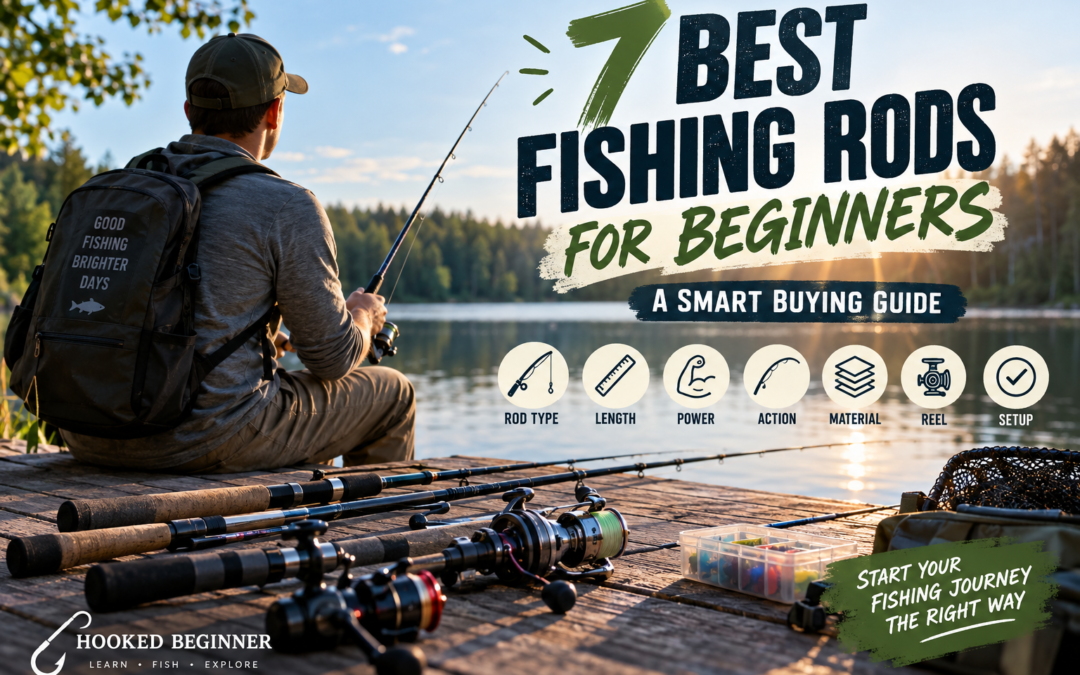
Choosing the right fishing rods for beginners can make your first fishing trips easier, more comfortable, and more enjoyable. You do not need the most expensive rod or the most advanced fishing setup to learn how to fish. What matters is choosing equipment that matches the type of fishing you plan to do, feels comfortable in your hands, and works properly with your reel, line, and lures.
With so many rod lengths, powers, actions, materials, and designs available, choosing your first rod can be confusing. This complete guide explains what beginners should look for before buying a fishing rod, the main types of rods available, how rod specifications work, and how to match a beginner fishing rod with the right reel and fishing situation.
If you are completely new to fishing, you can also learn more about the fundamentals in our complete fishing rod guide before choosing your first setup.
What Makes the Best Fishing Rods for Beginners?
The best fishing rods for beginners are generally simple, versatile, comfortable, and suitable for the fishing conditions where they will be used. A beginner-friendly rod should allow you to learn casting, retrieving, setting the hook, and fighting fish without making the process unnecessarily complicated.
When comparing beginner fishing rods, look for these characteristics:
- Comfortable and manageable length
- Appropriate rod power
- Suitable rod action
- Lightweight and comfortable construction
- Comfortable handle and grip
- Compatibility with the correct reel
- Suitable line rating
- Suitable lure rating
- Enough strength for your target fish
- A design appropriate for your fishing environment
Versatility is especially useful when you are starting out. Instead of immediately buying several specialized rods, one well-matched beginner fishing rod can allow you to learn different techniques and discover which type of fishing you enjoy most.
Understanding the Different Types of Fishing Rods
Before choosing a beginner fishing rod, it helps to understand the major rod types. Each type is designed around a particular reel style, casting method, and fishing application.
For a more detailed breakdown of rod designs, see our guide to types of fishing rods.
Spinning Rods for Beginners
A spinning rod is one of the most common choices for people learning how to fish. Spinning setups are relatively straightforward to operate and can be used for many freshwater and light saltwater applications.
A spinning rod is designed to work with a spinning reel. The reel hangs underneath the rod, and the spool allows fishing line to leave the reel during a cast. This design makes spinning equipment accessible to beginners who are still learning casting technique.
Spinning rods are available in many different lengths and power ratings. Depending on the species, lures, and fishing environment, a light, medium-light, or medium spinning setup can provide useful versatility.
For many new anglers, a spinning rod and spinning reel combination is a straightforward way to learn basic casting and fish-fighting skills.
Spincasting Rods for Beginners
Spincasting equipment is another option for new anglers. Spincasting reels typically have a covered spool and a push-button casting mechanism. This design can make the setup simple to operate, particularly for someone who has never used fishing equipment before.
Spincasting rods are commonly paired with spincasting reels and are often used for straightforward freshwater fishing. They can be useful for beginners who prioritize simplicity while learning basic casting and fish-fighting skills.
The important consideration is matching the rod and reel with the manufacturer's recommended line and lure specifications.
Baitcasting Rods for Beginners
Baitcasting rods are designed to work with baitcasting reels. These setups can provide excellent casting control and lure placement, but they generally require more practice than a basic spinning setup.
A beginner can learn to use a baitcasting setup, but baitcasting requires greater control of the spool during a cast. Poor spool control can result in line tangles commonly called backlashes.
If you are interested in bass fishing or techniques that benefit from precise lure placement, learning to use a baitcasting rod can eventually become useful. However, beginners should expect to spend time practicing their casting technique.
How to Choose a Fishing Rod for Beginners
When choosing a fishing rod for beginners, start with the most important question: where and how do you plan to fish?
Consider your target species, fishing environment, bait or lures, casting conditions, and the size of fish you expect to catch.
Before purchasing, evaluate:
- Fishing environment
- Target species
- Rod length
- Rod power
- Rod action
- Rod material
- Reel compatibility
- Line rating
- Lure rating
- Handle and grip comfort
Our guide on how to choose a fishing rod provides additional information about making this decision.
What Rod Length Is Best for Beginners?
Rod length affects casting distance, leverage, lure control, and how comfortable the rod feels in your hands. Longer rods can provide greater casting distance and leverage, while shorter rods can offer increased maneuverability in tight spaces.
For many beginners, a moderate-length rod can provide a useful balance between casting ability and control. The exact length, however, should depend on your fishing environment and technique.
For example, fishing from a small boat, fishing around heavy cover, and casting from an open shoreline can require different rod characteristics.
Rather than choosing a rod based on length alone, consider how much casting distance, control, and maneuverability you need.
For a deeper explanation of choosing rod dimensions, visit our Fishing Rod Buying Guide.
Understanding Fishing Rod Power
Rod power describes how much force is required to bend the rod. Common power ratings include ultralight, light, medium-light, medium, medium-heavy, and heavy.
Understanding rod power is important when choosing fishing rods for beginners because the wrong power can make the rod difficult to use for your intended fish and lures.
- Ultralight: Designed for very light presentations and smaller fish.
- Light: Useful for light tackle and smaller freshwater species.
- Medium-light: Provides a balance of flexibility and strength for lighter applications.
- Medium: A versatile option for many general-purpose applications.
- Medium-heavy: Provides additional strength for larger fish and heavier presentations.
- Heavy: Intended for powerful applications involving larger fish and heavier tackle.
The correct power depends on the species, lure weight, line, and fishing conditions.
Learn more about this specification in our dedicated fishing rod power guide.
Understanding Fishing Rod Action
Rod action describes where along the blank the rod bends when pressure is applied. Common descriptions include fast, moderate, and slow action.
A fast-action rod generally bends closer to the tip, while a slower-action rod bends farther down the blank.
Rod action can influence sensitivity, casting characteristics, hook-setting response, and lure control. Beginners should choose an action that matches their intended fishing technique rather than selecting a rod simply because a particular action sounds more advanced.
Our fishing rod action guide explains the differences in greater detail.
Fishing Rod Materials
Fishing rods are commonly manufactured from materials such as fiberglass, graphite, or combinations of different materials.
Fiberglass Fishing Rods
Fiberglass rods are known for their flexibility and durability. They can be useful when an angler wants a rod that can tolerate considerable bending and general use.
Graphite Fishing Rods
Graphite rods are generally lightweight and can provide good sensitivity. Sensitivity can help anglers detect subtle movements or changes in the lure and line.
Composite Fishing Rods
Composite rods combine characteristics of different materials. Depending on their construction, they can provide a balance of strength, flexibility, weight, and sensitivity.
For beginners, the important point is not simply choosing the most advanced material. Choose a material and construction that match your fishing style, budget, and intended use.
Choosing the Right Fishing Reel
A fishing rod works as part of a larger setup. Choosing the right reel is therefore just as important as selecting the rod itself.
Spinning rods should generally be paired with compatible spinning reels, while baitcasting rods are designed for baitcasting reels. The reel size should also be appropriate for the rod, fishing line, and target species.
When putting together a beginner rod and reel setup, check the manufacturer's specifications for recommended line and lure ranges.
Take Me Fishing also recommends keeping a beginner setup simple and explains the basic rod-and-reel combination for new anglers. You can review its fishing pole setup guide for additional beginner information.
Choosing a Beginner Rod and Reel Combo
A beginner rod and reel combo can simplify the buying process because the rod and reel are selected to work together. This can be particularly useful for someone purchasing fishing equipment for the first time.
When evaluating a combo, look at the specifications rather than choosing based only on the number of included components.
Check:
- Rod length
- Rod power
- Rod action
- Reel type
- Reel size
- Line capacity
- Lure rating
- Rod material
- Intended fishing environment
A properly matched setup can make learning easier because the components are designed to function together.
You can also explore Hooked Beginner's rod and reel combo selection when comparing complete setups.
Best Fishing Rods for Different Fish
The right beginner fishing rod depends heavily on the species you want to catch. Small panfish require different tackle from bass, catfish, trout, salmon, or large saltwater fish.
Fishing Rods for Bass
Bass fishing can involve a variety of techniques and lures. Beginners often benefit from a versatile setup that can handle several common presentations rather than a highly specialized rod.
A medium or medium-heavy setup may be appropriate for some bass applications, but the final choice should always be based on lure weight, line, cover, and the specific technique.
Fishing Rods for Trout
Trout fishing can involve relatively light lures and line. A lighter setup can provide an enjoyable experience when targeting smaller trout in suitable environments.
For anglers specifically targeting trout, a dedicated trout rod can be worth considering once you understand the basic specifications.
Fishing Rods for Catfish
Catfish can range considerably in size. The appropriate rod power should therefore depend on the species and size of catfish you are targeting, as well as the bait and fishing environment.
Fishing Rods for Saltwater
Saltwater fishing can place greater demands on fishing equipment. Beginners should choose rods specifically suited to the saltwater environment and the species they plan to target.
Saltwater anglers should also understand the local fishing regulations and licensing requirements that apply to their location. NOAA Fisheries provides a useful overview of recreational fishing resources and regulations for U.S. waters at NOAA Fisheries.
Choosing a Beginner Fishing Rod by Fishing Situation
Fishing conditions should influence your rod selection. A rod that works well from a boat may not be ideal for fishing from a riverbank or surf environment.
Fishing From Shore
When fishing from shore, casting distance may be an important consideration. The appropriate rod length depends on the specific location, species, and technique.
Fishing From a Boat
Boat fishing often provides less need for extremely long casting. Maneuverability and the ability to work a lure around the boat can become more important.
Fishing in Rivers and Streams
Smaller rivers and streams can have limited casting space. A manageable rod can make it easier to cast around vegetation, rocks, trees, and other obstacles.
Fishing in Lakes
Lakes provide a wide range of fishing conditions. A versatile setup can be useful for beginners who are still learning which species and techniques they prefer.
How Much Should Beginners Spend on a Fishing Rod?
The amount you should spend depends on your budget, how frequently you plan to fish, and the type of fishing you intend to do.
A beginner does not need to purchase the most expensive equipment available. Instead, focus on finding a reliable rod that matches your intended fishing conditions and works properly with the reel, line, and lures being used.
If budget is an important consideration, our guide to affordable fishing rods provides additional information about choosing equipment while keeping cost in mind.
Common Mistakes Beginners Make When Buying Fishing Rods
Choosing a Rod Only Because It Is Expensive
A higher price does not automatically mean that a rod is appropriate for your fishing situation. Specifications and intended use are more important than price alone.
Choosing the Wrong Rod Power
A rod that is too light or too heavy for the intended fish and lure can make fishing less effective and less enjoyable.
Ignoring Rod Action
Rod action affects how the rod loads and responds. Beginners should understand the basic differences before purchasing.
Ignoring Reel Compatibility
The rod and reel should be compatible. A mismatched setup can affect balance, casting, and overall handling.
Buying Specialized Equipment Too Early
Beginners often do not need a highly specialized rod immediately. A versatile setup can provide an opportunity to learn different techniques before investing in more specialized equipment.
Beginner Fishing Rod Setup Checklist
Before heading to the water, make sure your setup is properly matched.
- Choose the correct rod type.
- Check the rod length.
- Check the rod power.
- Check the rod action.
- Match the reel to the rod.
- Use fishing line within the recommended range.
- Use lures or bait appropriate for the rod's lure rating.
- Check your knots and connections.
- Make sure the reel operates correctly.
- Understand the fishing regulations that apply to your location.
For beginners who want additional education before their first trip, the International Game Fish Association's Intro to Fishing course provides free educational material covering angling fundamentals, safety, fish biology, and responsible fishing practices.
Frequently Asked Questions About Fishing Rods for Beginners
What is the best fishing rod for a beginner?
The best fishing rod for a beginner depends on the species, fishing environment, and technique. A versatile rod that is comfortable and properly matched to a compatible reel can be a practical starting point.
Are spinning rods good for beginners?
Yes. Spinning rods are commonly used by beginners because spinning setups are relatively straightforward to operate and can be used for many fishing situations.
What size fishing rod should a beginner use?
There is no single rod length that is perfect for every beginner. Choose a length based on where you fish, the species you target, and the casting distance and control you need.
Should beginners use a spinning reel or baitcaster?
Both can be learned, but spinning equipment is generally simpler for someone who is completely new to fishing. Baitcasting equipment can provide excellent control but typically requires more casting practice.
What rod power should a beginner choose?
Rod power should match the target fish, lure weight, line, and fishing conditions. A medium-power rod can be versatile for many general-purpose applications, but the appropriate choice depends on your intended fishing.
What is the difference between rod power and action?
Power describes how much force is required to bend a rod, while action describes where along the rod blank the bending primarily occurs.
Do beginners need an expensive fishing rod?
No. Beginners can learn the fundamentals with reasonably priced equipment. The important consideration is whether the rod matches the intended fishing application and works correctly with the reel, line, and lures being used.
Should I buy a fishing rod and reel separately?
You can buy them separately if you understand how to match the specifications. A rod and reel combo can simplify the process for beginners because the components are selected to work together.
What is a good all-around fishing rod for beginners?
A good all-around setup should be versatile enough for the species and fishing environments you expect to encounter. Many beginners choose a spinning setup because it can cover a broad range of general fishing applications.
Final Guide to Choosing Fishing Rods for Beginners
Choosing the right fishing rods for beginners starts with understanding how you plan to fish. Think about your target species, fishing environment, preferred techniques, rod length, power, action, material, and reel compatibility.
For many new anglers, a versatile spinning setup can provide a straightforward way to learn fundamental fishing skills. As your experience grows, you can explore baitcasting, specialized rods, heavier tackle, lighter tackle, and techniques designed for specific species.
The goal is not simply to buy the most expensive or most advanced fishing rod. The goal is to choose equipment that matches your fishing situation and gives you a comfortable platform for learning.
Once you understand rod length, power, action, materials, and reel compatibility, choosing a beginner fishing rod becomes much easier. Start with the type of fishing you actually plan to do, match your equipment to that situation, and build your tackle collection as your experience develops.
For more beginner resources, continue exploring Hooked Beginner's fishing rod guide, Fishing Rod Buying Guide, and best fishing rods guide.
```