
Sufix Advance Fluorocarbon: 8 Things to Know Before You Fish
Choosing the right fishing line can change the way a rod and reel performs. Line affects casting, lure control, sensitivity, abrasion resistance, knot performance, and how confidently you can fish around cover. Among fluorocarbon options, Sufix Advance Fluorocarbon is designed to provide a combination of handling, clarity, sensitivity, and resistance to abrasion.
This guide explains what Sufix Advance Fluorocarbon is, why anglers use fluorocarbon, how the different pound tests compare, how to choose the right size, when to use it as a main line or leader, how to spool and maintain it, and the mistakes that can reduce its performance.
For the manufacturer's specifications, see the official Sufix Advance Fluorocarbon information.
What Is Sufix Advance Fluorocarbon?
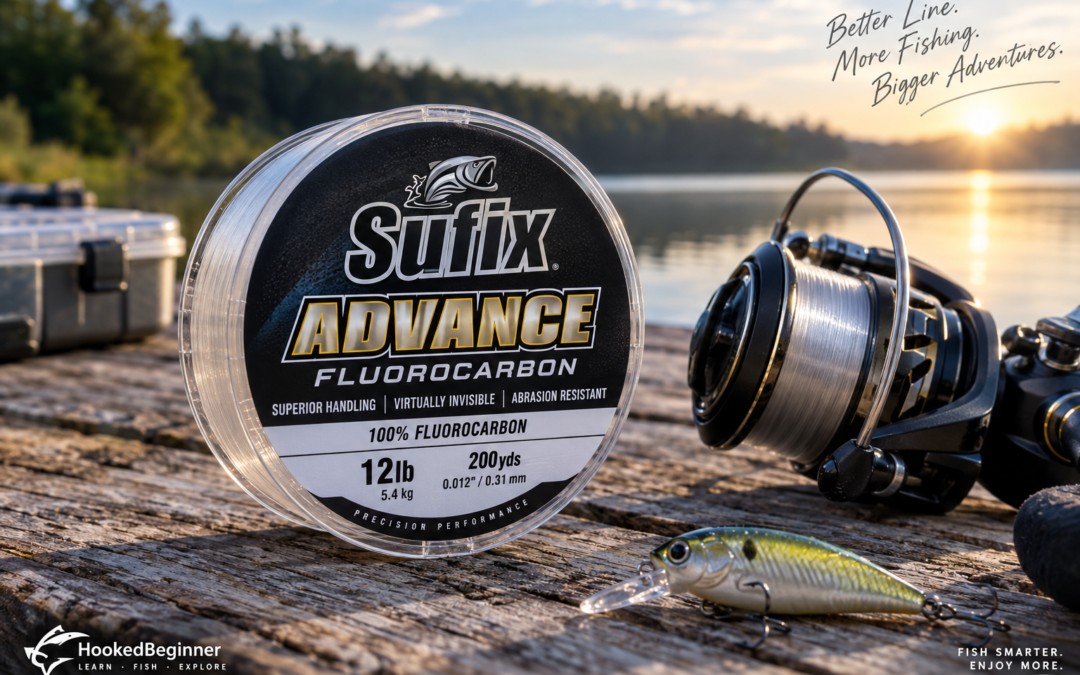
Sufix Advance Fluorocarbon is a 100% fluorocarbon fishing line made for anglers who want the characteristics associated with fluorocarbon while retaining manageable handling. Sufix says its Advance Fluorocarbon uses proprietary Gel Phase Technology and G2 Precision Winding to produce easy handling, high clarity, sensitivity, and abrasion resistance.
Fluorocarbon differs from monofilament because its material characteristics affect density, stretch, visibility, and how it behaves around structure. Sufix states that Advance Fluorocarbon has a higher density than traditional nylon and is designed to sink quickly, while its manufacturer specifications list tests from 4 lb through 30 lb.
The range is broad enough to cover very light presentations, general freshwater applications, heavier bass techniques, and situations where a stronger line is needed around cover.
That does not mean one spool is ideal for every technique. The correct choice depends on your rod, reel, lure weight, target species, water conditions, and the amount of cover you are fishing.
Why Sufix Advance Fluorocarbon Matters
The main reason to consider Sufix Advance Fluorocarbon is that line performance is not just about breaking strength. An angler also has to deal with handling, casting, knot tying, diameter, sensitivity, and abrasion.
Sufix highlights several characteristics of the Advance Fluorocarbon line, including clarity, sensitivity, abrasion resistance, easy handling, and low memory. Those qualities can be useful when fishing techniques where direct lure control and contact with the bottom or cover matter.
Line choice also needs to match the rest of the tackle. A strong line on a lightweight rod does not automatically create a better setup. Before choosing a test, review your rod's line rating and lure rating in our fishing rod buying guide.
The same principle applies to the reel. A line diameter that is inappropriate for a small spinning reel or poorly matched to the spool can create handling problems. Our fishing reel buying guide can help you evaluate reel size and compatibility.
8 Sufix Advance Fluorocarbon Options to Consider
1. 4 lb Sufix Advance Fluorocarbon for Ultra-Light Fishing
The 4 lb option is at the lightest end of the Advance Fluorocarbon range. It is best considered when your tackle is intentionally light and your target fish are not requiring heavy line.
Light line can make small presentations easier to cast and can complement light rods. However, the thinner line provides less margin for abrasion and mistakes around rocks, wood, docks, or heavy vegetation.
Use a 4 lb setup when the rest of your tackle is built around finesse and light presentations rather than simply choosing it because the diameter is small.
2. 6 lb Sufix Advance Fluorocarbon for Finesse Presentations
The 6 lb option provides another light-line choice while giving you a little more strength than the smallest test. It can suit anglers fishing lighter lures, smaller species, or clearer water where a relatively subtle presentation is useful.
Because fluorocarbon can sink and remains relatively resistant to abrasion, a properly selected light test can be useful for techniques where controlled presentation matters. The limitation remains the same: light line is less forgiving when you hook a fish near sharp structure.
3. 8 lb Sufix Advance Fluorocarbon for Light General-Purpose Fishing
An 8 lb line sits in a useful middle ground for anglers who want light tackle without going all the way down to very small tests.
This size can work for a variety of freshwater situations when the target species, lure weight, and cover do not demand heavy line. It is also a useful point of comparison for anglers choosing between finesse-oriented line and a more general-purpose setup.
Before choosing 8 lb line, check the rod's recommended line range and think about where you fish. A clear open-water lake and a rocky riverbank place very different demands on line.
4. 10 lb Sufix Advance Fluorocarbon for Versatile Freshwater Fishing
For many anglers, 10 lb provides a practical general-purpose starting point. It gives more strength than light finesse tests while remaining well suited to many freshwater presentations.
Ten-pound line can be useful when your fishing involves a mixture of casting, bottom contact, soft plastics, crankbaits, or other presentations that benefit from fluorocarbon's characteristics.
If you are building one versatile setup rather than several specialized outfits, 10 lb is worth considering, provided it matches the rod, reel, lure weight, and target species.
5. 12 lb Sufix Advance Fluorocarbon for All-Around Bass Applications
At 12 lb, Sufix Advance Fluorocarbon becomes a stronger choice for anglers dealing with more structure or larger fish while still wanting a relatively versatile line.
This test can be appropriate for many bass-fishing situations where the angler expects contact with weeds, rocks, docks, or other cover but does not need the diameter of the heaviest line in the range.
As always, the line should be paired with a rod and reel capable of handling the intended lure and fish. The line should not be chosen independently from the rest of the system.
6. 14 lb Sufix Advance Fluorocarbon for Heavier Presentations
The 14 lb option is a useful choice for anglers who need more strength around cover or want a heavier fluorocarbon setup for larger presentations.
It can be appropriate for techniques where abrasion resistance becomes increasingly important. The tradeoff is that heavier line generally has a larger diameter, so you should account for spool capacity, casting behavior, and lure performance.
If you are unsure whether your rod can handle this setup, check the recommended line and lure ranges before spooling.
7. 17–20 lb Sufix Advance Fluorocarbon for Heavy Cover
The 17 lb and 20 lb options are aimed toward significantly heavier applications. These tests make more sense when you are intentionally fishing around substantial cover or using tackle designed for stronger line.
Heavier line can offer greater resistance to abrasion, but it can also affect casting and spool capacity because of its larger diameter. That makes rod, reel, lure, and line selection even more important.
These tests should be treated as specialized choices rather than default options for every freshwater setup.
8. 25–30 lb Sufix Advance Fluorocarbon for Maximum Heavy-Line Applications
The 25 lb and 30 lb tests sit at the top of the Advance Fluorocarbon range. These sizes are intended for situations where heavier line is justified by tackle, target species, cover, or presentation.
At this point, you should pay especially close attention to your reel's line capacity, rod power, lure rating, and overall setup. Heavy line can be very useful, but putting the heaviest possible line on a setup that was not designed for it can create unnecessary compromises.
Sufix Advance Fluorocarbon Comparison Table
| Line Test | Approx. Diameter | Best General Use | Primary Consideration |
|---|---|---|---|
| 4 lb | 0.007 in | Ultra-light presentations | Limited margin around heavy cover |
| 6 lb | 0.008 in | Light finesse fishing | Best for lighter tackle |
| 8 lb | 0.009 in | Light general freshwater | Balance of lightness and strength |
| 10 lb | 0.011 in | Versatile freshwater fishing | Good all-around option when properly matched |
| 12 lb | 0.012 in | Bass and general structure fishing | More strength with moderate diameter |
| 14 lb | 0.013 in | Heavier presentations | Greater strength and abrasion resistance |
| 17 lb | 0.015 in | Heavy cover | Needs suitable tackle and spool capacity |
| 20 lb | 0.017 in | Heavy freshwater applications | Large diameter compared with finesse line |
| 25 lb | 0.018 in | Heavy-duty presentations | Use on appropriately powered tackle |
| 30 lb | 0.020 in | Maximum heavy-line applications | Highest diameter in the range |
Sufix lists these diameter specifications across its 4 lb through 30 lb range. The manufacturer's current product page also lists 200-yard and 1,200-yard spool options.
How to Choose Sufix Advance Fluorocarbon
Choosing the right Sufix Advance Fluorocarbon starts with the fishing situation rather than the name on the spool.
Start With the Target Fish
A small panfish setup and a heavy-cover bass setup do not place the same demands on line. Start by considering the fish you are actually targeting.
Check Your Rod's Line Rating
Your rod's recommended line range is an important boundary. Avoid selecting a heavy line simply because you expect to catch a large fish.
Our fishing rod power guide can help you understand how rod power relates to tackle selection.
Consider Cover
Open water, rock, vegetation, wood, docks, and other structure can change the line strength you need. More abrasion hazards generally make a stronger line more relevant.
Consider Lure Weight
Line is part of a complete casting system. Your lure weight should fit the rod and reel setup, and the line should complement that combination.
Consider Reel Capacity
Heavier fluorocarbon has a larger diameter and therefore takes up more space on a spool. Check the reel's capacity before choosing a high-test line.
Our fishing reel size guide is useful when you are matching line and reel size.
Consider Main Line Versus Leader Use
Some anglers use fluorocarbon as their main line, while others use it as a leader connected to braid or another main line. Your intended use can change the pound-test decision.
Using Sufix Advance Fluorocarbon in Different Fishing Situations
Clear Water
Fluorocarbon is often considered when anglers want a low-visibility line. Sufix specifically markets Advance Fluorocarbon for clarity and says it is virtually invisible.
Clear water can make presentation and line visibility more important, but that does not mean the thinnest possible line is always the answer. Fish size, structure, lure weight, and casting distance still matter.
Rocky Bottoms
Rock, gravel, shell, and hard cover can place significant abrasion demands on fishing line. This is where abrasion resistance becomes especially relevant.
Inspect the section of line closest to the lure regularly. Even an abrasion-resistant fluorocarbon should be replaced or retied when damage is visible.
Heavy Vegetation and Cover
Heavy cover can justify moving toward stronger line, especially when the plan is to steer a fish away from vegetation, wood, or other obstacles.
Do not increase line strength without considering your rod and reel. A heavier line should be part of a balanced setup.
Finesse Fishing
Light tests such as 4 lb, 6 lb, and 8 lb can be considered when the fishing calls for lighter presentations. The decision should be based on species, lure, cover, and tackle rather than line size alone.
Bass Fishing
Bass anglers have particularly varied line demands. Open-water finesse fishing may call for much lighter line than flipping or fishing around dense cover.
Tests in the 10 lb to 20 lb range may therefore appear across very different bass techniques, with the correct choice depending on the exact presentation and environment.
Materials and Setup for Sufix Advance Fluorocarbon
A good setup starts with the right spool, reel, knot, and line preparation.
1. Check the Spool
Inspect the spool for damage before loading line. A clean, undamaged spool gives you a better starting point.
2. Match the Line to the Reel
Make sure the line diameter and total amount of line are appropriate for the reel. Sufix currently lists both 200-yard and 1,200-yard spool options for Advance Fluorocarbon.
3. Load the Line Correctly
Fill the spool according to the reel manufacturer's recommended level. Avoid leaving excessive empty space, but also avoid overfilling the spool.
4. Tie a Reliable Knot
The connection between the line and terminal tackle is critical. Use a knot you can tie consistently and inspect the finished knot before fishing.
5. Test the Knot
After tying, pull steadily rather than jerking sharply. A properly seated knot should remain secure. If you see slipping, damaged material, or an incorrectly formed knot, cut it off and retie.
6. Inspect the First Several Feet
After fishing around rocks, vegetation, docks, or other structure, inspect the line nearest the lure. Detecting abrasion early can prevent avoidable break-offs.
Common Sufix Advance Fluorocarbon Mistakes
Using the Same Test for Every Technique
One pound test cannot reasonably cover every fishing situation. Light finesse fishing and heavy-cover fishing need different levels of strength and abrasion resistance.
Choosing Line Only by Pound Test
Pound test is important, but diameter matters too. Two different lines can have different diameters at similar breaking-strength ratings, so spool capacity and handling can change.
Ignoring the Rod Rating
Do not choose very heavy fluorocarbon for a lightweight rod without checking the manufacturer's line and lure recommendations.
Overfilling the Spool
Overfilling can contribute to poor line management, especially on spinning reels. Follow the reel manufacturer's recommended fill level.
Not Checking for Abrasion
Fluorocarbon is abrasion resistant, but it is not damage-proof. Run the line between your fingers before continuing to fish after significant contact with structure.
Waiting Too Long to Retie
Retie when the line is damaged, heavily scuffed, or when you have reason to distrust the connection. A fresh knot is inexpensive compared with losing a lure or fish.
Using Heavy Line on Light Tackle
More strength is not automatically better. Heavy line can affect casting, lure action, and spool capacity.
Sufix Advance Fluorocarbon Buying Checklist
| Check | Question to Ask |
|---|---|
| Line test | Does the pound test match the target species? |
| Diameter | Will the diameter fit the reel and intended presentation? |
| Rod rating | Is the line appropriate for the rod's recommended range? |
| Lure weight | Does the complete setup fit the lure being used? |
| Cover | Will the fishing environment require additional abrasion resistance? |
| Main line or leader | Are you using fluorocarbon as the main line or as a leader? |
| Spool size | Do you need a 200-yard spool or a larger 1,200-yard spool? |
| Condition | Is the line fresh and free from visible damage? |
Buying the right line is less about choosing the strongest option and more about matching the line to the complete fishing system.
Related Fishing Guides
Use these HookedBeginner guides to build a better line-and-tackle setup:
- Fishing Rod Buying Guide — understand rod specifications before matching line.
- Fishing Rod Power Guide — learn how rod power affects tackle selection.
- Fishing Rod Action Guide — understand how rod action affects lure control and hook-setting.
- Fishing Reel Buying Guide — compare reels and match them to your fishing setup.
- Fishing Reel Size Guide — choose a reel size that works with your intended line and tackle.
- Types of Fishing Rods — compare the major rod types before building a complete setup.
Sufix Advance Fluorocarbon FAQs
Is Sufix Advance Fluorocarbon real fluorocarbon?
Yes. Sufix describes Advance Fluorocarbon as 100% fluorocarbon.
What pound tests does Sufix Advance Fluorocarbon come in?
The current manufacturer listing shows 4 lb, 6 lb, 8 lb, 10 lb, 12 lb, 14 lb, 17 lb, 20 lb, 25 lb, and 30 lb tests.
Is Sufix Advance Fluorocarbon suitable for spinning reels?
Yes. Sufix identifies Advance Fluorocarbon as suitable for both spinning and casting reels. You should still match the diameter and line test to the reel and technique.
Can Sufix Advance Fluorocarbon be used as leader material?
Yes. Fluorocarbon can be used as leader material, and many anglers select fluorocarbon when they want a low-visibility and abrasion-resistant connection between the main line and lure or terminal tackle.
Is heavier Sufix Advance Fluorocarbon always better?
No. Heavier line can provide more strength, but it also increases diameter and can affect casting and spool capacity. Choose according to the actual fishing conditions.
Does Sufix Advance Fluorocarbon have different spool sizes?
Yes. Sufix currently lists 200-yard and 1,200-yard spool options.
What is the best Sufix Advance Fluorocarbon test for bass?
There is no single test for every bass technique. Light open-water presentations may call for lighter line, while heavy cover may justify substantially heavier line. Consider the lure, rod, reel, cover, and fish size together.
How often should I replace fluorocarbon line?
There is no universal replacement schedule. Inspect the line regularly and replace or retie when it shows significant abrasion, damage, weakened sections, or unreliable knots. Storage conditions and fishing frequency also matter.
Final Thoughts on Sufix Advance Fluorocarbon
Sufix Advance Fluorocarbon is a broad-range fluorocarbon option designed around easy handling, clarity, sensitivity, and abrasion resistance. Its current range covers 4 lb through 30 lb, giving anglers plenty of room to build either light or heavy presentations.
The best choice is not simply the strongest test on the shelf. Match the line to your rod, reel, lure, target fish, water conditions, and cover. For many anglers, the biggest improvement comes from selecting a line that fits the complete setup rather than trying to maximize one specification.
Before your next trip, check your line diameter, pound test, spool capacity, knots, and abrasion level. A properly matched line can make the entire fishing setup easier to manage and more consistent on the water.
Official reference: Sufix Advance Fluorocarbon by Rapala/Sufix