
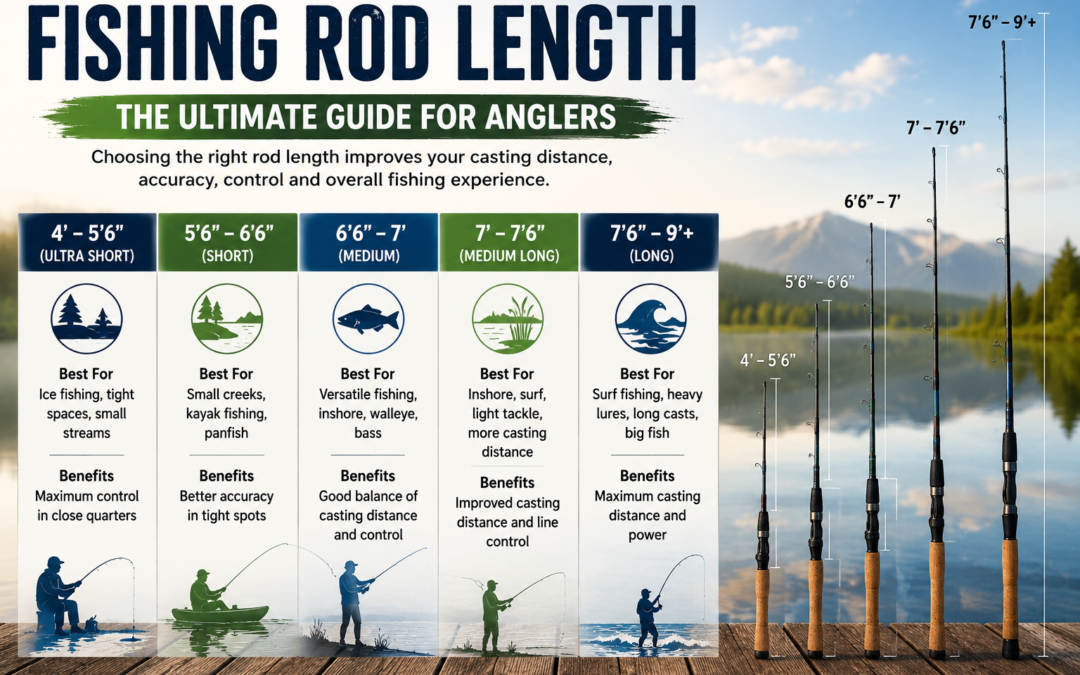
Fishing rod length is one of those specs beginners tend to overlook while obsessing over power, action, or brand — but it directly affects casting distance, accuracy, leverage, and even how comfortable a full day of fishing feels. Getting fishing rod length right matters just as much as any other spec on the blank.
This guide breaks down how to actually choose fishing rod length based on where and how you fish, rather than guessing based on what looks right on a rack.
Table of Contents
Why Fishing Rod Length Matters
Longer rods generally cast farther and provide more leverage when fighting a fish, while shorter rods offer more precision and control in tight quarters. Neither is universally "better" — the right fishing rod length depends entirely on where you fish and what you're targeting.
Length also affects comfort over a long day. A rod that's too long for the space you're fishing in becomes tiring and awkward fast, while one that's too short can leave casting distance on the table when you need it.
A General Length Guide
- 5'–6' rods: best for tight spaces, kayak fishing, or close-quarters jigging around docks and structure
- 6'–7' rods: the most versatile all-around range, suitable for most freshwater fishing from shore or boat
- 7'–8' rods: better for longer casts, surf fishing, or when extra leverage helps control bigger fish
- 8'+ rods: specialized uses like surf casting or certain trolling and drift fishing setups where length aids line control
For most beginners without a specific technique in mind yet, a 6'6"–7' fishing rod length covers the widest range of general-purpose fishing.
Length and Casting Distance
Longer fishing rod length generally translates to farther casts, since a longer blank generates more line speed through a longer arc during the cast. This matters most in situations like surf fishing or open-water casting, where covering distance increases your odds of reaching active fish.
Fishing in Tight Spaces
Shorter rods shine in situations where a long cast isn't the priority — kayak fishing, fishing from a small boat, or working tight pockets around docks, brush, or overhanging trees. A shorter fishing rod length gives you more control over precise, short-range presentations without a long blank getting in the way.
Matching Length to Technique
- Jigging or finesse techniques: shorter to medium length rods offer better control and sensitivity at close range
- Casting for distance: longer rods generate more line speed and reach
- Trolling: length matters less than action, though moderate lengths are common for manageable boat setups
- Ice fishing: an exception to standard length rules entirely — see our ice fishing rods guide for details specific to that setup
If you're still deciding on a full setup, our fishing rod buying guide and how to choose a fishing rod guide cover power and action in more depth alongside length. For a deeper technical breakdown of how casting mechanics relate to rod length, the Take Me Fishing beginner resource library is a solid place to keep learning.
Frequently Asked Questions
What is the best all-around fishing rod length?
6'6" to 7' covers the widest range of general freshwater fishing situations, offering a solid balance between casting distance and control.
Does a longer rod always cast farther?
Generally yes, since a longer blank generates more line speed through the cast — but beyond a certain point, extra length starts trading off control and comfort.
What length is best for kayak fishing?
Shorter rods in the 5'–6'6" range are usually easier to manage in the confined space of a kayak, reducing the chance of tangles or awkward casting angles.
Why do ice fishing rods break the normal length rules?
Ice fishing involves fishing straight down through a hole rather than casting, so ice rods are intentionally much shorter — typically 24"–36" — to maximize sensitivity instead of casting distance.
Trackbacks/Pingbacks