
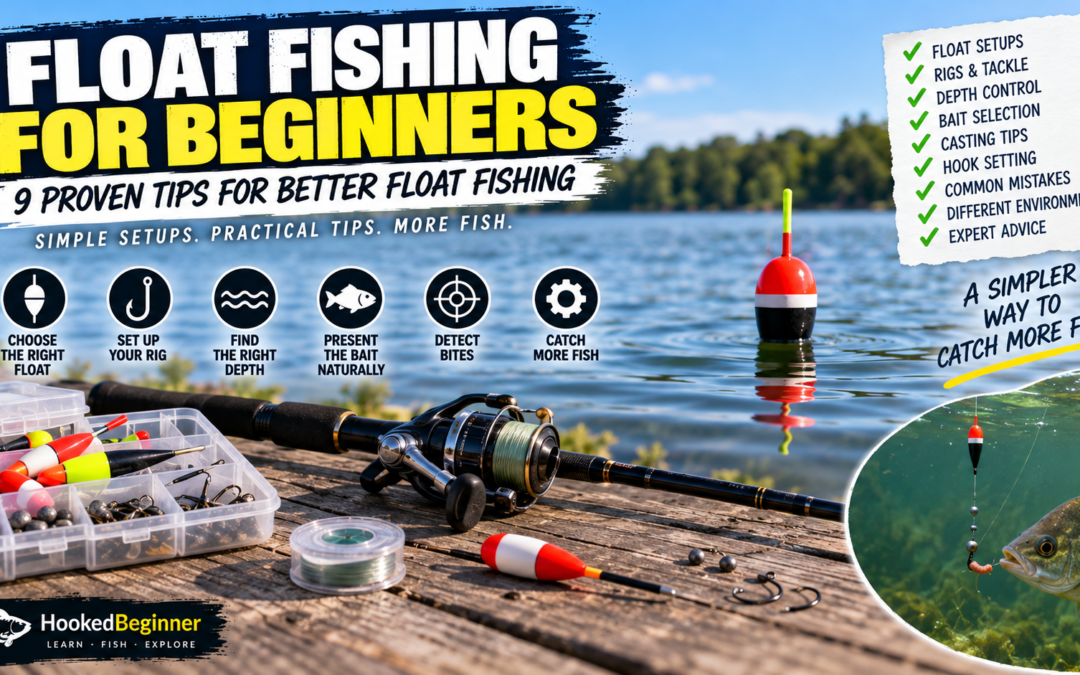
Float Fishing for Beginners: 9 Proven Tips for Better Float Fishing
Learning float fishing for beginners can be one of the easiest ways to understand how bait presentation, depth, current, and bite detection work together. A float gives you a visible reference point on the water, helping you see movement that may otherwise be difficult to detect.
Float fishing can be used in ponds, lakes, canals, rivers, and many other freshwater environments. The basic idea is simple: suspend bait beneath a fishing float and present it at a controlled depth. The challenge is learning how to choose the right float, balance the rig, set the fishing depth, and keep the bait moving naturally.
This guide explains float fishing for beginners from the ground up. You will learn how a float rig works, what tackle you need, how to adjust depth, which floats to use, how to handle current, and how to avoid common mistakes that can make beginner fishing unnecessarily difficult.
For broader tackle selection, you can also review the fishing rod buying guide and fishing reel buying guide.
What Is Float Fishing?
Float fishing is a fishing method in which a float, also called a bobber or fishing float, supports part of the rig and helps suspend bait at a chosen depth. The float also acts as a visual bite indicator. When a fish takes the bait, the float may dip, move sideways, disappear beneath the surface, or behave differently from the normal movement caused by wind and water.
A basic fishing float setup normally contains a rod, reel or fixed-line system, main line, float, shot or other weight, hook, and bait. The arrangement can be extremely simple or highly refined depending on the species and environment.
Unlike some lure-fishing techniques where the angler continuously retrieves the lure, float fishing often focuses on keeping bait in a controlled zone. That makes depth management one of the most important parts of the technique.
The float is not simply there to make the rig visible. Its size, shape, buoyancy, attachment method, and weighting all influence how the bait behaves and how clearly you can detect a bite.
Why Float Fishing Matters for Beginners
One reason float fishing for beginners is so useful is that the technique teaches several fundamental fishing skills at the same time.
It Makes Bites Easier to See
A visible float gives you a reference point. Instead of trying to feel every small movement through the rod, you can watch the float for unusual movement.
It Teaches Depth Control
Fish do not always feed on the bottom or directly beneath the surface. Learning to position bait at different depths helps you understand where fish are holding.
It Encourages Better Bait Presentation
Because the bait hangs beneath the float, you can learn how water movement affects your presentation. Small changes in weight, depth, or float position can alter how naturally the bait behaves.
It Works in Different Freshwater Environments
A float rig can be adapted to stillwater, flowing water, shallow margins, deeper water, and areas where fish are feeding at specific depths.
It Builds Observation Skills
Successful float fishing requires attention to wind, current, surface movement, depth, weed, structure, and fish activity. These observations become useful in almost every other fishing technique.
9 Float Fishing Rig Options for Beginners
There is no single beginner float fishing rig that works everywhere. Different floats and rig arrangements are designed for different depths, water conditions, and fishing styles.
1. Fixed Float Rig
A fixed float remains attached at a set point on the line. This is one of the simplest options for beginners because the fishing depth can be adjusted by moving the float attachment point.
Fixed floats are especially useful in relatively shallow water where the required depth is within a manageable casting range.
2. Sliding Float Rig
A sliding float can move along the line until it reaches a stopper or knot. This allows you to fish deeper water without having to make the entire rig extremely long.
For deeper lakes or deeper sections of a river, a sliding arrangement can be more practical than a fixed float.
3. Waggler-Style Float Rig
A waggler-style float attaches primarily toward the lower part of the float and can provide a sensitive presentation for stillwater fishing. The amount of shot placed along the line affects how much of the float remains above the surface.
This type of setup is useful when subtle bites need to be detected clearly.
4. Stick Float Rig
A stick float is generally long and narrow, making it useful for presenting bait in flowing water. The float can help the angler control the speed of the rig as it moves through the current.
The important skill is learning how to keep the bait moving naturally rather than allowing the line to drag the float unnaturally.
5. Slip Float Rig
A slip float is another name commonly used for a sliding float arrangement. It is useful when you need to fish beyond the depth that would be practical with a fixed float.
A float stopper controls the maximum fishing depth while still allowing the rig to be cast in a more compact form.
6. Small Float and Light Tackle Rig
Small floats can work well when targeting smaller fish with light bait and light line. The lighter presentation can be useful for panfish and other species that respond well to subtle tackle.
Do not automatically choose the smallest float available. Wind, water movement, bait weight, and casting distance all influence what size float is practical.
7. Heavy Float for Windy Conditions
Wind can make a tiny float difficult to cast and difficult to see. A larger and more stable float can provide better visibility and casting control when conditions become challenging.
8. River Float Rig
River fishing often requires a float that can remain stable while moving with the current. Weight distribution becomes especially important because the rig needs to behave naturally instead of constantly being pulled away from the intended line.
For river fishing, you should think about the speed of the current, depth, bottom structure, and how quickly your bait needs to travel.
9. Deep-Water Sliding Float Rig
When fish are holding several feet below the surface, a deep-water sliding float arrangement can make it easier to reach the feeding zone while keeping the casting setup manageable.
The principle is simple: use the stopper to establish the desired depth, allow the float to slide during the cast, and let the rig settle until the bait reaches the intended zone.
Float Fishing Setup Comparison
| Setup | Best Use | Depth Control | Beginner Difficulty |
|---|---|---|---|
| Fixed float | Shallow to moderate water | Simple | Easy |
| Sliding float | Deeper water | Excellent | Moderate |
| Waggler-style | Stillwater | Precise | Easy to moderate |
| Stick float | Flowing water | Precise | Moderate |
| Small float | Light tackle | Simple | Easy |
| Heavy float | Windy or rough conditions | Moderate | Easy |
The right fishing float setup should be selected according to the actual conditions rather than simply choosing the float with the largest casting rating or the most attractive design.
How to Choose a Float Fishing Setup
Start With the Fishing Location
The first question should be where you intend to fish. A small pond with calm water has different requirements from a deep lake or fast-moving river.
Stillwater generally gives you more freedom to use simple presentations. Rivers require greater attention to current, float stability, weight distribution, and line control.
Think About Water Depth
Depth is one of the most important considerations. If the fish are holding close to the surface, there is no need to build a complicated deep-water arrangement.
If fish are several feet below the surface, a sliding arrangement may provide more practical depth control.
Match the Float to the Conditions
Wind, waves, current, visibility, bait weight, and casting distance all affect float selection.
A very small float may be extremely sensitive but difficult to see in rough water. A larger float may be easier to cast and observe but can create a more noticeable presentation.
Match the Rod
Your rod should be suitable for the casting weight and fishing conditions. A lighter setup can work well for small floats and light bait, while heavier conditions may require a rod with greater casting capacity.
Use the fishing rod power guide when comparing rod power, and review the fishing rod action guide to understand how action affects casting and hook setting.
Match the Reel
The reel should balance properly with the rod and provide enough line capacity for your fishing environment. A spinning reel can be a practical choice for many beginner float-fishing situations because of its straightforward casting system.
For general reel selection, see the fishing reel size guide.
Float Fishing for Different Situations
Float Fishing in a Pond
Ponds are often excellent environments for learning because you can begin with a simple fixed float. Start by estimating the depth, place your bait below the float, and adjust the depth until you begin finding fish.
Work around features such as weed edges, drop-offs, shaded areas, submerged structure, and visible feeding activity.
Float Fishing in a Lake
Lakes can require more experimentation because depths may change dramatically. Begin with a practical depth and adjust according to where fish are feeding.
Wind can also push the float and line across the surface. In these circumstances, controlling excess line can improve presentation.
Float Fishing in a River
River float fishing is more dynamic because the current continuously influences the rig.
Your objective is generally to keep the bait moving at a controlled and believable speed. Too much drag can make the bait behave unnaturally, while too little control can allow the rig to drift into unwanted areas.
Float Fishing Around Weeds
Weeds can hold fish because they provide cover and feeding opportunities. However, they can also catch hooks, weights, and line.
When fishing around vegetation, choose a presentation that lets you keep the bait near the productive edge without constantly burying the hook in the weeds.
Float Fishing From the Bank
Bank fishing often limits casting angles and can affect how much room you have to land a fish. Keep your float rig compact enough to cast comfortably and avoid placing the float where overhanging branches will interfere with your line.
Materials and Basic Float Fishing Setup
A practical beginner outfit does not need to be complicated.
- Fishing rod suitable for the intended species and tackle.
- Appropriately sized reel.
- Main fishing line.
- Fishing float.
- Float stopper or attachment hardware where required.
- Small split shot or other suitable weights.
- Hook matched to the bait and target species.
- Leader material where appropriate.
- Natural bait or artificial bait suitable for the target fish.
- Small tackle box or container for terminal tackle.
The float should be balanced with the amount of weight used on the rig. If the float is overloaded, it may sit too low in the water. If it is underweighted, excessive float body may remain above the surface, reducing sensitivity.
Your line should also remain manageable. Excessive slack can make strike detection harder, while excessive tension can pull the float and alter the bait's presentation.
For general tackle organization, the IGFA tackle organization guide provides additional ideas for keeping fishing equipment organized.
How to Set Up a Beginner Float Fishing Rig
Start by deciding how deep you want to fish. Attach the float according to its design, then add the appropriate weights and hook.
For a simple fixed arrangement, position the float so that the hook and bait will sit at the required depth. Make a test cast and observe how the float sits on the water.
Adjust the weight distribution until the float remains stable and visible without sitting excessively high.
Next, check the bait presentation. The bait should move naturally instead of being pulled upward by excessive buoyancy or dragged downward by too much weight.
Once the rig is balanced, test it at different depths. This is one of the most useful habits when learning how to float fish because fish may be feeding at a different level from where you initially expect them to be.
Take Me Fishing's information on fishing rigs and basic rig construction can also help beginners understand how individual components work together.
Common Float Fishing Mistakes
Fishing at the Wrong Depth
A beautifully balanced rig will not help much if the bait is nowhere near the fish. Change depth when you are not getting bites rather than repeatedly fishing the same level.
Using Too Much Weight
Excessive weight can make the rig less natural and can cause the float to sink too far.
Using Too Little Weight
A poorly weighted rig may be unstable and difficult to control, particularly when wind or current is present.
Choosing a Float That Is Too Small
Tiny floats can provide excellent sensitivity, but they are not always practical. Strong wind, distance, waves, and poor visibility can make them frustrating for beginners.
Choosing a Float That Is Too Large
A very large float can be easy to see but may require more weight and can create a less subtle presentation.
Ignoring Wind
Wind can move the float, bow the line, and change how the bait behaves. Learn to distinguish natural water movement from an actual bite.
Watching Only the Float
The float is important, but you should also observe line angle, surface conditions, current, and the behavior of the water around the float.
Setting the Hook Too Aggressively
Not every float movement means a fish has fully taken the bait. Learn the normal behavior of the float before striking aggressively.
Float Fishing Buying Checklist
| What to Check | Why It Matters |
|---|---|
| Target species | Determines bait, hook, line, and tackle requirements |
| Fishing depth | Helps determine fixed or sliding presentation |
| Water type | Stillwater and rivers require different float characteristics |
| Wind exposure | Affects float size and visibility |
| Current speed | Influences float stability and weight placement |
| Rod rating | Ensures the rod handles the rig safely and effectively |
| Reel balance | Improves comfort during long sessions |
| Float visibility | Makes subtle bites easier to detect |
| Weight capacity | Allows the float to sit correctly in the water |
| Transport and storage | Protects floats, terminal tackle, and other equipment |
Related Float Fishing Guides and Resources
Float fishing becomes easier when you understand the rod and reel that support the rig. Start with the fishing rod buying guide, then use the fishing rod length guide to understand how length affects casting and control.
For reel selection, the fishing reel buying guide covers the factors that matter when pairing a reel with a rod.
If you are fishing in freshwater, Take Me Fishing's freshwater fishing FAQ is another useful external reference for general freshwater equipment and fishing questions.
For anglers who want to examine a dedicated float-oriented setup, the Hooked Beginner catalog also includes the Shimano Aero X6 Float Combo. Always review the current product specifications before purchasing to confirm that the setup matches your intended fishing application.
Frequently Asked Questions
What is the easiest float rig for beginners?
A simple fixed float rig is often the easiest place to start because the float position directly controls the fishing depth and there are fewer components to manage.
How deep should a beginner set a float?
There is no universal depth. Start by targeting the depth where fish are likely to feed, then adjust the float position if you are not getting bites.
What bait can I use for float fishing?
The correct bait depends on the target species and local fishing conditions. Natural baits such as worms, maggots, bread, insects, and other species-specific options may work in appropriate situations.
Can I use a spinning rod for float fishing?
Yes. A spinning rod can be used for many beginner float-fishing applications. The important factors are rod length, power, action, casting weight, line, and the total weight of the rig.
Do I need a special float fishing rod?
A specialized float rod can provide advantages for anglers who regularly use the technique, but beginners can start with a suitable general-purpose rod as long as its specifications match the rig and fishing conditions.
How do I know when to strike?
Look for a clear change from the float's normal movement. Depending on the rig, a bite may cause the float to sink, lift, travel sideways, or behave differently from wind and current movement.
Can float fishing work in rivers?
Yes. River float fishing is a well-established approach, but current speed and line control become much more important than in calm water.
Should the float be completely above the water?
Not necessarily. The correct amount showing above the surface depends on the float's design and how the rig is weighted. The goal is a stable and visible presentation with enough sensitivity for bite detection.
Can I use a sliding float in shallow water?
You can, but a fixed float may be simpler when the required fishing depth is shallow enough to manage comfortably.
What line should beginners use for float fishing?
Line choice depends on the target fish, environment, bait, and tackle. A straightforward line that matches the rod and reel specifications can make learning easier.
Final Thoughts on Float Fishing for Beginners
Float fishing for beginners does not have to involve complicated equipment. Start with a simple rig, choose a practical float, use manageable tackle, and spend time learning how changes in depth and water movement affect your bait.
The most important skill is observation. Watch the float, study the water, pay attention to wind and current, and be willing to adjust the depth when the fish are not responding.
As your experience grows, you can move from a basic fixed float to sliding floats, more precise weighting systems, river presentations, and specialized tackle. The fundamentals remain the same: present the bait at the right depth, keep it behaving naturally, and recognize the difference between normal water movement and a bite.
With a simple fishing float setup and a little practice, beginners can develop a strong understanding of depth, presentation, and bite detection that carries over into many other forms of fishing.