
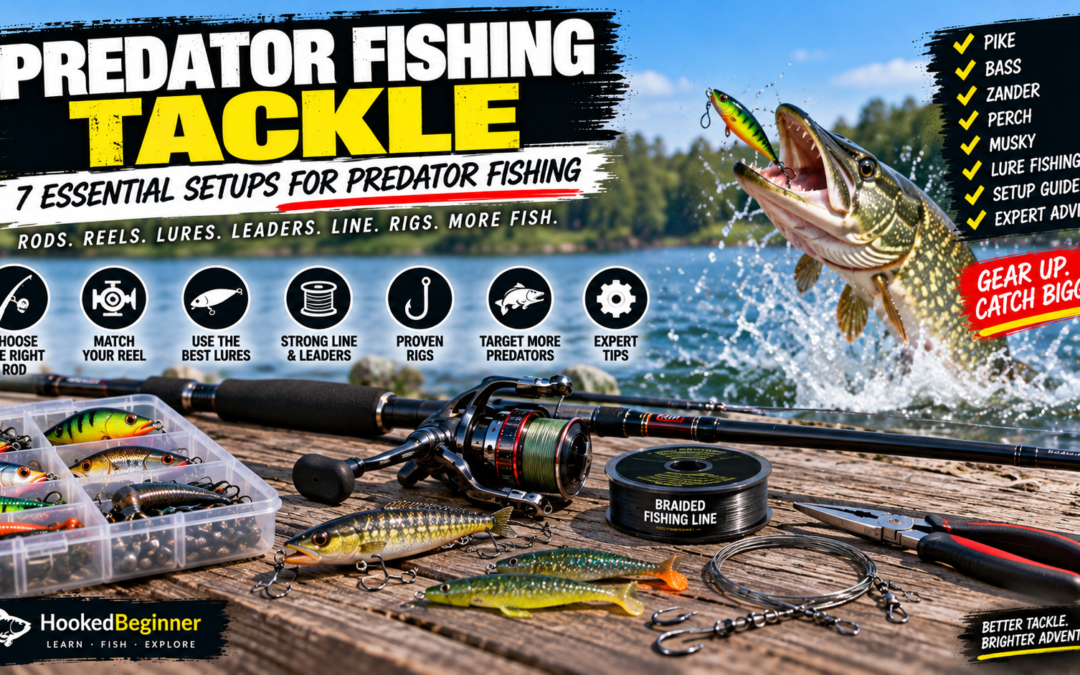
Predator Fishing Tackle: 7 Essential Setups for Predator Fishing
Predator fishing tackle needs to handle aggressive strikes, sharp teeth, heavier lures, stronger runs, and the structure where predator fish often hunt. The right combination of rod, reel, line, leader, hooks, and lures can make a major difference in casting control, lure presentation, hook setting, and fish handling.
Predator fishing covers many freshwater species and techniques. Pike, musky, zander, bass, perch, and other predatory fish can require different tackle depending on their size, habitat, and the lures being used. A setup for casting small soft plastics to perch is very different from equipment intended for large pike and heavy swimbaits.
This guide explains predator fishing tackle from the ground up. You will learn how predator setups are built, how to select rods and reels, which lines and leaders to consider, how to match lures to tackle, what changes for different predator species, and which mistakes to avoid when building your gear.
For a broader foundation, review Hooked Beginner's fishing rod buying guide and fishing reel buying guide.
What Is Predator Fishing Tackle?
Predator fishing tackle is fishing equipment selected specifically for fish that actively hunt other fish, insects, crustaceans, or other prey. Instead of relying mainly on stationary bait, many predator techniques use artificial lures designed to imitate something the fish naturally wants to eat.
A typical predator setup can include a casting or spinning rod, matching reel, main fishing line, leader or terminal protection, lure, hooks, and tools for safely landing and handling the fish.
The exact equipment depends on the predator you are targeting. Small perch can often be targeted with relatively light tackle, while large pike, musky, and other powerful fish may require substantially stronger equipment and more durable terminal tackle.
Predator fishing also places greater emphasis on lure control. The rod needs to cast the lure effectively and transmit movements to it. The reel needs to recover line smoothly and maintain adequate control during a fight. The line needs to withstand casting and abrasion, while the leader may need to protect against sharp teeth or rough surfaces.
Why the Right Predator Tackle Matters
Lure Weight Must Match the Rod
Predator lures can range from small jigs and soft plastics to large hard baits, jerkbaits, spinnerbaits, swimbaits, and heavy rubber lures. The rod must be suitable for the lure weight you actually intend to cast.
Using a lure outside the manufacturer's recommended range can affect casting performance and may place unnecessary stress on the rod.
Rod Power Affects Hook Setting and Fish Control
Rod power describes how much force is required to bend the rod. Light and medium powers can be useful for smaller predators, while medium-heavy and heavy powers are commonly considered when the fish, lures, or cover require greater strength.
Use Hooked Beginner's fishing rod power guide when comparing power ratings.
Line Selection Affects Casting and Fighting Fish
Line choice influences casting distance, sensitivity, stretch, abrasion resistance, and the amount of direct control you have over the lure and fish.
Monofilament, fluorocarbon, and braided line each have different characteristics. Predator anglers often choose among them according to the lure, water, structure, target species, and leader system.
Leaders Can Protect the Terminal End
A leader can provide abrasion resistance or additional protection between the main line and lure. This can be particularly important when targeting fish with sharp teeth or fishing around rocks, wood, weeds, and other abrasive structure.
Good Tackle Improves Lure Presentation
A rod that loads correctly, a balanced reel, and appropriately matched line can make repeated casting and lure manipulation easier. This becomes especially valuable when fishing techniques require frequent casts, pauses, twitches, retrieves, or changes in direction.
7 Essential Predator Fishing Tackle Setups
1. Light Predator Spinning Setup
A light spinning setup can be useful when targeting smaller predator species with small lures. This type of equipment can work with lightweight soft plastics, small jigs, spinners, small crankbaits, and other compact presentations.
The advantage is casting control with lighter lures and a more sensitive overall outfit. The limitation is that the setup may not be appropriate for exceptionally heavy lures or very large fish.
Choose the line and leader based on the fish and cover rather than choosing the lightest possible terminal tackle.
2. Medium Predator Spinning Setup
A medium spinning outfit provides broader versatility. It can be useful when you expect to fish for several freshwater predator species or when lure weights vary from light to moderate.
This can be a practical setup for anglers who want one outfit capable of handling different soft plastics, small hard baits, spinnerbaits, and other lures without moving immediately into specialized heavy tackle.
Check the rod's lure and line ratings before building the final setup.
3. Medium-Heavy Bass Setup
Bass fishing can involve a wide variety of lures, including soft plastics, jigs, spinnerbaits, crankbaits, frogs, and other presentations.
A medium-heavy setup can be appropriate for techniques that require additional hook-setting power and fish control, particularly around heavier cover. The right reel and line combination should also match the lure weights and fishing environment.
Hooked Beginner's bass spinning reel guide provides another resource when comparing reel requirements for bass applications.
4. Pike Lure-Casting Setup
Pike can require more specialized tackle because of their size, powerful strikes, and sharp teeth. If you are throwing larger hard baits, jerkbaits, swimbaits, or other heavy lures, a stronger rod and suitable reel can provide better control.
Terminal protection is particularly important. A leader system should be selected with the possibility of tooth contact and abrasion in mind.
Hooked Beginner's catalog includes the Lake-X Pike Combo, which is relevant when examining a dedicated pike-oriented setup. Always check the current product specifications before purchasing.
5. Heavy Predator Baitcasting Setup
Baitcasting tackle can be useful for anglers who regularly cast heavier predator lures and want precise spool and lure control.
The setup should be built around the lure range rather than simply selecting the strongest available rod and reel. An unnecessarily powerful outfit can make lighter lures difficult to cast and may reduce the versatility of the setup.
For a deeper look at baitcaster use and casting fundamentals, Take Me Fishing's baitcaster casting guide provides additional instruction.
6. Soft-Plastic Predator Setup
Soft plastics are among the most versatile predator lures. They can imitate baitfish, worms, small prey, and other food sources depending on their design and rigging.
A soft-plastic setup should provide enough sensitivity to detect contact and bites while still having enough power for the target fish and cover.
Rigging also matters. The same soft plastic can behave very differently when used on a jig head, weighted hook, Texas-style arrangement, or another terminal system.
7. Large-Lure Predator Setup
Large-lure fishing places greater demands on the entire system. Oversized swimbaits, large jerkbaits, and other heavy lures require equipment specifically designed around their weight.
The rod should have a suitable lure rating and enough power to load properly during the cast. The reel should have sufficient capacity and a drag system appropriate for the target fish. The line should match the overall setup, and the leader should provide the needed protection.
This kind of setup is highly specialized, so check the manufacturer's specifications for every major component instead of building it from general assumptions.
Predator Fishing Tackle Comparison Table
| Setup | Typical Application | Lure Range | Key Priority |
|---|---|---|---|
| Light spinning | Small predators and light lures | Light | Sensitivity and casting control |
| Medium spinning | General predator fishing | Light to moderate | Versatility |
| Medium-heavy bass | Bass and heavier cover | Moderate | Power and control |
| Pike casting | Pike and larger lures | Moderate to heavy | Durability and terminal protection |
| Heavy baitcasting | Heavy predator lures | Heavy | Spool control and power |
| Soft-plastic setup | Versatile predator presentations | Variable | Sensitivity and presentation |
| Large-lure setup | Oversized bait and large predators | Heavy | Complete system strength |
The correct predator fishing tackle setup should always be matched to the actual fish, lure, water, and cover instead of relying on a single specification such as rod power.
How to Choose Predator Fishing Tackle
Start With the Predator Species
The species determines many of your equipment requirements. A setup for perch is not automatically suitable for pike, and tackle designed around bass may not be appropriate for large predator lures.
Start by identifying the fish you expect to catch, their average size, the largest fish you could realistically encounter, and the techniques you intend to use.
Consider the Lures You Will Cast
Lure weight is one of the most important factors in tackle selection. If you mainly throw small soft plastics, lightweight equipment may make sense. If you regularly cast heavy swimbaits, large jerkbaits, or oversized rubber lures, you need equipment designed to handle that load.
Do not select a rod first and then assume every lure will work with it. Start with the fishing you plan to do and work backward toward the rod and reel.
Choose the Rod Length Carefully
Rod length influences casting distance, leverage, lure control, and maneuverability.
Longer rods may help with casting distance and line control in open water, while shorter rods can be easier to maneuver around vegetation, docks, branches, and confined bank-fishing areas.
Take Me Fishing's rod-selection guide also emphasizes choosing equipment around the fishing environment and the baits or lures being used.
Understand Rod Action
Rod action describes where the blank begins to bend when pressure is applied. Fast actions generally bend closer to the tip, while slower actions load farther down the blank.
Action can influence casting, lure control, bite detection, and hook-setting response.
See Hooked Beginner's fishing rod action guide for a more detailed explanation.
Match the Reel to the Rod
A reel should balance with the rod and provide the line capacity, drag capability, and retrieval characteristics required for the fishing application.
A large reel is not automatically the correct choice for a large predator. The complete system matters more than the reel size by itself.
Review the fishing reel size guide when comparing reel options.
Predator Fishing Tackle by Species and Use Case
Pike
Pike fishing often involves moving lures and areas containing weeds, structure, or ambush points. Tackle needs to handle the lure range, fish size, and possibility of tooth contact.
A suitable leader is particularly important. The leader should be selected for the fishing situation and inspected regularly for damage.
Bass
Bass fishing is highly technique-dependent. One setup may be used for finesse presentations while another is built around heavy cover and larger lures.
When choosing bass predator fishing gear, consider the techniques first. Soft plastics, jigs, frogs, crankbaits, spinnerbaits, and other presentations each place somewhat different demands on the rod and line.
Perch
Perch can be targeted with smaller lures and lighter presentations. A light or medium-light spinning setup can be useful where conditions and lure weights allow it.
Sensitivity can become especially useful when working small jigs or soft plastics.
Zander
Zander fishing can involve soft plastics, jigging, and other lure techniques where sensitivity and bottom contact matter.
Rod action, line characteristics, lure weight, and depth all influence how effectively you can maintain contact with the lure.
Musky and Other Large Predators
Large predators demand carefully matched equipment. Heavy lures, strong fish, powerful runs, and repeated casting place greater demands on rods, reels, lines, leaders, hooks, and knots.
This is an area where specialized tackle specifications become particularly important. Avoid building a heavy setup by simply combining the strongest components you can find. Every component should be designed to work together.
Line, Leader, and Terminal Tackle
Line is one of the most important parts of a predator fishing setup because it connects the lure to the rod and reel and must withstand casting, hook setting, fish pressure, and environmental abrasion.
Monofilament
Monofilament has noticeable stretch and can be forgiving for many anglers. It can be useful in situations where some stretch is desirable, but its characteristics should be considered against the sensitivity and hook-setting requirements of the technique.
Braided Line
Braid generally offers low stretch and a high strength-to-diameter ratio. It can be useful when sensitivity, line capacity, and long casting are important.
However, braid can also require careful management around abrasive structure and may be paired with a leader depending on the fishing application.
Fluorocarbon
Fluorocarbon is commonly used in leader applications and other situations where abrasion resistance and a lower-visibility terminal section are desirable.
For example, Rapala provides fluorocarbon information and products through its Advance Fluorocarbon range.
Wire and Tooth-Proof Leaders
When targeting fish with sharp teeth, leader selection becomes especially important. A tooth-resistant leader can provide additional protection between the fish and the main line.
The precise leader material and construction should match the species, lure, water clarity, and fishing conditions.
Hooks and Split Rings
Artificial predator lures often contain treble hooks, split rings, or other terminal hardware. Inspect these components regularly, particularly after catching fish or contacting rocks and hard structure.
A strong lure is only as reliable as its weakest terminal component.
Common Predator Fishing Tackle Mistakes
Choosing Tackle by Fish Name Alone
A product labeled for a particular species does not tell you everything you need to know. The lure weight, line, rod action, cover, and fishing method may matter just as much.
Ignoring Lure Ratings
One of the most common mistakes is purchasing a rod without checking its recommended lure range.
The rod needs to load properly with the lures you are actually casting.
Using an Inadequate Leader
A strong main line does not automatically mean the entire system is protected. Sharp teeth and abrasive structure can still damage the terminal section.
Using Too Much Power
More power is not automatically better. An overly heavy setup can make lighter lures difficult to cast and can reduce sensitivity.
Using Too Little Power
The opposite problem can also occur. A rod that is too light may struggle with heavy lures, strong fish, or heavy cover.
Ignoring Reel Balance
Predator fishing can involve hundreds of casts. A poorly balanced outfit can become uncomfortable and may make consistent lure presentation more difficult.
Failing to Inspect Tackle
Inspect leaders, knots, hooks, split rings, lure bodies, line, and rod guides regularly. Damage that looks minor before casting can become a serious problem during a fish fight.
Buying Too Many Specialized Lures Too Early
Beginners can easily accumulate a large collection of lures before learning which presentations work in their local water.
A smaller selection of proven lure styles can be easier to manage while learning how predators respond.
Predator Fishing Tackle Buying Checklist
| Component | What to Check |
|---|---|
| Target species | Know the predator and realistic fish size |
| Rod power | Match power to fish, lure, and cover |
| Rod action | Match response to casting and lure technique |
| Rod length | Balance casting distance and maneuverability |
| Lure rating | Keep lure weight within the manufacturer's range |
| Reel size | Match balance, capacity, and technique |
| Drag | Choose a reel appropriate for the intended fish |
| Main line | Match strength and characteristics to the technique |
| Leader | Provide suitable tooth and abrasion protection |
| Hooks | Check strength, size, sharpness, and condition |
| Split rings | Inspect for deformation or damage |
| Lures | Choose weights and actions appropriate for the rod |
| Knots | Use a connection suitable for the chosen line and leader |
| Tools | Carry appropriate pliers, cutters, and tackle tools |
For broader tackle organization, the International Game Fish Association tackle organization guide provides additional ideas for keeping equipment organized and accessible.
Related Predator Fishing Guides
Rod selection is one of the first steps in building a reliable predator outfit. Start with Hooked Beginner's fishing rod buying guide, then examine the fishing rod power guide and fishing rod action guide.
For reel selection, use the fishing reel buying guide and fishing reel size guide.
Take Me Fishing also provides general freshwater resources through its freshwater fishing FAQ.
For anglers looking at a species-specific combination, the Hooked Beginner Lake-X Pike Combo is a relevant product page to review alongside the general principles in this guide.
Frequently Asked Questions
What is the best predator fishing tackle setup for beginners?
There is no single setup for every predator species. A medium spinning outfit can provide useful versatility for many freshwater applications, while heavier species and larger lures require more specialized equipment.
What rod power should I use for predator fishing?
Choose rod power according to the target fish, lure weight, line, and cover. Light tackle can work for smaller predators, while medium-heavy and heavier rods may be appropriate for larger fish or heavy lure applications.
Is spinning or baitcasting better for predator fishing?
Both can work. Spinning tackle is useful for many light-to-medium lure applications, while baitcasting equipment can provide additional spool control and is commonly used for heavier lure techniques.
Do I need a leader for predator fishing?
A leader can be important depending on the species and fishing environment. Fish with sharp teeth and waters with significant abrasion hazards may require additional terminal protection.
What line is best for predator fishing?
The correct line depends on the technique. Braided, monofilament, and fluorocarbon lines each have different characteristics, and many setups combine a main line with a separate leader.
What lures work for predator fishing?
Common predator lures include soft plastics, jigs, spinners, spoons, crankbaits, jerkbaits, spinnerbaits, frogs, swimbaits, and other designs that imitate prey or trigger a predatory response.
Can one rod catch different predator species?
Yes, provided the species, lure weights, line, and fishing conditions overlap within the rod's specifications. A general-purpose setup can cover several species, while specialized fish may require dedicated tackle.
How often should predator tackle be inspected?
Inspect tackle before and after fishing, especially after catching fish, contacting structure, or using heavy lures. Leaders, knots, hooks, split rings, and line deserve particular attention.
Should I buy heavy tackle just in case I catch a large fish?
Not necessarily. Tackle should be matched to the fishing you actually plan to do. Extremely heavy equipment can reduce casting comfort, lure control, and versatility when the typical fishing situation involves smaller lures or fish.
What tools should I carry for predator fishing?
Useful tools can include fishing pliers, line cutters, hook-removal tools, spare leaders, measuring equipment where appropriate, and storage for terminal tackle. The exact toolkit depends on the species and fishing environment.
Final Thoughts
Predator fishing tackle works best as a complete system rather than a collection of unrelated pieces. The rod must match the lures, the reel must balance with the rod, the line must suit the technique, and the leader and terminal tackle must provide appropriate protection.
Start with the species and fishing method. Then determine the lure range, choose the rod, match the reel, select the main line, and finish the system with an appropriate leader and terminal components.
For smaller predators, a lighter spinning setup may provide the sensitivity and casting control you need. For bass around heavy cover, a stronger setup may be more appropriate. For pike and other large predators, pay particular attention to lure weight, rod power, leader protection, hooks, and overall system strength.
The goal is not simply to buy the strongest predator fishing gear. The goal is to build equipment that matches the actual fishing conditions, allowing you to cast efficiently, control the lure, detect strikes, set hooks, and land fish confidently.
As you gain experience, you can add specialized setups for different lure categories and predator species. A well-matched foundation, however, will make every later tackle decision easier.