
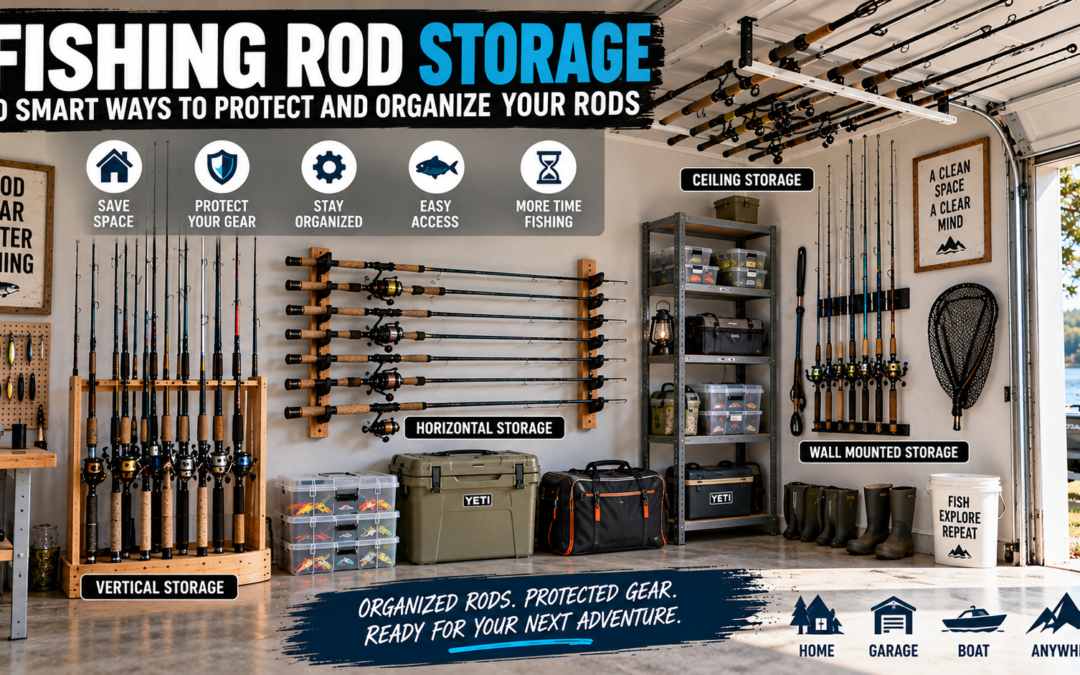
Fishing Rod Storage: 10 Smart Ways to Protect and Organize Your Rods
Good fishing rod storage does more than make a garage or boat look tidy. The right storage setup helps protect rod blanks, guides, tips, handles, reels, and fishing line while making it easier to find the setup you need before a trip. Whether you own two spinning rods or a full collection of freshwater and saltwater equipment, storing your rods correctly can help prevent avoidable damage and keep your fishing gear ready to use.
Many anglers simply lean their rods against a wall, leave them in a corner, or pile them together after a day on the water. Those habits can create unnecessary contact between rods, tangles between lines, pressure on tips, and accidental damage to guides or reel components. A dedicated storage solution gives every rod a safer place while also making your fishing area easier to manage.
In this guide, we cover 10 fishing rod storage ideas for garages, homes, workshops, boats, and smaller spaces. You will also learn how to choose a rack, when to use a holder, how to prepare rods before storage, how to organize rods by fishing style, and how to avoid common storage mistakes.
Why Fishing Rod Storage Matters
Fishing rods are designed to bend under load, but that does not mean they should be stored under constant pressure. Rod tips, guides, reel seats, blanks, and handles can all be affected by poor storage habits. A good system keeps the rod supported in appropriate locations rather than allowing it to rest against hard surfaces or become trapped beneath other gear.
Your storage system should also reflect the type of fishing rods you own. A long surf rod requires different space than a compact travel rod. A spinning setup with a large reel may need more clearance than a lightweight freshwater setup.
The same principle applies when choosing between a rack, stand, holder, wall mount, or cabinet. The goal is not simply to fit as many rods as possible. The goal is to store them securely without creating unnecessary pressure, tangles, scratches, or collisions.
Proper storage also improves access. Instead of sorting through a bundle of rods before every trip, you can organize them by species, fishing technique, length, reel type, or frequency of use.
10 Fishing Rod Storage Ideas
1. Vertical Fishing Rod Rack
A vertical rack is one of the simplest solutions for anglers who want to store multiple rods while using relatively little wall space. The rod butt sits in a lower support while the upper section is held in position by a second support point.
This arrangement works particularly well in garages, workshops, gear rooms, and utility areas. It lets you separate rods individually instead of allowing them to lean together.
Vertical storage is especially useful for anglers who own several rods with different lengths. You can group short rods together and place longer rods in another section of the same rack.
When installing a vertical system, make sure the rod supports are secure and spaced appropriately for the rod and reel combinations you are storing. Heavy reels should not be left hanging from a weak support.
2. Horizontal Wall-Mounted Rack
A horizontal rack stores rods parallel to the wall. This design can be an excellent solution when ceiling height is limited or when you want the rods displayed clearly and within easy reach.
Horizontal storage is useful because the rod can be supported at more than one point instead of resting against a single corner. The spacing between each rod also reduces contact between blanks and reels.
This option works particularly well in garages and workshops where unused wall space can be converted into organized fishing gear storage.
Before mounting a horizontal rack, measure the available wall length and the longest rods in your collection. You also need enough clearance around reels so they do not hit shelves, walls, or nearby equipment.
3. Freestanding Fishing Rod Storage Stand
A freestanding fishing rod storage stand is useful when you cannot drill into walls or when you want a portable organization system. These stands can be moved when you rearrange your garage, workshop, or fishing room.
They are also practical for anglers who regularly rotate equipment. Instead of taking a permanent rack off the wall, you can move the entire stand closer to your workbench or vehicle.
Look for a stable base and enough separation between rod positions. A crowded stand may technically hold many rods but can make retrieving them more difficult.
4. Ceiling-Mounted Rod Storage
Ceiling storage can turn unused overhead space into valuable fishing gear storage. It is especially useful in garages where wall space is already occupied by shelves, tools, bicycles, tackle storage, or workbenches.
A ceiling-mounted system should be installed carefully and positioned where rods can be placed and removed without hitting lights, garage doors, vehicles, or other equipment.
This type of fishing rod storage is best suited to rods that are not needed every day. Frequently used rods should remain easily accessible.
When using overhead storage, think about rod length and weight. The mounting points must remain secure, and long rods should not extend into walkways where they could become an obstruction.
5. Fishing Rod Storage in a Garage
The garage is one of the most common places for fishing gear storage because it provides more room than most indoor living spaces. The challenge is keeping rods away from vehicles, tools, moisture, and clutter.
A dedicated garage rack can create a clearly defined fishing zone. You can combine vertical rod storage with shelves for tackle boxes, line, tools, reels, and other accessories.
A good garage organization system might separate rods into categories such as:
- Spinning rods
- Baitcasting rods
- Surf rods
- Saltwater rods
- Lightweight rods
- Long or specialty rods
You can learn more about different rod designs and applications in the types of fishing rods guide before deciding how to arrange your collection.
6. Fishing Rod Storage for Small Spaces
Not every angler has a garage or dedicated fishing room. Apartments, small homes, boats, and compact workshops require a more efficient approach.
For small spaces, look for storage systems that use vertical walls, corners, doors, or overhead areas. Narrow wall-mounted holders can keep rods off the floor without requiring a large footprint.
You can also group rods based on how frequently you use them. Keep your everyday setups in the easiest-to-reach positions and move specialized rods to higher or less accessible storage locations.
Small-space organization becomes much easier when you avoid storing unnecessary equipment. A rod that is damaged, unused, or no longer suitable for your fishing style does not need prime storage space.
7. Fishing Rod Storage on a Boat
Boat storage requires more than simply keeping rods out of the way. Rods can be exposed to vibration, movement, moisture, saltwater, and contact with other equipment while a boat is underway.
Rod lockers, built-in holders, and secure boat racks can help prevent rods from rolling around or striking other equipment. Rods should remain supported and should not be left loose where they can move around during transport.
Take Me Fishing recommends keeping rods straight and side-by-side while on a boat and using rod holders or rod lockers to help protect blanks, guides, and reels. It also recommends rinsing gear with fresh water after exposure to dirt, grit, or saltwater. See these fishing rod and reel maintenance guidelines from Take Me Fishing.
For anglers who regularly fish saltwater, storage and cleaning should be treated as part of the same routine. Salt residue that remains on equipment can create problems over time, particularly when gear is stored while still wet.
8. Rod Storage Using a Dedicated Fishing Rod Holder
A rod holder and a larger rod rack are related but not always interchangeable. A rack is generally designed around organizing several rods, while a holder may provide a more specific mounting or positioning function.
For anglers who need individual mounting solutions, Hooked Beginner currently has several rod-holder products available:
Choosing between a rack and an individual holder depends on how and where you fish. A garage organization system may benefit from a multi-rod rack, while a boat or specific workstation may benefit from dedicated rod holders.
You can also browse the broader fishing accessories collection when building a complete organization and gear setup.
9. DIY Fishing Rod Storage
DIY storage can be a practical option when you need a custom solution or want to work within a limited budget. One of the biggest advantages is flexibility. You can design the rack around the exact number, length, and reel sizes of the rods you own.
For example, a wall-mounted system can be built around a strong backing surface with individual supports sized for each rod. However, the structure needs to be secure enough to support the equipment without allowing rods to slide or fall.
Take Me Fishing has published a detailed DIY fishing rod holder project using plywood and PVC sections. The design is intended to keep rods organized while reducing the stress and damage that can occur when rods are leaned against walls or left in corners. Review the DIY fishing rod holder project.
DIY storage can work well, but do not sacrifice rod protection for appearance. Smooth contact points, adequate spacing, secure mounting, and enough clearance around reels are more important than making the rack look complicated.
10. Organized Long-Term Fishing Rod Storage
Long-term storage requires more preparation than simply putting rods away after a trip. If you will not use a setup for several weeks or months, clean it before storing it.
Check the rod guides, reel seat, handles, blank, and tip. Remove hooks, lures, and unnecessary terminal tackle from the rod. Wipe away dirt and moisture and allow the equipment to dry completely.
Take Me Fishing recommends inspecting and cleaning fishing equipment before seasonal storage, including checking rod tips and guides and making sure gear is properly dried before it is put away. Read the seasonal fishing gear maintenance guide.
For additional organization, the International Game Fish Association recommends creating a disciplined storage system for fishing equipment and keeping related gear grouped so it is easier to locate and prepare for the next trip. See the IGFA's tackle organization guide.
How to Choose the Right Fishing Rod Storage
The right storage system depends on your available space, rod collection, environment, and how often you fish. There is no single rack design that works equally well for every angler.
Consider Rod Length
Measure your longest rods before buying or building storage. A rack that is too short can leave rod tips exposed or force you to store the rods at an angle.
Understanding rod length also helps when you are expanding your collection. The fishing rod length guide can help you understand how different rod lengths relate to fishing applications.
Consider Rod Power
Rod power affects the type of fishing setup you own and can influence how you organize your collection. Light and ultralight rods may be thinner and easier to store in dense groups, while heavier rods may require stronger supports.
For a deeper look at the subject, see the fishing rod power guide.
Consider Rod Action
Different rods are built with different action characteristics, and anglers often maintain separate rod groups for different techniques. Organizing by action can make it easier to select the correct setup before a fishing trip.
The fishing rod action guide provides more information about the differences between common rod actions.
Consider Reel Clearance
Do not measure the rod alone. A rod and reel combination can require substantially more space than an unrigged rod. Make sure the reel body, handle, spool, and bail have enough clearance.
A crowded rack may increase the risk of reels striking one another during removal. Give heavier setups enough room that you can lift them out without disturbing neighboring rods.
Consider Your Environment
Storage in a climate-controlled room is different from storage in a humid garage, outdoor shed, or boat. Moisture, dust, direct sunlight, and temperature changes can all influence how you should store your gear.
For general equipment care, also review the fishing reel maintenance guide, especially if the same storage area is being used for both rods and reels.
How to Prepare Fishing Rods Before Storage
The best fishing rod storage system cannot compensate for putting dirty or wet equipment away. A short preparation routine can make a major difference.
Remove Hooks and Lures
Never treat a fully rigged rod as though it were ready for long-term storage. Remove hooks, lures, swivels, and other terminal tackle that can snag clothing, line, storage materials, or other rods.
Clean the Rod
Wipe the rod down after use. Saltwater anglers should pay particular attention to salt residue. Sand and grit should also be removed before equipment is placed into a rack or holder.
Inspect the Guides
Look closely at rod guides and tips for damage. Small issues are easier to address before the equipment goes into storage than immediately before an important fishing trip.
Dry Everything Completely
Moisture trapped around rod handles, reel seats, storage covers, or nearby equipment can contribute to unpleasant odors and equipment problems. Give the gear time to dry before putting it into enclosed storage.
Protect Delicate Rods
Rod sleeves or covers can provide additional protection when rods are transported or stored close together. They can help reduce tangles and contact between neighboring setups.
Fishing Rod Storage Mistakes to Avoid
Leaning Rods in a Corner
This is one of the easiest habits to develop and one of the simplest to improve. Rods leaning together can rub against each other, fall over, or become tangled.
Overloading a Rack
Do not select a rack solely because it advertises a high capacity. The actual usability of a rack depends on spacing, rod length, reel size, and how easily each setup can be removed.
Storing Wet Gear
Wet equipment should not be placed into closed or poorly ventilated storage. Allow rods and reels to dry before long-term storage.
Ignoring the Rod Tip
The tip is one of the most delicate areas of a fishing rod. Make sure the tip does not rest against a hard corner, become trapped under another rod, or extend into a walkway.
Putting Heavy Equipment on Top
Never use fishing rods as convenient shelves. Tackle boxes, tools, bags, and other equipment should have dedicated storage space rather than being placed on top of stored rods.
Using an Unstable DIY Rack
A homemade storage solution should be tested for stability before the entire rod collection is loaded onto it. Secure the mounting surface and use suitable fasteners for the material being mounted.
Fishing Rod Storage for Apartments and Small Rooms
Small spaces require better organization rather than simply more storage capacity.
Start by measuring the wall, floor, ceiling, and door clearance available to you. Then determine how many rods actually need to remain assembled and ready to fish.
A compact vertical rack can often hold several rods in a narrow footprint. Wall-mounted storage can keep gear off the floor, while a carefully positioned overhead system can use space that would otherwise remain unused.
If you fish multiple techniques, organize your most frequently used rods where they can be reached immediately. Specialized or seasonal rods can be placed farther away.
Another useful approach is grouping rods by function. Keep freshwater spinning setups together, heavier saltwater equipment together, and specialty rods in a separate section.
Fishing Rod Storage on Boats
Boat storage has to account for movement. Rods should not be able to slide, bounce, or strike hard surfaces while the boat is moving.
Dedicated holders and lockers are useful because they secure the equipment in a defined location. Rods should also be placed so that tips and guides are not exposed to unnecessary impacts.
For frequently used boat setups, keep your most important rods accessible while storing specialty equipment separately. This reduces the amount of equipment you have to move when preparing for a trip.
Saltwater anglers should be especially consistent with cleaning and drying routines. Once equipment is clean and dry, place it into its assigned holder or rack rather than leaving it scattered around the boat or garage.
Fishing Rod Storage and Maintenance Should Work Together
Storage is part of fishing gear maintenance. A rod that is cleaned, inspected, and correctly stored is easier to maintain than equipment that is repeatedly thrown into a corner after every trip.
Create a simple post-trip routine:
- Remove hooks and lures.
- Clean dirt, sand, and salt residue.
- Inspect rod tips and guides.
- Check reel seats and handles.
- Allow the equipment to dry.
- Place every rod into its designated storage position.
For additional gear organization, keeping tackle categorized and returning equipment to its assigned location after each fishing trip can make preparation much faster. The IGFA tackle organization guide provides an example of how a disciplined storage system can make fishing equipment easier to locate and prepare.
Fishing Rod Rack vs. Fishing Rod Holder vs. Storage Stand
| Storage Type | Best For | Main Advantage |
|---|---|---|
| Fishing Rod Rack | Multiple rods | Efficient organization |
| Fishing Rod Holder | Boat or specific mounting positions | Secure individual positioning |
| Storage Stand | Garages and flexible spaces | Portable and movable |
| Ceiling Storage | Limited wall space | Uses overhead space |
How to Build a Better Fishing Gear Storage Area
A rod rack becomes much more useful when it is part of an overall fishing organization system.
Keep rods in one section, reels in another, tackle in labeled containers, and tools where they can be reached quickly. This reduces the time spent searching for equipment before a fishing trip.
A simple organization system might look like this:
- Wall section: Rods and rod racks
- Shelf section: Tackle boxes and storage containers
- Workbench: Line, hooks, tools, and maintenance supplies
- Dedicated hook area: Nets, bags, clothing, and accessories
- High storage: Seasonal or rarely used fishing equipment
Once your equipment has a defined location, put everything back in the same place after each trip. Consistency is what turns a storage system into an organization system.
Final Fishing Rod Storage Checklist
Before finishing your storage setup, check the following:
- Are the rods supported at appropriate points?
- Can you remove one rod without disturbing the others?
- Are rod tips protected?
- Are reels given enough clearance?
- Is the storage system firmly mounted or stable?
- Are rods protected from excessive moisture?
- Are saltwater rods cleaned before storage?
- Are frequently used rods easy to reach?
- Are specialty rods separated from everyday setups?
- Is the system expandable if you buy more rods?
Frequently Asked Questions About Fishing Rod Storage
What is the best way to store fishing rods?
The best method depends on your available space and the number of rods you own. A properly supported vertical or horizontal rack is generally more organized than leaving rods leaning together in a corner.
Should fishing rods be stored vertically or horizontally?
Both can work. Vertical storage is useful when floor and wall width are limited, while horizontal storage can make use of long sections of wall. The important factor is that the rod remains properly supported and protected.
Can fishing rods be stored with reels attached?
Yes. Many anglers keep rods and reels together so the setup is ready to use. The storage system should provide enough clearance to prevent reels from hitting each other.
Should fishing rods be stored in sleeves?
Rod sleeves can be useful for protecting rods from contact with nearby equipment and reducing tangles, especially when several rods are transported or stored close together.
How do you store fishing rods in a garage?
A wall-mounted rack, vertical stand, or ceiling-mounted system can work well in a garage. Choose a location away from vehicle traffic, tools, moisture, and areas where rods can be knocked over.
How do you store long fishing rods?
Measure the longest rods first and select storage that provides sufficient support and clearance. Long rods should not be forced into a short rack or placed where their tips can be struck.
What is the difference between a fishing rod rack and a fishing rod holder?
A rack is usually designed to organize multiple rods in a storage system, while a holder is often designed to secure a rod in a particular position. The right choice depends on whether your priority is collection storage, boat use, or individual mounting.
How should fishing rods be stored after saltwater fishing?
Clean away salt and debris, allow the equipment to dry, inspect the rod and guides, and then place the setup into protected storage. Consistent cleaning and drying are especially important for gear exposed to saltwater.
Can I build my own fishing rod storage rack?
Yes. DIY storage can be effective when it is designed around the number and sizes of your rods. The mounting surface, fasteners, spacing, and support points should all be strong enough for the equipment.
How much space should I leave between fishing rods?
There is no universal measurement because rod and reel sizes vary. Leave enough clearance to remove individual setups without forcing adjacent rods or allowing reels to collide.
Conclusion
The right fishing rod storage system protects your equipment, saves space, and makes every fishing trip easier to prepare for. Whether you choose a vertical rack, horizontal wall system, freestanding stand, ceiling solution, boat holder, or custom DIY setup, the key is to give each rod a secure and accessible place.
Start by measuring your rods, considering reel clearance, assessing your available space, and deciding which setups you use most often. Then build your organization system around those needs instead of trying to force every rod into the same storage method.
For anglers continuing to build their equipment knowledge, the fishing rod buying guide is a useful next step for understanding how rod characteristics affect setup selection. You can also explore the fishing rods section for additional rod information and equipment options.
A well-organized storage area means fewer tangled lines, fewer accidental impacts, less time searching for gear, and more time doing what the equipment is meant for: fishing.
Trackbacks/Pingbacks